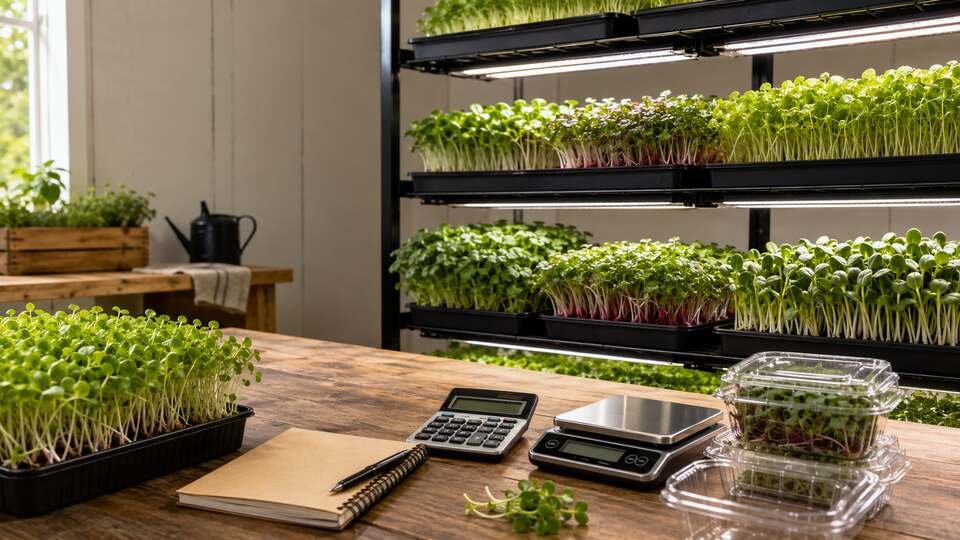

Which microgreens taste best depends on what you like to eat. For a first tray, try sweet pea shoots, crunchy sunflower, or peppery radish. Then sample arugula, mustard, basil, and cilantro to see which flavors earn a place in your kitchen. These seven choices cover mild, sweet, spicy, and herbal notes; they are suggestions to taste, not an objective ranking.
Microgreens are young edible seedlings harvested for their stems and leaves. University of Maryland Extension notes that much of their flavor is in the leaves. A small pinch can change a sandwich or bowl without turning it into a whole salad. Maryland Extension’s growing guide explains the harvest stage and common kitchen uses.
Seven microgreens to try for flavor
| Variety | What to expect | Try it with |
|---|---|---|
| Pea shoots | Sweet, fresh pea flavor; tender shoots | Grain bowls, stir-fries after cooking, sandwiches |
| Sunflower | Mild, nutty impression and substantial crunch | Sandwiches, wraps, salads |
| Radish | Peppery bite, often sharper than mild greens | Tacos, eggs, creamy dips |
| Arugula | Peppery, leafy flavor | Pizza after baking, tomato dishes |
| Mustard | Assertive, mustard-like heat | Rich sandwiches or a small amount in a salad mix |
| Basil | Familiar basil aroma in a small leaf | Tomatoes, pasta after cooking, fresh cheese |
| Cilantro | Distinct cilantro aroma; a polarizing choice | Salsa, tacos, rice bowls |
Flavor changes with the cultivar and harvest stage, and people disagree about what tastes best. Penn State Extension groups radish, arugula, and mustard among the pungent brassicas, while basil and cilantro are aromatic herbs. Taste a leaf before mixing an entire harvest into dinner.
Start with the flavor you already enjoy
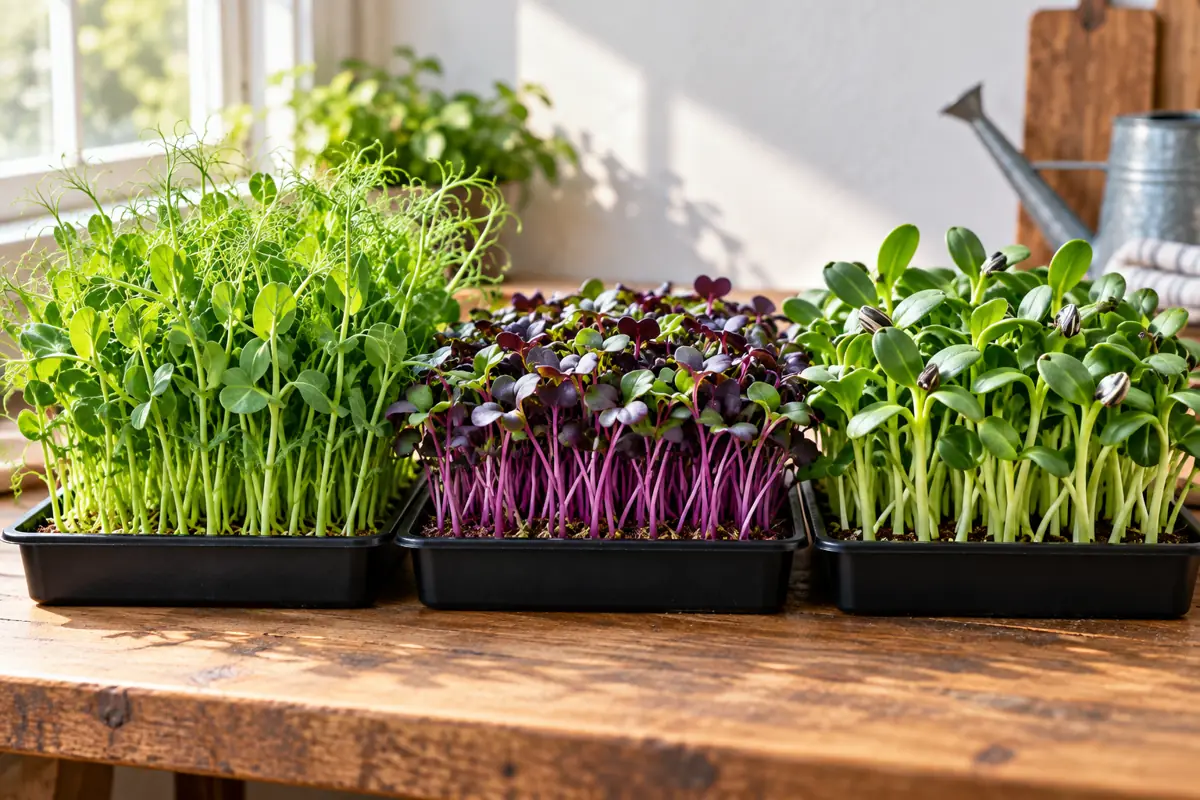
If you like fresh peas, start with pea shoots. Their generous stems work well in a wrap or alongside cooked food. Sunflower microgreens are a good next try when you want more crunch. For heat, sample a few radish microgreens first and add more to taste. The spicy brassicas can overpower a mild salad if you treat them like lettuce.
Basil and cilantro make sense when you already use those herbs. Scatter them on a finished dish so their aroma stays noticeable. For a larger salad, blend a small handful of assertive greens with milder leaves; our microgreens for salads guide has more pairing ideas.
How to choose and grow a tasting tray
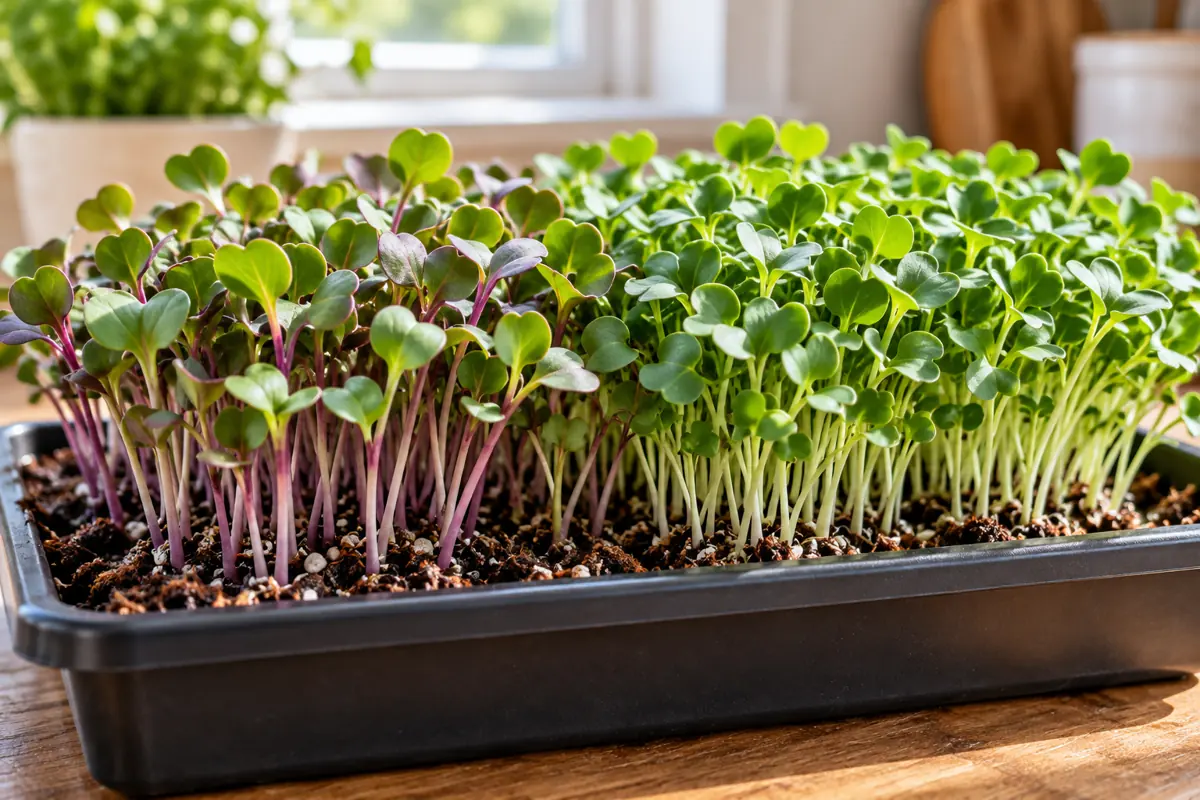
Grow two or three varieties separately for the first comparison. Label each tray, harvest at the stage recommended for that crop, and taste a small sample plain before adding dressing. Separate trays let you compare flavor without guessing which seed made which leaf.
Use seed intended for food growing and avoid pesticide-treated seed. Penn State Extension advises this because some seed coats remain on the seedlings. Start with clean food-grade trays, potable water, suitable growing media, and good airflow. Its home growing instructions show the basic setup. If you are choosing supplies, see our microgreens seed guide and indoor growing guide.
Which tastes best for a beginner?
Pea, sunflower, and radish give you three noticeably different experiences with one simple test: sweet, crunchy, and spicy. If you only have room for one tray, pick the one that matches foods you already cook. Our beginner variety guide helps you choose a first crop and get it to harvest.
Wash hands and food-contact surfaces, keep trays clean, and discard any harvest that smells off or shows decay. Microgreens are often eaten raw, so careful handling matters. Add the greens just before serving, especially on hot dishes, and let their flavor do the work.