Are you dreaming of a more self-sufficient lifestyle but think you need acres of land to make it happen?
Think again. Urban homesteading is transforming city dwellers and apartment residents into confident food producers, skilled makers, and sustainability champions—all within the confines of balconies, patios, and small backyards.
The urban homesteading movement has exploded in recent years, with over 25% of current homesteaders starting within the last three years. Nearly half are millennials or Gen Z, driven by distrust in industrial food systems, rising food costs, and a deep desire for control over their personal well-being.
The COVID-19 pandemic accelerated this trend, with searches for live chickens increasing by 424% and chicken coop services rising by 163%.
In this guide, we’ll walk you through everything you need to know about urban homesteading, from the basic principles to practical step-by-step instructions.
Whether you’re working with a tiny apartment balcony or a modest suburban backyard, these proven strategies will help you build the sustainable, self-sufficient lifestyle you’ve been dreaming of.
What you’ll learn in this guide:
- The fundamental principles of urban homesteading and the mindset shift required
- Space-maximizing techniques for growing food in containers, vertically, and indoors
- Food preservation methods perfect for small spaces
- How to raise small animals in urban environments (where permitted)
- DIY skills that reduce reliance on commercial products
- Community-building strategies for urban homesteaders
Understanding Urban Homesteading: More Than Just a Garden
Urban homesteading is defined more by a mindset than by land ownership. It’s about embracing self-sufficiency and sustainable practices within city settings, regardless of space limitations. At its core, urban homesteading rests on two foundational pillars:
The Two Pillars of Urban Homesteading
1. Self-Sufficiency
This involves producing goods and food with your own hands, reducing reliance on external systems, and fostering a deeper connection with the natural world. It’s about taking control of your resources and building resilience in an uncertain world.
2. Community Sufficiency
Acknowledging that urban resources are limited, successful urban homesteaders collaborate with and support their local community. This includes bartering for goods, purchasing from local growers, joining CSA programs, and sharing knowledge and resources with neighbors.
Why Urban Homesteading Matters in 2025
The motivations driving the urban homesteading movement are more relevant than ever:
- Food Security: Concerns about supply chain disruptions and food system reliability
- Economic Uncertainty: Rising food costs and the desire to reduce household expenses
- Health and Wellness: Access to fresh, organic produce and reduced exposure to chemicals
- Environmental Stewardship: Minimizing carbon footprint and reducing waste
- Skill Development: Learning practical skills that build confidence and independence
- Community Connection: Building relationships with like-minded individuals
The Urban Homesteading Mindset
Before diving into specific techniques, it’s crucial to adopt the right mindset:
- Start Small: Avoid overwhelm by beginning with one or two manageable projects
- Embrace Imperfection: Mistakes are learning opportunities, not failures
- Think Creatively: Limited space requires innovative solutions
- Focus on Progress: Don’t compare your journey to others with more resources
- Celebrate Wins: Acknowledge every success, no matter how small
- Stay Connected: Engage with the homesteading community for support and inspiration
Step-by-Step Implementation Guide
Phase 1: Get Connected (Weeks 1-2)
Before investing in tools or seeds, connect with your local homesteading community. This crucial first step will save you time, money, and frustration.
Build Your Network
- Visit local farmers’ markets and talk to vendors about their growing practices
- Join community gardens to learn hands-on and meet experienced gardeners
- Attend workshops at local extension offices or gardening centers
- Connect with online urban homesteading groups specific to your region
- Volunteer with gardening non-profits for practical experience
- Find a mentor who’s already doing what you want to achieve
Assess Your Space and Resources
- Sunlight: Track sun exposure throughout the day (most vegetables need 6-8 hours)
- Available Space: Measure balconies, patios, windowsills, or yard areas
- Weight Restrictions: Check building regulations (balconies typically support 60 lbs/sq ft)
- Water Access: Identify water sources and drainage considerations
- Local Regulations: Research city ordinances regarding gardening, composting, and animals
- Microclimate: Note wind exposure, heat retention, and seasonal variations
Phase 2: Start Growing Food (Months 1-3)
Container Gardening Essentials
Container gardening is the foundation of urban homesteading, allowing you to grow food anywhere from fire escapes to patios.
Best Containers for Urban Spaces:
- Pots and Planters: Choose containers with drainage holes, sized appropriately for root systems
- Grow Bags: Lightweight, portable, and excellent drainage
- Hanging Baskets: Perfect for strawberries, herbs, and trailing plants
- Vertical Planters: Wall-mounted systems that maximize vertical space
- Railing Planters: Attach directly to balcony railings for space efficiency
- Stacked Pots: Create vertical structures with graduated pot sizes
Top Crops for Small Spaces:
- Herbs: Basil, rosemary, thyme, oregano, parsley, chives, mint (in separate containers)
- Leafy Greens: Lettuce, spinach, kale, arugula, chard (tolerate partial shade)
- Vegetables: Tomatoes (dwarf varieties), peppers, radishes, carrots, beans
- Fruits: Strawberries, dwarf citrus trees, blueberries in large containers
Vertical Gardening Techniques
Maximize your growing space by thinking vertically:
- Trellises: Support cucumbers, beans, peas, and vining squash
- Pallet Gardens: Repurpose pallets for layered herb and strawberry gardens
- Grow Towers: Self-contained vertical systems with multiple planting pockets
- Window Boxes: Utilize windowsills for herbs and small vegetables
- Hanging Systems: Suspend planters from ceilings, pergolas, or balcony overheads
Indoor Growing Options
- Countertop Hydroponic Systems: Year-round growing with LED grow lights
- Microgreens: Fast-growing, nutrient-dense greens ready in 7-14 days
- Sprouts: Grow in jars on kitchen counters with minimal equipment
- Mushrooms: Cultivate in small spaces using grow kits or inoculated logs
Phase 3: Food Preservation for Small Spaces (Months 3-6)
Canning and Preserving
Even without a large pantry, you can preserve seasonal abundance:
- Water Bath Canning: Preserve high-acid foods like pickles, jams, and tomatoes
- Refrigerator Pickling: Beginner-friendly method requiring no specialized equipment
- Freezing: Freeze fruits, vegetables, and prepared meals in compact containers
- Dehydrating: Use a dehydrator or low oven for fruits, vegetables, and herbs
Fermentation
This ancient preservation method requires minimal space and equipment:
- Sauerkraut and Kimchi: Ferment in mason jars on countertops
- Kombucha: Brew probiotic tea in a gallon jar
- Sourdough: Maintain a starter for fresh, digestible bread
- Kefir: Culture milk or water kefir in small containers
Phase 4: Sustainable Household Practices (Months 6-12)
Composting in Small Spaces
- Bokashi Bins: Odor-free fermentation system perfect for apartments
- Worm Bins (Vermicomposting): Compact, efficient, and produces liquid fertilizer
- Countertop Compost Bins: Collect scraps for weekly drop-off at community composting sites
- Compost Tumblers: Small rotating bins for balconies or patios
Rainwater Harvesting
- Set up rain barrels connected to downspouts
- Use collected water for container gardens and houseplants
- Install small collection systems on balconies (check building regulations)
DIY Products and Skills
- Cleaning Products: Make natural cleaners with vinegar, baking soda, and essential oils
- Beauty Products: Create soaps, lip balms, and moisturizers
- From-Scratch Cooking: Bake bread, make yogurt, culture butter, and prepare nut milks
- Mending and Repair: Learn basic sewing to extend clothing life
Raising Small Animals in Urban Spaces
While not feasible for everyone, many urban areas now permit small-scale animal husbandry. Always check local zoning ordinances before acquiring animals.
Backyard Chickens
The most popular urban livestock, chickens provide fresh eggs and help with pest control. Many cities allow 2-6 hens (no roosters) with proper housing.
Getting Started with Chickens:
- Research local regulations and obtain necessary permits
- Build or purchase a secure coop (4 square feet per bird minimum)
- Choose quiet, docile breeds like Buff Orpingtons or Australorps
- Provide proper feed, fresh water, and predator protection
- Expect 4-6 eggs per week per hen during peak laying
Quail
Smaller and quieter than chickens, quail are ideal for very limited spaces. They can even be raised in apartments (where permitted) and produce eggs in just 6-8 weeks.
Rabbits
Excellent for meat production or manure, rabbits require minimal space and are quiet. They can be housed in small cages or pens in backyards or garages.
Bees
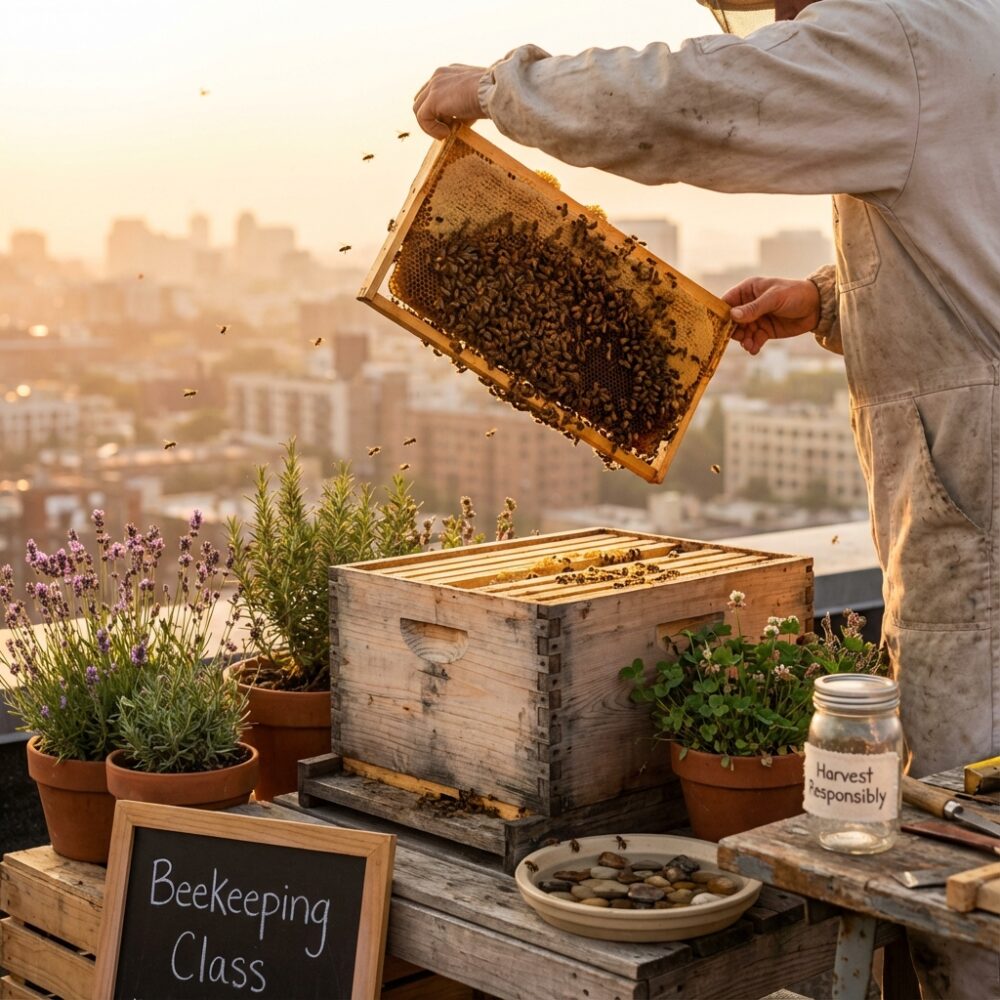
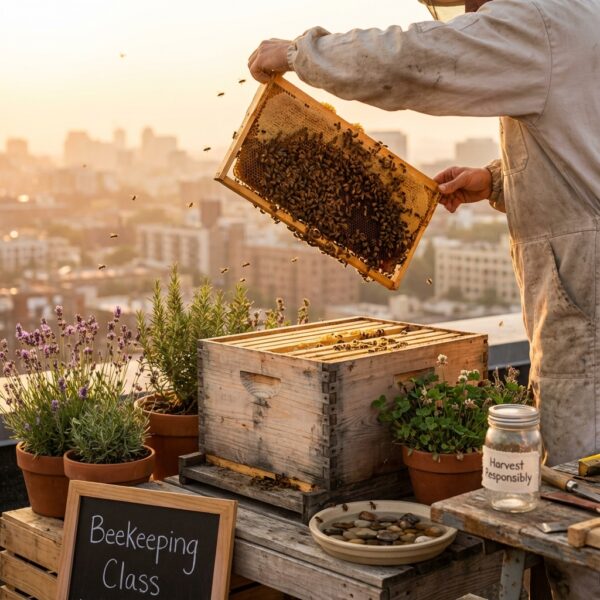
Urban beekeeping is gaining popularity, with bees providing honey, beeswax, and crucial pollination services. A single hive can fit on a rooftop or in a small backyard.
Beekeeping Basics:
- Take a beekeeping class before starting
- Check local ordinances (many cities now allow beekeeping)
- Start with one or two hives
- Provide water sources and bee-friendly plants
- Harvest honey responsibly, leaving enough for the colony
Common Challenges and Solutions
Challenge 1: Limited Space
Solution: Think vertically and creatively. Use walls, railings, and ceilings. Choose compact varieties and multi-functional plants. Remember, even a windowsill can produce fresh herbs year-round.
Challenge 2: Overwhelming Information
Solution: Start with the “Get Connected” phase. Focus on one skill at a time—master container gardening before moving to food preservation or animal husbandry. Join local groups for filtered, relevant advice.
Challenge 3: Initial Investment Costs
Solution: Start with free or low-cost methods:
- Use recycled containers (buckets, yogurt containers, milk jugs)
- Start plants from seeds instead of buying transplants
- Find free materials on Craigslist, Facebook Marketplace, or “Buy Nothing” groups
- Build systems gradually as budget allows
- Focus on high-value crops that save the most money
Challenge 4: Time Management
Solution: Design efficient systems that work with your schedule:
- Use self-watering containers for vacations or busy weeks
- Batch similar tasks (water everything at once, harvest weekly)
- Choose low-maintenance crops like herbs and leafy greens
- Start small to avoid burnout
Challenge 5: Lack of Sunlight
Solution:
- Grow shade-tolerant crops like lettuce, spinach, kale, and herbs
- Use grow lights for indoor growing
- Utilize reflective surfaces to maximize available light
- Focus on microgreens and sprouts that don’t require full sun
Challenge 6: Building Restrictions
Solution:
- Review your lease or HOA rules before starting
- Focus on portable containers that can be moved if needed
- Keep gardens neat and attractive to avoid complaints
- Consider indoor growing if outdoor space is restricted
- Join community gardens for additional growing space
Tools and Resources for Success
Essential Tools for Urban Homesteaders
Gardening Basics:
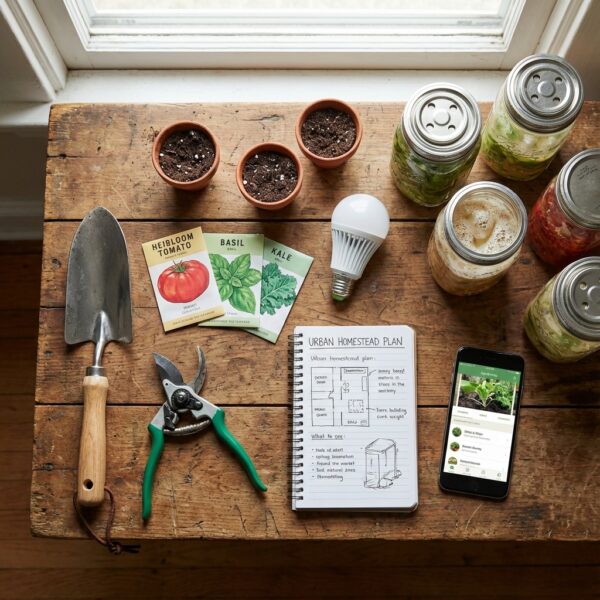
- Quality hand trowel and cultivator
- Pruning shears or scissors
- Watering can or expandable hose (connects to indoor sink)
- Containers with drainage holes (various sizes)
- Quality potting soil and compost
- Plant labels and markers
Food Preservation:
- Mason jars (various sizes)
- Canning supplies (if water bath canning)
- Dehydrator or oven-safe racks
- Fermentation weights and airlocks
- Freezer-safe containers
Space-Saving Solutions:
- Vertical planters or grow towers
- Hanging basket hooks
- Railing planters
- Grow lights for indoor growing
- Self-watering containers
Budget-Friendly Sourcing Strategies
- Free Materials: Check Craigslist, Facebook Marketplace, and “Buy Nothing” groups for containers, tools, and materials
- Repurpose Creatively: Use yogurt containers, milk jugs, and food-grade buckets as planters
- Seed Swaps: Join local seed libraries or swap events for free, locally-adapted seeds
- Community Resources: Many cities offer free compost, mulch, or rain barrels to residents
- Start from Seed: Seeds cost pennies compared to transplants and offer more variety
Recommended Learning Resources
Local Resources:
- Cooperative Extension offices (free publications and soil testing)
- Community gardens (hands-on learning and mentorship)
- Local nurseries and garden centers (workshops and advice)
- Farmers’ markets (connect with experienced growers)
- Library programs (free classes and book resources)
Online Communities:
- Urban homesteading Facebook groups (city-specific)
- Reddit communities (r/homesteading, r/UrbanHomestead)
- YouTube channels focused on small-space growing
- Instagram for visual inspiration and tips
- Online forums like Permies.com
Books Worth Reading:
- “The Urban Homestead” by Kelly Coyne and Erik Knutzen
- “The Apartment Homesteader” by Alex Mitchell
- “The Vegetable Gardener’s Container Bible” by Edward C. Smith
- “The Art of Fermentation” by Sandor Ellix Katz
Building Your Support Network
Success with urban homesteading is much easier when you have support:
- Join Local Groups: Find urban homesteading meetups in your area
- Connect with Neighbors: Start conversations about gardening and share harvests
- Participate in Skill Shares: Attend or host workshops on specific skills
- Seed and Plant Swaps: Exchange varieties and reduce costs
- Online Communities: Join forums for troubleshooting and encouragement
- Find a Mentor: Connect with someone a few steps ahead on the journey
- Community Gardens: Rent a plot for additional growing space and community connection
[IMAGE_PLACEHOLDER_2]
Measuring Your Progress and Celebrating Success
Urban homesteading is a journey, not a destination. Track your progress to stay motivated and identify areas for improvement:
Quantifiable Metrics:
- Food Production: Track pounds of produce harvested or percentage of meals using homegrown ingredients
- Cost Savings: Calculate money saved on groceries, cleaning products, and other DIY items
- Waste Reduction: Measure compost created and trash diverted from landfills
- Skills Acquired: List new skills mastered (canning, fermentation, sewing, etc.)
- Container Count: Track the number of productive containers or growing spaces
Qualitative Measures:
- Confidence Level: Notice how your self-sufficiency confidence grows
- Connection to Food: Observe your deeper appreciation for seasonal eating
- Community Engagement: Count new relationships formed through homesteading
- Stress Reduction: Notice the therapeutic benefits of working with plants
- Family Involvement: Track how household members engage with projects
Celebrate Every Win:
- Your first successful harvest, no matter how small
- The first jar of homemade pickles or jam
- Successfully overwintering herbs indoors
- Sharing your harvest with neighbors
- Teaching someone else a skill you’ve learned
Remember, even growing a single pot of basil on your windowsill is urban homesteading. Every step toward self-sufficiency matters, regardless of scale.
Your Urban Homesteading Action Plan
Ready to start your urban homesteading journey? Here’s your immediate action plan:
This Week:
1. Assess your space: Spend 15 minutes observing sunlight patterns on your balcony, patio, or windowsills
2. Connect locally: Find one urban homesteading group or community garden in your area
3. Start small: Purchase seeds or a starter plant for one easy-to-grow herb (basil, mint, or parsley)
This Month:
1. Set up your first containers: Start with 2-3 pots of herbs or leafy greens
2. Begin composting: Set up a small countertop compost bin or research local composting programs
3. Learn one new skill: Watch tutorials on a preservation method that interests you
This Quarter:
1. Expand your garden: Add 3-5 more containers with vegetables or fruits
2. Preserve something: Can, ferment, or dehydrate your first batch of food
3. Make one DIY product: Create homemade cleaning supplies or beauty products
4. Connect with community: Attend a workshop, farmers’ market, or homesteading meetup
This Year:
1. Achieve consistent harvests: Develop a rotation system for continuous production
2. Master 3-5 core skills: Focus on skills that align with your goals and interests
3. Build your network: Establish relationships with mentors and fellow homesteaders
4. Evaluate and adjust: Reflect on what worked, what didn’t, and plan for next year
Conclusion: Embracing the Urban Homesteading Lifestyle
Urban homesteading is more than just growing food in small spaces—it’s a mindset shift toward self-sufficiency, sustainability, and intentional living. It’s about reclaiming skills our grandparents knew, building resilience in uncertain times, and creating a more meaningful connection to our food and resources.
You don’t need acres of land, expensive equipment, or years of experience to start. You just need curiosity, willingness to learn, and the courage to take that first small step. Whether you’re growing herbs on a windowsill, fermenting vegetables in mason jars, or raising backyard chickens, you’re part of a growing movement of urban dwellers choosing a more self-sufficient path.
The beauty of urban homesteading is its accessibility and adaptability. Start where you are, use what you have, and do what you can. Each small action—planting a seed, preserving a harvest, making something from scratch—builds momentum toward a more sustainable, resilient lifestyle.
The urban homesteading community is welcoming, supportive, and eager to share knowledge. Don’t hesitate to ask questions, share your successes and failures, and connect with others on this journey. Together, we’re proving that self-sufficiency isn’t just for rural homesteaders—it’s for anyone willing to embrace the homesteading mindset, regardless of where they live.
Your urban homesteading journey starts today. What will your first step be?