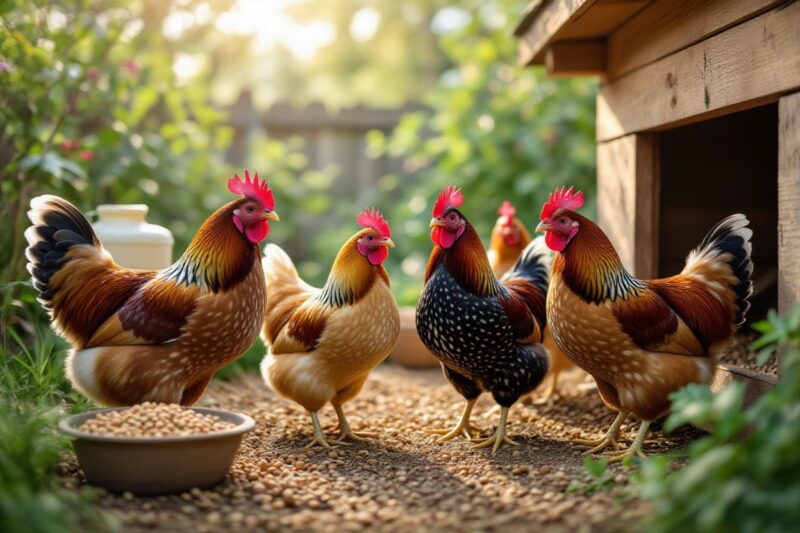

For the highest egg output, start with a White Leghorn or a production hybrid such as an ISA Brown, Lohmann Brown, or Golden Comet. If you want a calmer backyard bird that also has enough body for a dual-purpose flock, consider an Australorp, Rhode Island Red, Plymouth Rock, or Sussex.
The “best” layer depends on more than a number in a hatchery catalog. Egg color, temperament, climate, body size, feed efficiency, expected lifespan, and whether you want to hatch your own replacements can matter just as much as peak production.
Best egg-laying chicken breeds at a glance
The production ranges below come from Utah State University Extension’s laying-breed comparison. Treat them as planning ranges. Your results will depend on the strain, age, nutrition, daylight, housing, health, stress, weather, and molt.
| Breed or hybrid | Estimated eggs per year | Egg color | General fit |
|---|---|---|---|
| ISA Brown | 300 to 320 | Light brown | High-output hybrid, calm temperament |
| Lohmann Brown | 300 to 320 | Brown | High-output hybrid, usually easy to handle |
| White Leghorn | 280 to 320 | White | Efficient layer, active and often flighty |
| Golden Comet | 280 to 320 | Brown | Early-producing hybrid, backyard friendly |
| Australorp | 250 to 300 | Brown | Gentle, heavier-bodied, cold-tolerant choice |
| Rhode Island Red | 250 to 300 | Brown | Hardy dual-purpose bird, can be assertive |
| Sussex | 250 to 300 | Light brown | Calm dual-purpose bird and active forager |
| Easter Egger | 200 to 280 | Often blue, green, or tinted | Mixed type with variable traits and egg colors |
| Plymouth Rock | 200 to 250 | Brown | Calm, heavier dual-purpose breed |
| Ameraucana | 200 to 250 | Blue to blue-green | True breed known for colored eggs |
| Welsummer | 160 to 200 | Speckled dark brown | Moderate layer chosen partly for egg color |
| Marans | 150 to 200 | Dark brown | Heavier bird known for chocolate-colored eggs |
Production numbers from different Extension publications do not always match. Penn State Extension gives a broader range of 200 to 260 eggs for most commercial egg-type birds and 100 to 180 for purebred poultry. That difference is a useful warning: the name of a breed or hybrid does not guarantee a fixed number of eggs.
Choose the breed by your main goal
| Your priority | Strong starting choices | Tradeoff to expect |
|---|---|---|
| Maximum egg output | ISA Brown, Lohmann Brown, Golden Comet, White Leghorn | Hybrids may not breed true; Leghorns can be flighty |
| Efficient white eggs | White Leghorn | Active temperament and large comb |
| Brown eggs and calm handling | ISA Brown, Lohmann Brown, Australorp, Sussex | Individual temperament still varies |
| Eggs plus a heavier body | Rhode Island Red, Plymouth Rock, Sussex, Australorp | Usually less efficient than specialized layers |
| Cold-climate backyard flock | Australorp, Sussex, Rhode Island Red, Plymouth Rock | Housing and comb protection still matter |
| Colorful egg basket | Ameraucana, Easter Egger, Marans, Welsummer | Often fewer eggs than production hybrids |
| Family flock | Australorp, Sussex, Plymouth Rock | Handle birds regularly and judge individuals |

Production hybrids versus pure breeds
ISA Browns, Lohmann Browns, and Golden Comets are hybrids developed from selected parent lines. Hatcheries may use different crosses under similar trade names, so read the supplier’s description instead of assuming every bird sold under one label is identical.
Hybrids are a practical choice when the goal is a steady supply of eggs. They are selected for early maturity and high production. If you hatch their eggs, however, the offspring will not reliably reproduce the same combination of traits.
Pure breeds such as Leghorns, Australorps, Rhode Island Reds, Plymouth Rocks, Sussex, Ameraucanas, Welsummers, and Marans are more predictable when bred within a well-managed line. Output still varies by strain. A breeder selecting for exhibition appearance may produce a different laying bird than a breeder selecting the same breed for working farm traits.
Best breeds when egg numbers come first
White Leghorn
White Leghorns are the standard choice for efficient white-egg production. University of Minnesota Extension identifies small-bodied commercial White Leghorns as economical layers, while Penn State notes that Leghorn-type hybrids tend to be more flighty than brown-egg production birds.
Their lighter bodies mean less feed is directed toward maintaining body mass. That efficiency is useful for a flock focused on eggs, but the active temperament may not suit a small pen or a household that wants easily handled birds.
ISA Brown, Lohmann Brown, and Golden Comet
These brown-egg hybrids combine high estimated output with temperaments commonly described as manageable. They are often a better fit than Leghorns for keepers who want productive birds without as much flightiness.
Buy from a hatchery that clearly identifies the hybrid and its expected adult characteristics. Trade names and parent crosses can differ among suppliers.
Best dual-purpose laying breeds
Australorp
Australorps are heavier than specialized layer hybrids and are commonly chosen for a quieter temperament and dependable brown eggs. Utah State lists them among its cold-weather choices, which makes them worth considering for northern backyard flocks.
Rhode Island Red
Rhode Island Reds combine strong estimated production with a useful dual-purpose body. They have a reputation for hardiness, though some individuals and lines are more assertive than others. They work well in a mixed flock when the birds have enough feeder and roost space.
Plymouth Rock
Plymouth Rocks give up some peak egg output compared with production hybrids, but many backyard keepers value their calm behavior and heavier frame. They are a sensible choice when household eggs and an easy-to-manage flock matter more than maximum efficiency.
Sussex
Sussex chickens are active foragers with a heavier dual-purpose body. Utah State lists them among cold-weather and family-flock choices. As with any breed, strain and individual handling affect temperament.
Best chickens for colorful eggs
Ameraucana and Easter Egger
Ameraucana is a defined breed that lays blue to blue-green eggs. “Easter Egger” is a broad label for mixed chickens carrying blue-egg genetics; their appearance, temperament, and egg shade can vary.
If breed accuracy matters, check the hatchery’s description carefully. Birds marketed with vague labels such as “Americana” may be Easter Eggers rather than true Ameraucanas.
Marans and Welsummer
Marans are selected for dark brown eggs, while Welsummers are known for reddish-brown or speckled shells. Egg color often becomes lighter as a laying cycle progresses, and shell shade varies by line.
Choose these birds for the egg basket you want, not because they will outlay a Leghorn or production hybrid.
Match laying hens to your climate
Utah State lists Australorps, Sussex, Rhode Island Reds, and Plymouth Rocks as cold-weather choices. Leghorns and Anconas appear among its hot-weather options.
Breed selection does not replace suitable housing. In cold areas, keep the coop dry and well ventilated without placing birds in a direct draft. Large single combs can be more vulnerable during severe cold. In summer, shade, air movement, and constant clean water matter for every breed.
For a Plymouth, Massachusetts flock, winter moisture and wind exposure deserve as much attention as the breed name. A dry coop and enough indoor space for storm days will do more than a “cold-hardy” label by itself.
Egg color does not change nutrition
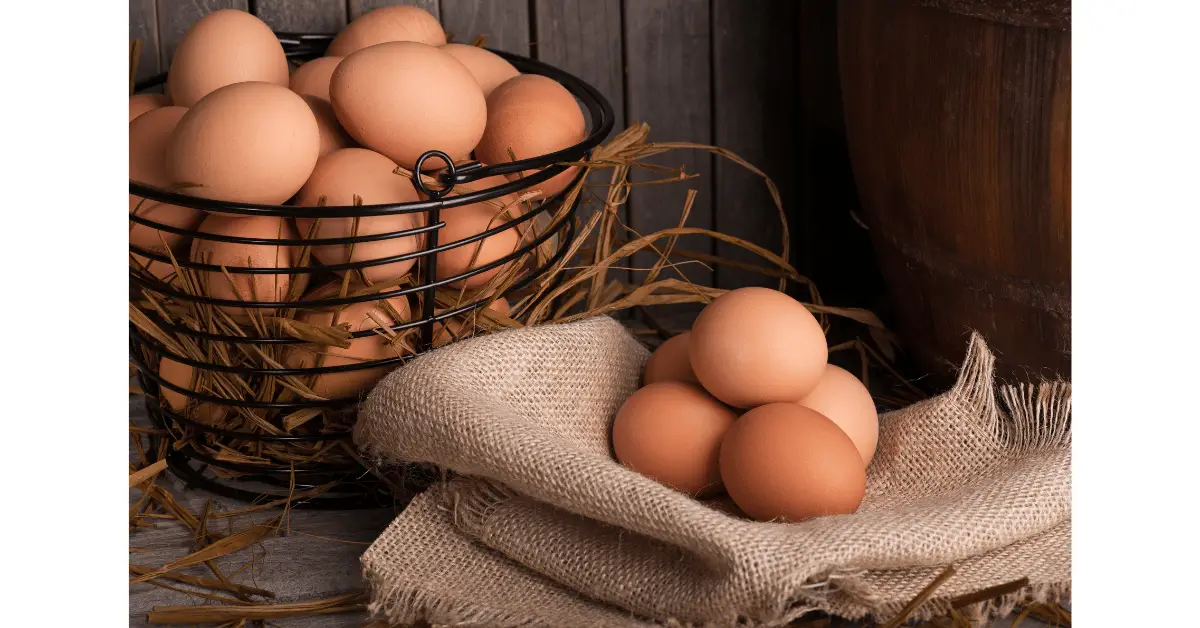
Blue, white, green, and brown shells can make a basket more interesting, but shell color does not make one egg more nutritious than another. Penn State Extension states that shell color is determined by breed and does not change the egg’s taste or nutritional value.
Nutrition and egg quality depend more on the hen’s diet, health, age, environment, and how the eggs are handled after collection.
Why your hens may lay fewer eggs than the breed chart
- Young pullets have not reached full production.
- Older hens generally lay less than they did during earlier cycles.
- Molt temporarily reduces or stops production.
- Shorter natural day length can reduce laying.
- Poor nutrition, stale feed, or too many treats can dilute the ration.
- Heat, cold stress, crowding, predators, or flock conflict can affect production.
- Parasites, disease, and lack of water can cause abrupt changes.
- The hatchery strain may differ from the strain used for a published estimate.
A rooster is not needed for hens to lay eggs. You only need a rooster if you want fertile eggs for hatching, and local rules may restrict roosters.
Plan feed and housing before ordering chicks
A breed list is only useful if the flock fits your space and budget. Estimate adult feed use before buying. Our chicken feed calculator uses a quarter-pound daily planning figure for mature hens and shows how long a 50-pound bag may last.
Then check coop capacity, ventilation, feeder access, nest boxes, predator protection, and room for quarantine. The complete chicken-raising guide covers the full setup, while the hoop coop guide is one option for movable housing.
A practical short list
- Choose White Leghorns for efficient white eggs and high output.
- Choose ISA Browns, Lohmann Browns, or Golden Comets for high-output brown eggs from production hybrids.
- Choose Australorps, Rhode Island Reds, Sussex, or Plymouth Rocks for a heavier backyard or dual-purpose flock.
- Choose Ameraucanas or Easter Eggers for blue or green eggs.
- Choose Marans or Welsummers when dark or speckled shells matter more than maximum production.
Pick two or three priorities before choosing a bird: egg quantity, temperament, climate fit, body size, or shell color. No single breed leads every category, and a healthy hen from a well-selected strain will usually outperform a poorly raised bird with a famous breed name.