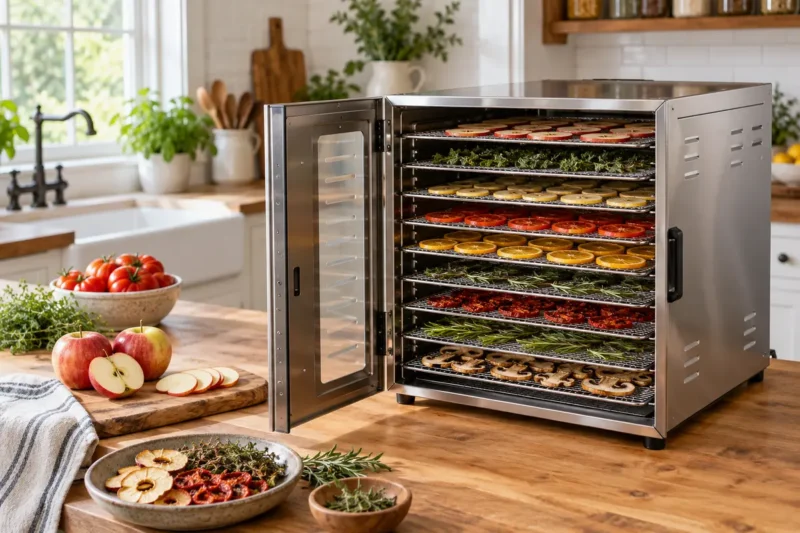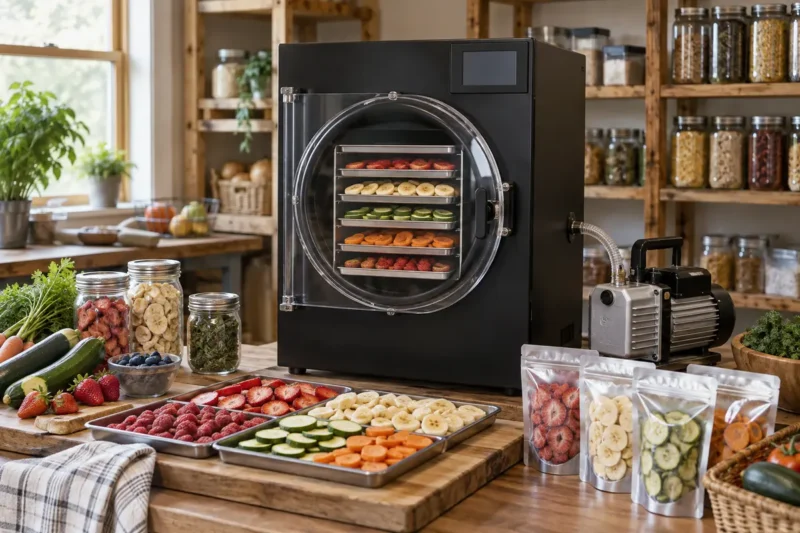
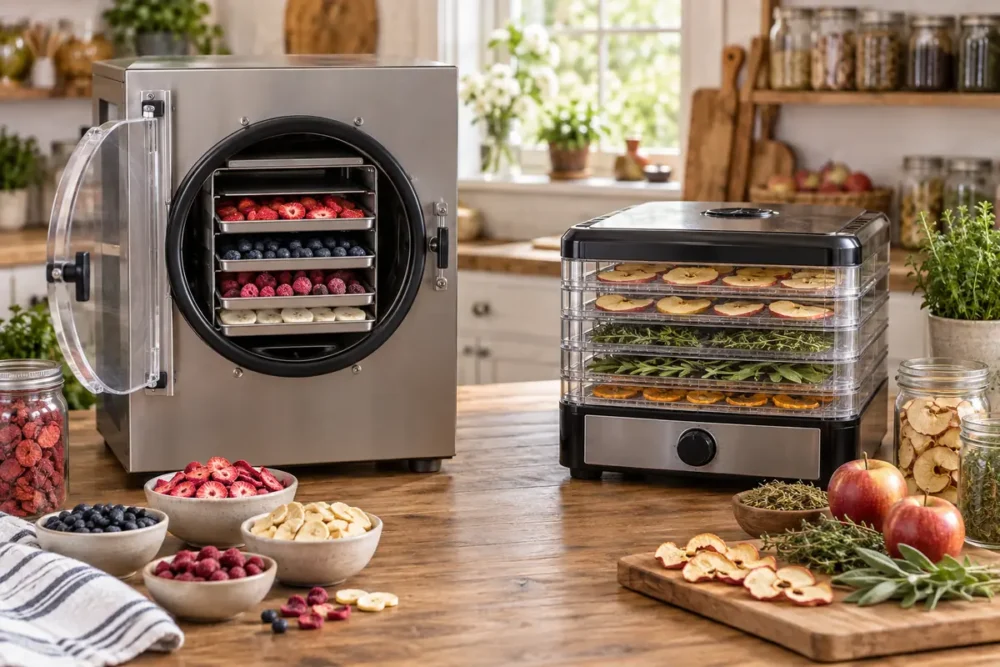
Choose a dehydrator if you want an affordable way to make dried fruit, vegetables, herbs, jerky, and everyday snacks. Choose a freeze dryer when long storage, lightweight meals, and crisp texture matter enough to justify a much higher equipment cost, longer batches, and more maintenance.
Neither machine is automatically better. The right choice depends on what you preserve, how often you use it, where you will store it, and whether the finished food needs to last for months or form part of a longer-term pantry.
Freeze dryer vs. dehydrator at a glance
| Decision | Dehydrator | Freeze dryer |
|---|---|---|
| Best fit | Low-cost, frequent batches and snacks | Long-term pantry food and complete meals |
| Process | Warm moving air removes moisture | Food freezes, then a vacuum removes ice as vapor |
| Upfront cost | Usually the lower-cost choice | A four-figure appliance in the home market |
| Finished texture | Chewy, leathery, or crisp, depending on the food | Usually dry, light, and crisp |
| Batch time | Often several hours | Often much longer and dependent on food, load, and machine |
| Maintenance | Wash trays and check the fan and vents | Clean trays and chamber, maintain the vacuum system, and follow the pump instructions |
| Food safety | Requires correct preparation, temperature, dryness, and storage | Does not reliably kill microorganisms; safe preparation and storage still matter |
How the two methods remove water
A dehydrator uses controlled heat and airflow. The goal is to remove enough moisture that bacteria, yeast, and mold cannot grow under proper storage conditions. The University of Minnesota Extension drying guide stresses low humidity, low heat, good air circulation, and storage that keeps moisture out.
A freeze dryer first freezes food at very low temperature. Under vacuum, frozen water changes directly into vapor through sublimation. Secondary drying removes more moisture from the food surface. This requires a sealed chamber, refrigeration system, vacuum pump, and controls that a dehydrator does not need.
Which foods work best in each machine?
A dehydrator is practical for everyday drying
- Apple slices and fruit leather
- Herbs and peppers
- Mushrooms and prepared vegetables
- Jerky made with a tested process
- Garden produce intended for snacks, powders, soups, or short-term pantry use
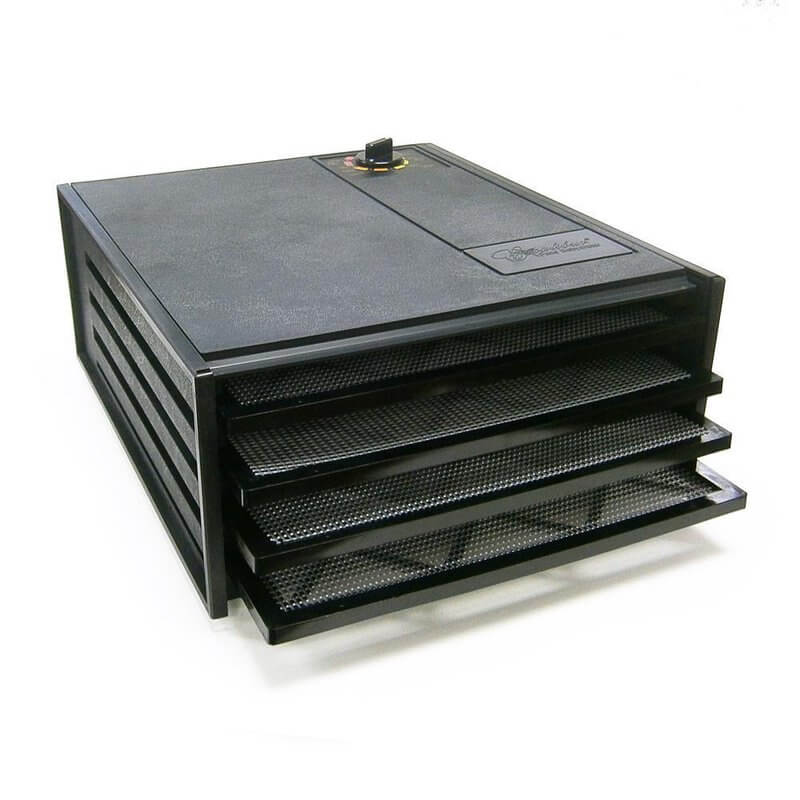
Drying time changes with the food, slice thickness, moisture level, temperature, humidity, airflow, and tray load. Turning up the heat is not a shortcut. The outside can harden while moisture remains inside, which increases the risk of spoilage during storage.
A freeze dryer handles a broader range of prepared foods
- Fruit and many vegetables
- Cooked meat and complete meals
- Dairy and eggs when prepared according to reliable guidance
- Soups, sauces, and leftovers that fit the manufacturer’s instructions
- Lightweight meals that will be rehydrated later
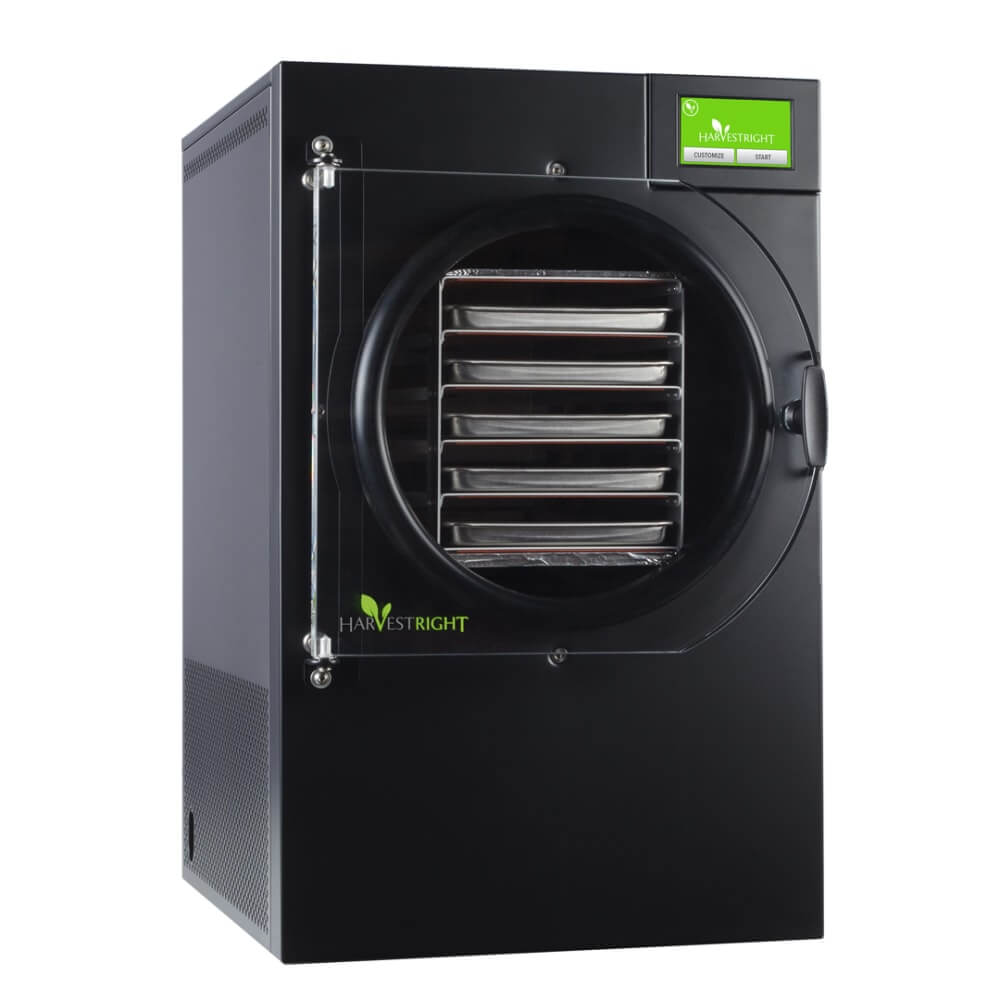
Foods that are high in fat or oil may not freeze-dry well. Cut food into uniform pieces, spread it in a single layer, and stay within the machine’s stated capacity. The University of Minnesota Extension freeze-drying guide also recommends cleaning and sanitizing trays after every batch.
Food safety matters with both methods
Freeze-drying and dehydrating remove water, but they are not universal kill steps. Microorganisms already present can survive and begin growing again after the food absorbs moisture or is rehydrated. Start with food that has been handled safely, prevent cross-contamination, and use research-based preparation instructions for the specific food.
Vegetables may need blanching before drying or freeze-drying. Jerky needs its own tested time-and-temperature process. Raw meat, poultry, seafood, eggs, and dairy deserve extra care because a dry final appearance does not prove that the food was processed safely.
Package finished food only after it is fully dry and cool. Use clean containers that keep moisture out, label the contents and date, and discard food if the package fails or the food shows moisture, mold, an off odor, or another sign of spoilage.
Compare the full cost of each method
A dehydrator is usually easier to justify for a household that wants dried snacks and seasonal produce. Home freeze dryers cost far more, need dedicated space, and add vacuum-system maintenance. Current prices and promotions change, so check the manufacturer’s product page instead of relying on an old price quoted in a blog post.
Use this formula to estimate electricity for either machine:
Estimated electricity cost = average kilowatts used x batch hours x local price per kilowatt-hour
The nameplate wattage is not always the average draw because heaters and compressors may cycle. A plug-in electricity meter gives a better household estimate. Record several normal batches rather than using the shortest or longest cycle as the baseline.
Also include packaging, replacement parts, vacuum-pump supplies where required, tray accessories, cleaning time, and food lost during failed batches. Compare specific machines in our Harvest Right freeze-dryer review and Excalibur 10-tray dehydrator review. For a purchase, check current Excalibur options and verify the model specifications.
Does freeze-dried food retain more nutrition?
Do not choose a machine based on a universal nutrient-retention percentage. Results vary by food, pretreatment, temperature, oxygen exposure, storage conditions, and time. Freeze-drying often preserves color, shape, and structure well, while dehydration deliberately uses more heat and creates a different texture.
For a household decision, focus on the food you will preserve and eat. A less expensive dehydrator used every week can be more useful than a freeze dryer that stays idle. A freeze dryer may be worth the expense when you regularly preserve complete meals or large harvests for longer storage.
Choose a dehydrator if…
- You want the lower-cost entry point.
- Your main foods are fruit, vegetables, herbs, leather, or jerky.
- You prefer a smaller appliance with simpler maintenance.
- You expect to use dried food within a normal pantry rotation.
- You like chewy or crisp dried textures.
Choose a freeze dryer if…
- You want to preserve complete meals and a wider range of foods.
- Long storage and lightweight food are central to the plan.
- You have the budget, electrical capacity, ventilation, and space for the equipment.
- You are willing to maintain the vacuum system and use suitable packaging.
- You will run enough batches to justify the investment.
A simple decision before you buy
- List the five foods you expect to preserve most often.
- Estimate how many batches you will run during a typical month.
- Measure the available space and confirm the electrical requirements.
- Calculate equipment, energy, packaging, and maintenance costs.
- Choose the less expensive method if both produce food your household will use.
For most beginners, a dehydrator is the practical first purchase. A freeze dryer becomes easier to justify when long-term food storage is a defined household goal and the machine will run regularly. Compare current home units in our home freeze-dryer guide before committing to the larger investment.