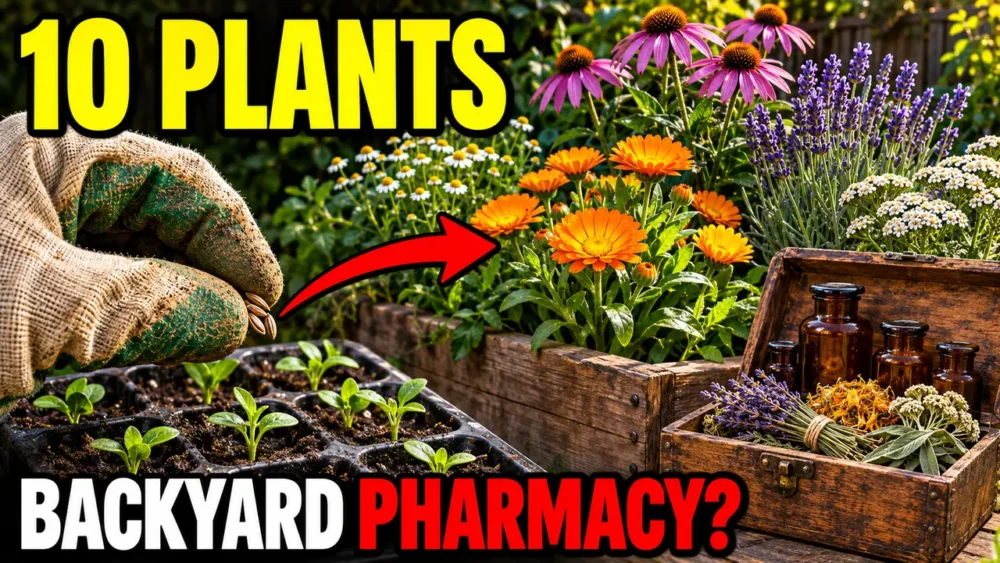
Learning how to grow a medicinal herb garden from seed is the single fastest way to break your family’s dependence on fragile commercial pharmacy supply lines.
Quick question.
If the delivery trucks stopped rolling to your neighborhood pharmacy tomorrow, what sits in your medicine cabinet right now?
A half-empty bottle of generic pain relievers stamped with an expired date?
Some neon pink antacid tablets loaded with artificial dyes and chalky binders?
A sleep aid that leaves your head feeling like a sack of wet sand until noon?
(Zero judgment here. I ran that exact same drugstore routine for years.)
Here is the cold, uncomfortable TRUTH:
Over 80 percent of essential active pharmaceutical ingredients sold across America originate in foreign chemical manufacturing plants.
When shipping corridors lock up or regulatory lines stall, store shelves clear out overnight.
Yet for generations before petrochemical factories and corporate conglomerates existed, self-reliant households grew an entire emergency dispensary in a simple 10 by 10 dirt plot.
No sterile labs.
No 900 percent corporate retail markups.
Just ten hardy, dirt-cheap botanical workhorses pulling pain-relieving, gut-calming, and wound-healing compounds directly out of living soil.
Here is the complete, field-tested playbook on how to grow a medicinal herb garden from seed this season, even if you have never sprouted a single seed in your life.
The 10 Workhorse Plants for Complete Household Coverage
Do not waste cash buying 40 different ornamental seed packets off a spinning retail rack.
Most decorative garden nursery plants are hybridized strictly for showy blossoms, not high chemical potency.
You only need ten battle-tested botanical species to handle approximately 95 percent of routine household complaints:
- Yarrow (Achillea millefolium): The master battlefield first-aid plant. Crushed leaves stop minor bleeding on contact. Infused into hot tea, it prompts sweating to help break stubborn fevers.
- California Poppy (Eschscholzia californica): The non-narcotic evening sedative. It soothes an overstimulated nervous system and supports uninterrupted sleep without daytime lethargy.
- Chicory (Cichorium intybus): The deep taproot joint compound. Rich in inulin and bitter lactones that ease stiff morning joints and support liver filtration.
- Chamomile (Matricaria chamomilla): Gentle, high-potency digestive calm. Relaxes smooth muscle spasms, settles nervous stomachs, and eases tension headaches.
- Marshmallow (Althaea officinalis): The ultimate botanical mucilage producer. Cools irritated throat tissue, coats burning esophagus linings, and soothes topical burns.
- Calendula (Calendula officinalis): The cellular repair accelerator. High in triterpenoids that speed new skin tissue formation across cuts, scrapes, and dry cracked hands.
- Echinacea (Echinacea purpurea): The immune defense trigger. Active alkylamides activate mucosal immunity at the very first sign of seasonal sniffles.
- Feverfew (Tanacetum parthenium): The vascular tension fighter. Chewing a fresh leaf or steeping an infusion reduces the severity of recurring pressure headaches.
- Lavender (Lavandula angustifolia): The primary topical antiseptic and nervine. Relieves nervous stomach cramps, repels pests, and sanitizes minor surface abrasions.
- Evening Primrose (Oenothera biennis): Loaded with natural gamma-linolenic acid (GLA). Essential for balanced tissue inflammation and cellular skin health.
Soil Biology: Why Living Dirt Beats Synthetic Plant Food
Let me save you a hundred wasted dollars at the garden store.
Put down the jug of synthetic blue chemical fertilizer.
Commercial fertilizers pump seedlings full of quick soluble nitrogen and excess water.
That forces rapid cellular growth that looks lush on camera, but it severely DILUTES the therapeutic phytochemicals: the volatile oils, bitter alkaloids, and aromatic resins you need for real medicine.
Medicinal plants demand living soil biology.
When roots interact with beneficial mycorrhizal fungi and indigenous soil microbes, the plant experiences mild natural stress.
That biological interaction stimulates the plant to produce thick concentrations of secondary protective metabolites.
Those protective compounds are the exact medicine you harvest.
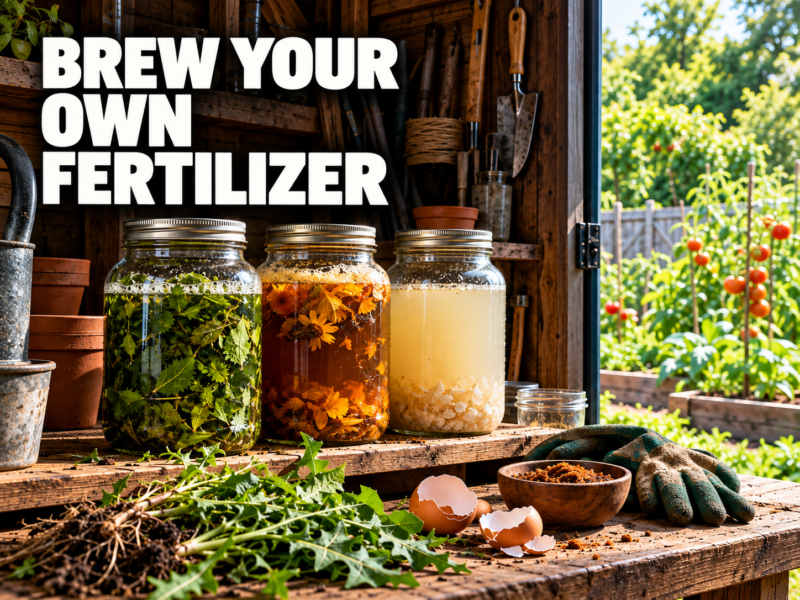
For beds and containers, build this simple base:
- 40 percent clean native topsoil or chemical-free loam
- 40 percent well-rotted organic compost or leaf mold
- 20 percent coarse horticultural sand or perlite for razor-sharp drainage
Heavy, waterlogged potting soils rot medicinal roots. Keep the mix loose, airy, and biologically alive.
Overcoming Seed Dormancy: Light and Cold Stratification Rules
Here is where most beginner gardeners hit a brick wall:
They bury dust-sized seeds an inch deep into soggy mud and wonder why nothing emerges.
Medicinal herbs are wild heritage genetics. They follow distinct natural rules:
The Light Germinators
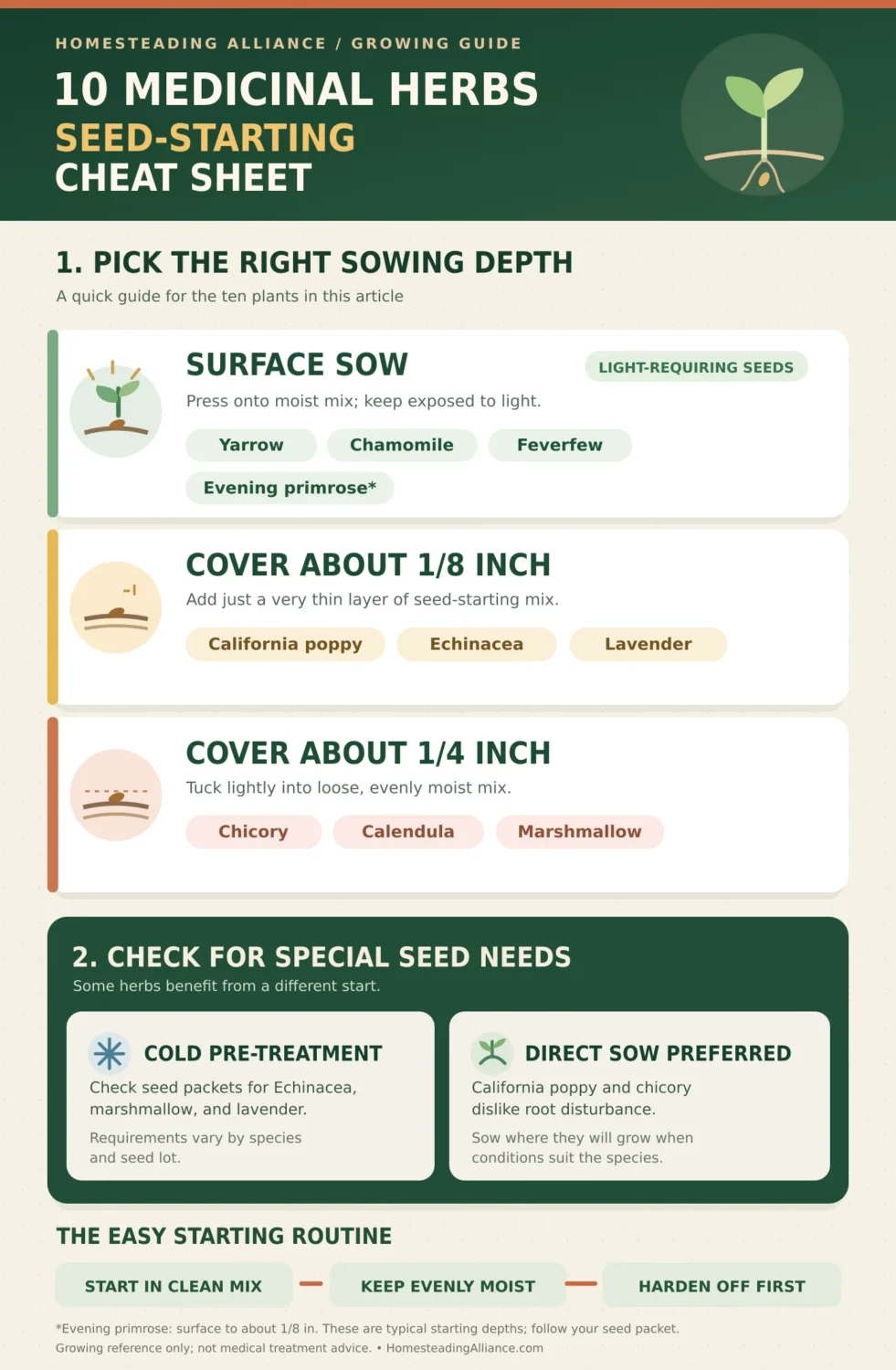
Seeds like Chamomile, Feverfew, and Yarrow are tiny.
If you bury them under dark soil, they remain dormant.
Scatter them directly across the surface of damp, tamped soil. Press them down lightly with the flat palm of your hand so they make solid contact with the dirt, but leave them exposed to ambient light. Mist with a spray bottle rather than pouring water from a heavy can.
The Cold Stratification Protocol
Seeds like Lavender and Echinacea possess hard, protective protective outer shells designed to survive harsh alpine winters.
If you plant them straight from a warm drawer, germination rates often drop below 20 percent.
To wake them up:
- Mix your seeds with a tablespoon of damp horticultural sand or a slightly moist paper towel.
- Seal the mixture in a small glass jar or plastic pouch.
- Place the container in your refrigerator (around 38 degrees Fahrenheit) for 14 to 21 days.
- Remove the seeds and sow them into warm room-temperature trays.
This simple artificial chill signals to the seed embryo that winter has passed and it is safe to surge upward.
The Master Blueprint: How to Grow a Medicinal Herb Garden from Seed Step-by-Step
Follow this orderly sequence from early spring through the summer solstice to ensure maximum plant vigor and continuous medicine:
Stage 1: Seed Starting Schedule (6 to 8 Weeks Before Last Spring Frost)
- Indoor Sowing: Start your slow-growing perennials (Lavender, Echinacea, Marshmallow, Feverfew) in seedling flats under basic grow lights or in a warm, south-facing window.
- Moisture Control: Bottom-water seedling trays by placing them in shallow water pans for 15 minutes. This prevents surface fungal damping-off and protects fragile surface-sown seeds from washing away.
- Air Circulation: Run a gentle oscillation fan nearby for 30 minutes twice daily. Light air movement strengthens seedling stems, preventing weak, leggy growth.
Stage 2: Hardening Off and Transplanting
- Seven days before transplanting into your outdoor plot or permanent containers, move your seedling flats outdoors into partial shade for two hours.
- Increase their outdoor exposure by two hours every day. This hardens tender leaf cuticles against direct sun and outdoor wind.
- Transplant outdoors in the cool of early evening to prevent transplant shock. Water the base deeply with non-chlorinated water.
Stage 3: Direct Sowing the Taproots
- Deep-rooted plants like Chicory and California Poppy dislike having their root balls disturbed in plastic seedling trays.
- Direct-sow their seeds straight into garden soil or 5-gallon containers two weeks before your region’s final expected spring frost.
- Keep the top half-inch of soil damp until sprouts show, then thin seedlings to 8 inches apart.
| Herb Variety | Sowing Depth | Germination Temp | Days to Harvest |
|---|---|---|---|
| Yarrow | Surface Needs Light | 65 – 70°F | 90 days (leaves/tops) |
| California Poppy | 1/8 inch | 55 – 65°F | 55 – 65 days (flowers) |
| Chicory | 1/4 inch | 60 – 75°F | 120 days (fall roots) |
| Chamomile | Surface Needs Light | 65 – 70°F | 60 – 70 days (flowers) |
| Marshmallow | 1/4 inch Cold Stratify | 60 – 65°F | 120 – 180 days (roots) |
| Calendula | 1/4 inch | 65 – 70°F | 45 – 60 days (blooms) |
| Echinacea | 1/8 inch Cold Stratify | 65 – 75°F | 90 days (first leaves) |
| Feverfew | Surface Needs Light | 65 – 70°F | 70 – 80 days (foliage) |
| Lavender | 1/8 inch Cold Stratify | 65 – 70°F | 100+ days (foliage) |
| Evening Primrose | Surface to 1/8 in | 65 – 70°F | 90 days (foliage/seeds) |
Harvesting Windows and Autumn Seed-Saving
To keep your backyard dispensary running indefinitely, harvest timing matters:
- Foliage and Leaves (Yarrow, Feverfew): Snip mid-morning right after the morning dew evaporates, but before the hot midday sun bakes away the volatile aromatic oils.
- Blossoms (Chamomile, Calendula, Poppy): Pick flowers when they are fully open but before petals begin wilting or fading in color. Frequent picking prompts the plant to throw even more blooms.
- Roots (Chicory, Marshmallow, Echinacea): Wait until late autumn after the first hard freeze causes top foliage to die back. That freeze forces the plant to concentrate its carbohydrates and active phytochemicals down into the root system.
- Autumn Seed Preservation: Designate two or three healthy plants of each variety solely for seed collection. Allow their flower heads to turn brown and paper-dry on the stem. Snip the dry heads into a paper grocery bag, shake gently to dislodge the seeds, and store in airtight glass jars with a desiccant pack in a cool, dark closet.
Two Paths for Your Family’s Health Security
Take a close look at how you want your household prepared.
Path One: Continue running to the corner drugstore every time someone gets a fever, an inflamed joint, or an infected scratch. Pay whatever retail price they demand, swallow whatever fillers they press into the tablets, and hope shipping lines stay open forever.
Path Two: Clear a modest dirt patch or set out a few patio pots this weekend.
Plant ten proven heirloom species that return season after season.
Fill your pantry shelves with amber jars of home-brewed first-aid salves, calming teas, and immune tonics harvested with your own hands for pennies.
If you are ready to secure high-germination, non-GMO heirloom genetics packaged specifically for self-reliance, see the details on the Backyard Medicinal Seed Vault here
before current seasonal allocations sell out.