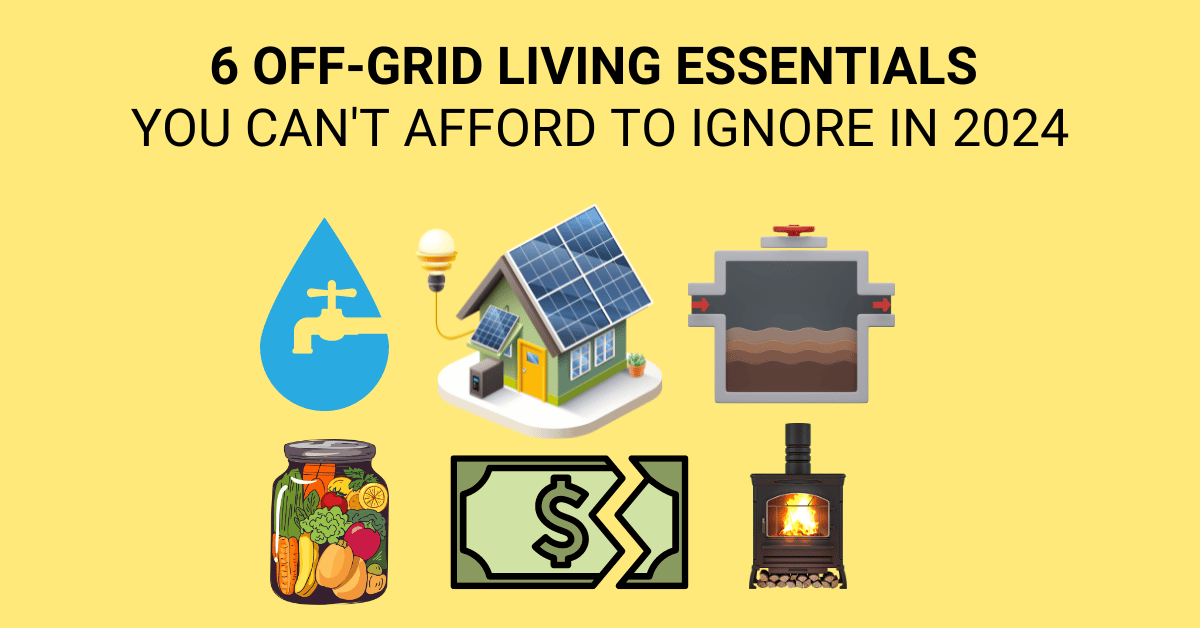
A practical off-grid homestead needs a plan for daily resource use plus five physical systems: power, water, waste, food, and heating or cooling. Size each system for normal demand, then build backups for cloudy weather, dry periods, equipment failure, and seasonal extremes.
This guide explains how those systems fit together, from off-grid power options and water storage to sanitation, food production, and temperature control.
1. Understanding Off-Grid Living: More Than Just Unplugging
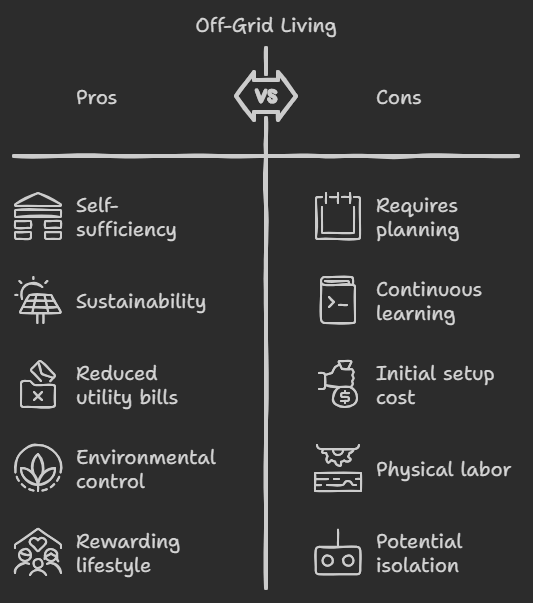
Off-grid living is much more than just disconnecting from the electrical grid. It’s a complete lifestyle shift that requires careful planning and continuous learning.
At its core, off-grid living means not being connected to public utilities like electricity, water, gas, or sewage. Instead, individuals are responsible for meeting all of their own needs through sustainable and self-sufficient means.
The benefits of off-grid living are numerous:
- Energy Independence: No more surprise rate hikes or power outages
- Reduced Environmental Impact: A much more sustainable lifestyle
- Financial Savings: After the initial investment, utility bills become a thing of the past
- Self-Sufficiency: An incredible sense of pride in providing for one’s own needs
However, there are important considerations to keep in mind:
- Legal Considerations: Zoning laws and building codes can be restrictive in some areas.
- Location: The choice of land significantly impacts off-grid success.
- Initial Costs: Going off-grid usually requires a significant upfront investment.
- Skills and Knowledge: Off-grid living requires becoming a jack-of-all-trades.
- Lifestyle Adjustment: It involves saying goodbye to energy-hungry appliances and embracing a more mindful way of living.
Before diving in, it’s crucial to assess needs and goals. Whether looking to be 100% off-grid or considering a hybrid system, understanding energy usage and budget constraints will help create a solid plan for the off-grid journey.
2. Sustainable Power Sources: The Heart of Off-Grid Living
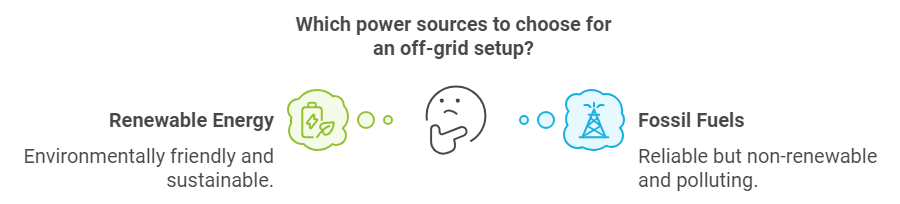
Choosing the right power sources for an off-grid setup is crucial.
Here are the main options:
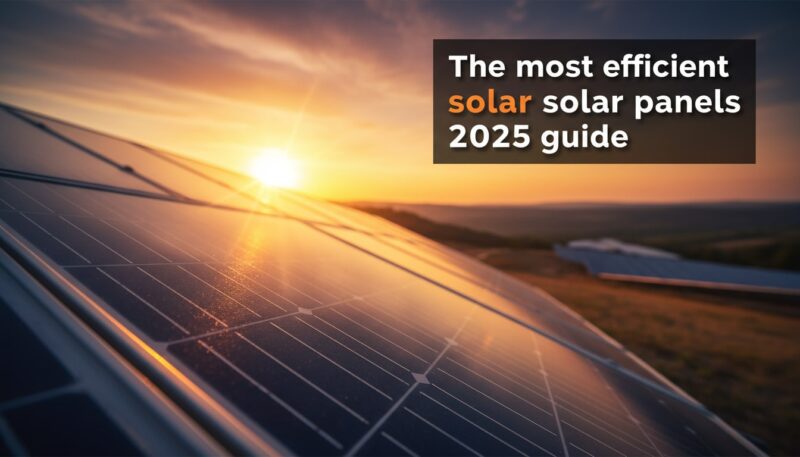
Solar Power Systems:
- Abundant and renewable
- Minimal maintenance once set up
- Silent operation
Considerations:
- Location’s sun exposure
- System size based on energy needs
- Battery storage for cloudy days
For those interested in harnessing solar power, our guide on the best 6kW off-grid solar systems provides valuable insights into setting up an efficient solar power system.
Wind Turbines:
- Works day and night
- Can be more efficient in certain locations
Considerations:
- Requires consistent wind to be effective
- Can be noisy
Micro-Hydro Power:
- Consistent power generation
- Low maintenance once installed
Considerations:
- Requires a reliable water source
- May have environmental impacts
Backup Generators:
- Provides a safety net for the power system
Considerations:
- Fuel type (propane, gasoline, diesel)
- Power output
- Noise level
For a portable power solution, consider checking out our review of the Jackery Explorer 1000, which can be a great addition to your off-grid power setup.
Battery Banks and Energy Storage:
- Essential for storing excess energy
- Allows for power use when generation is low
Considerations:
- Battery type (lead-acid, lithium-ion, etc.)
- Bank size based on energy needs and generation capacity
- Importance of a good battery monitoring system
3. Off-Grid Water Systems: Ensuring a Steady, Clean Supply
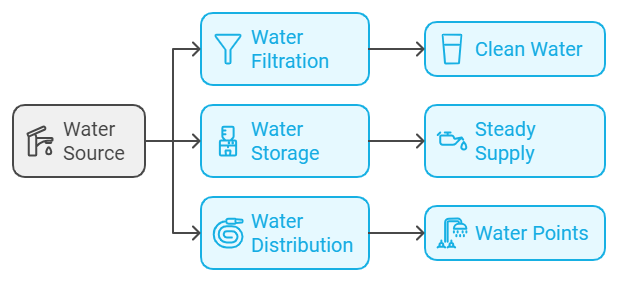
A reliable water system is crucial for off-grid living. Here are the main components:
Rainwater Harvesting Techniques:
- Roof material matters for collection
- Importance of clean gutters and downspouts
- Use of first flush diverters
- Proper sizing of storage tanks
Well Drilling and Maintenance:
- Professional help is recommended
- Importance of water testing
- Regular maintenance of well pump and water quality
Water Filtration and Purification Methods:
- Sediment filters for large particles
- Activated carbon filters for taste and some contaminants
- UV purification for bacteria and viruses
- Reverse osmosis for comprehensive purification
For those interested in natural water purification methods, learning how to make activated charcoal at home can be a valuable skill for off-grid living.
4. Waste Management: Eco-Friendly Solutions for Off-Grid Homes
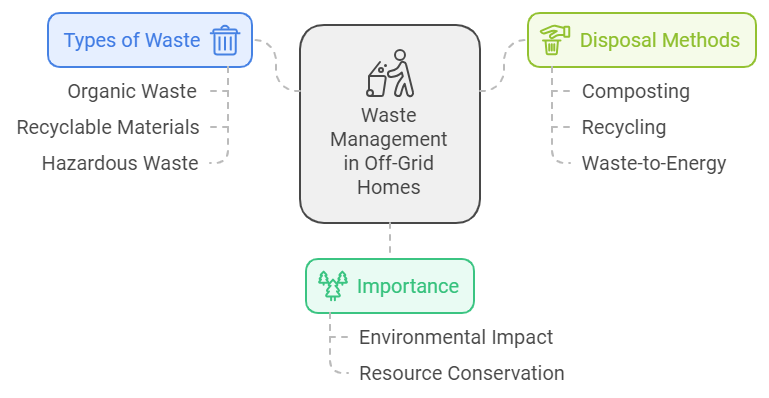
Proper waste management is essential in off-grid living:
Composting Toilets:
- Use natural processes to break down human waste
- Types include self-contained units and central systems
- Require regular addition of bulking material and occasional turning
- Produce compost for non-edible plants
Septic Systems:
- Traditional solution for off-grid waste management
- Require suitable soil for leach field
- Need regular pumping and inspections
- Careful use of cleaning chemicals is important
Greywater Disposal:
- Can be redirected to gardens
- May require basic filtration
- Some plants thrive on and help filter greywater
Greywater Systems for Conservation:
- Reuse of gently used water from sinks, showers, and washing machines
- Great for irrigation, but not for drinking or bathing
- Can range from simple redirecting systems to complex filtration setups
Solid Waste Reduction and Recycling:
- Composting for food scraps and yard waste
- Setting up a recycling system
- Upcycling materials for new uses
For an environmentally friendly way to dispose of waste, consider learning how to make a burn barrel, which can be useful for managing certain types of waste on your homestead.
5. Food Production and Storage: Achieving Self-Sufficiency
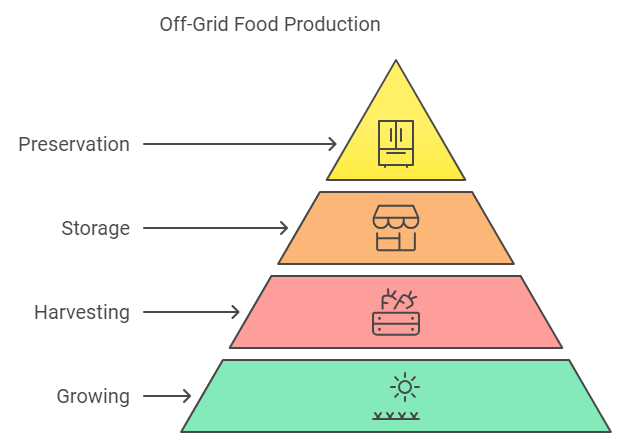
Growing and preserving food is a key aspect of off-grid living:
Vegetable Gardening and Permaculture:
- Starting small with easy-to-grow vegetables
- Implementing permaculture principles
- Focusing on soil health through composting and crop rotation
For those looking to start their garden, our guide on building a DIY raised garden bed with pallets can be a cost-effective way to begin your food production journey.
Small-Scale Animal Husbandry:
- Chickens for eggs and meat
- Goats for milk and land clearing
- Bees for honey and pollination
If you’re considering raising chickens, our article on raising chickens for eggs and meat can provide valuable insights.
Greenhouse Cultivation:
- Extends the growing season
- Utilizes passive solar design for climate control
- Can incorporate rainwater collection systems
Food Preservation Techniques:
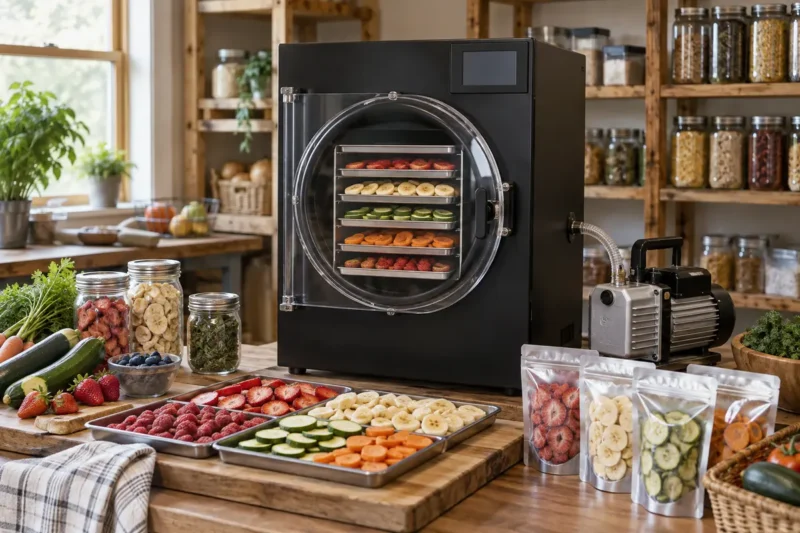
- Canning for fruits, vegetables, and meats
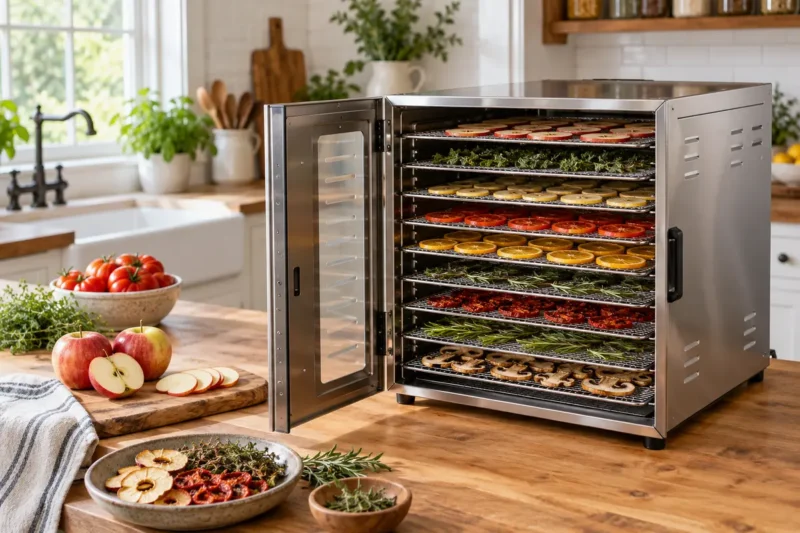
- Dehydrating, potentially with solar dehydrators
- Fermenting for nutritious preserved vegetables
Root Cellars and Natural Refrigeration:
- Using earth’s natural cooling for storage
- Spring houses for natural refrigeration
- Zeer pots as simple clay pot refrigerators in dry climates
6. Heating and Cooling: Maintaining Comfort Off the Grid
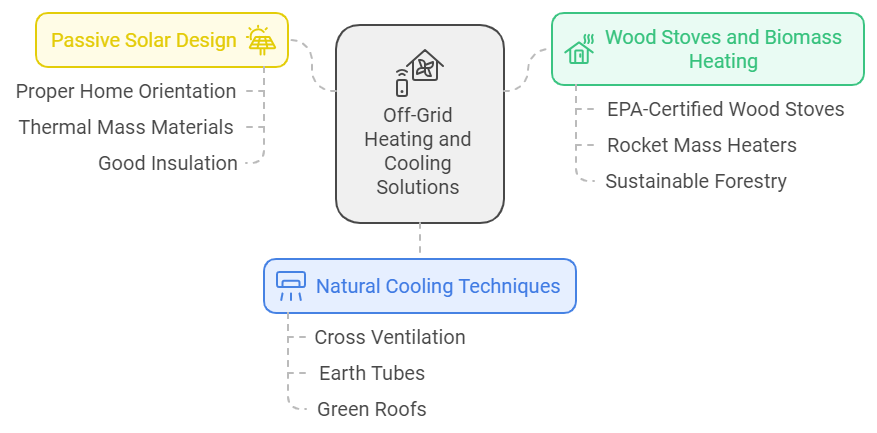
Staying comfortable without traditional HVAC is achievable:
Passive Solar Design:
- Proper home orientation for maximum efficiency
- Use of thermal mass materials
- Importance of good insulation
Wood Stoves and Biomass Heating:
- Efficient, EPA-certified wood stoves
- Rocket mass heaters for high efficiency
- Practicing sustainable forestry for fuel
Natural Cooling Techniques:
- Utilizing cross ventilation
- Implementing earth tubes for pre-cooling air
- Considering green roofs for insulation and cooling
For those interested in sustainable heating solutions, our solar water heater cost calculator can help you estimate the investment required for this eco-friendly option.
Conclusion
Off-grid living encompasses a wide range of considerations, from power and water to waste management and food production. While it’s a significant undertaking, many find it to be an incredibly rewarding lifestyle.
It’s important to remember that transitioning to off-grid living doesn’t have to happen all at once. Starting small, perhaps with a DIY indoor herb garden or a solar panel system, allows for learning and gradual expansion of off-grid capabilities over time.
While challenges are inevitable, the sense of self-sufficiency, connection to nature, and knowledge of living more sustainably make it worthwhile for many. Whether just starting to consider off-grid living or already on the journey, it’s helpful to connect with others in the off-grid community to share experiences and learn from each other.
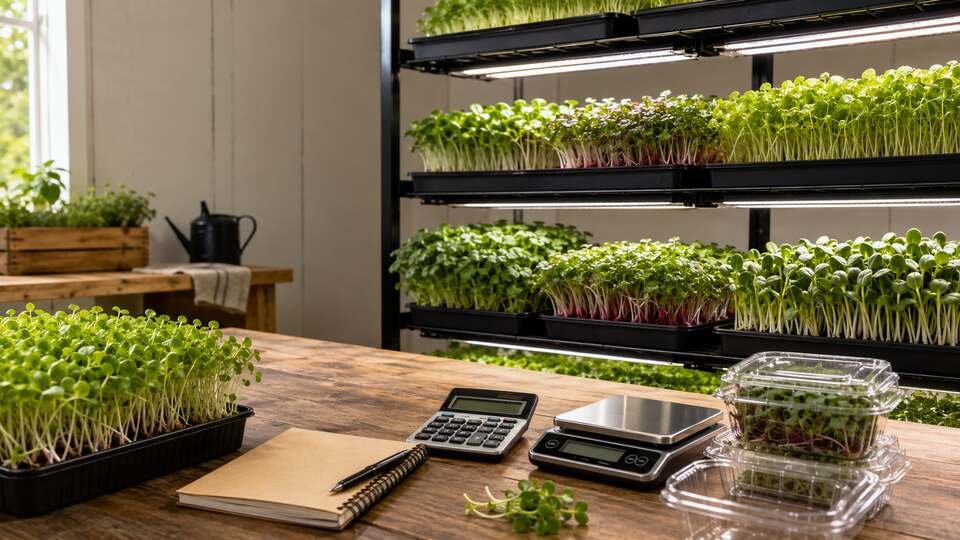
The path to a more self-sufficient, sustainable future is open to those ready to embrace the challenges and rewards of off-grid living. As you embark on this journey, remember that every step towards self-sufficiency, whether it’s growing microgreens indoors or setting up a comprehensive solar power system, brings you closer to your goal of living off the grid.
Are you ready to take the first step towards off-grid living? Start with small projects, educate yourself, and gradually build up to full self-sufficiency. The journey may be challenging, but the rewards of a sustainable, independent lifestyle are immeasurable.
FAQ
- How much does it cost to go off-grid? Initial costs can range from $30,000 to $100,000+ depending on your setup and location. However, long-term savings are significant.
- Can I go off-grid in the city? While challenging, urban off-grid living is possible. Check local regulations and consider partial off-grid solutions.
- What skills do I need for off-grid living? Basic carpentry, plumbing, electrical work, gardening, and problem-solving skills are invaluable for off-grid success.
- Is off-grid living legal everywhere? Regulations vary widely. Always check local zoning laws and building codes before starting your off-grid journey.
- How do I handle medical emergencies off-grid? Have a robust first-aid kit, learn basic medical skills, and have a plan for reaching emergency services when needed.