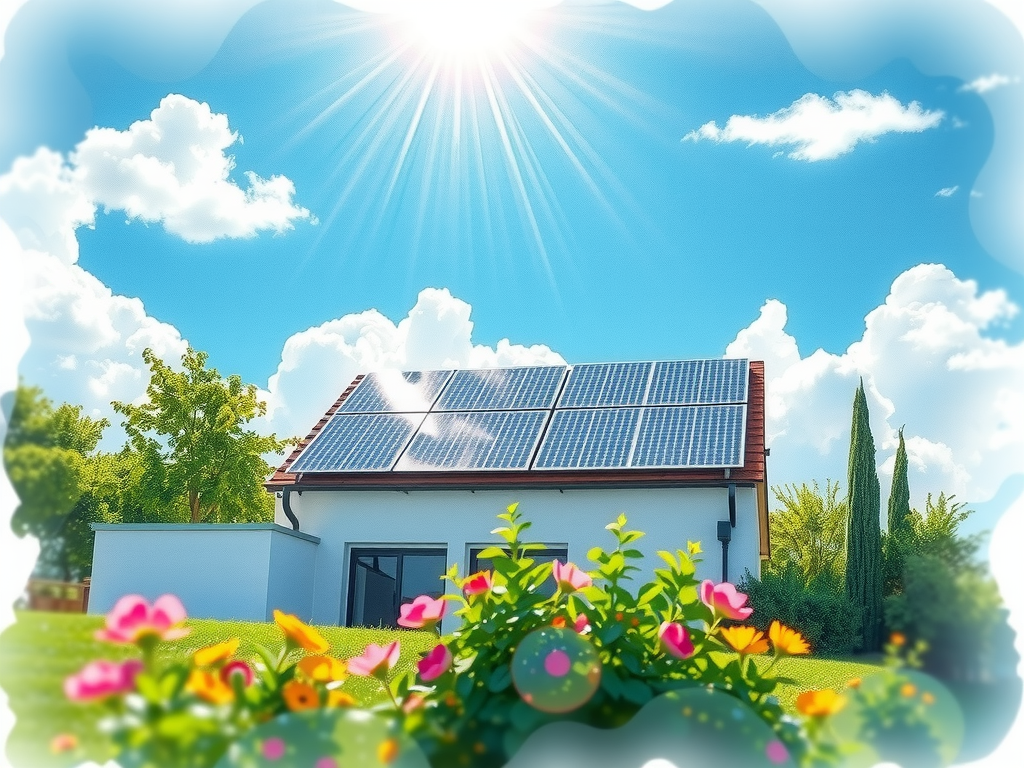
Installing solar panels helps you use renewable energy effectively. Start with a thorough site assessment to determine factors such as solar irradiance and shading.
Using photovoltaic systems can reduce your electricity bills by up to 90%.
Choose high-quality solar panels that meet your energy needs.
Ensure your roof’s integrity to support the system. Also, obtain necessary building permits and follow safety guidelines during installation.
Regularly monitor your system’s performance to optimize efficiency.
Click here to learn more about: most efficient solar panels
Site Analysis For Solar Installations
Conducting a site analysis is key for effective solar panel installations. Start by assessing sun exposure for shading from trees and buildings.
Evaluating seasonal sunlight variations is essential for finding ideal panel placement.
Obstacles like tall trees can affect panel efficiency.
Trimming trees and clearing debris can enhance energy capture. If your roof has significant shade, you might consider ground-mounted systems.
These recommendations will help maximize your solar energy generation.
Steps for Site Analysis
- Assess sunlight exposure and shading.
- Evaluate seasonal variations for optimal placement.
- Identify obstacles that impact energy generation.
- Consider modifications to enhance energy capture.
These measures ensure that your solar installation achieves maximum effectiveness. Following these guidelines allows you to harness the full potential of solar technology for your home.
How Solar Irradiance Affects Energy Generation
The solar irradiance levels play a significant role in energy generation. Solar irradiance measures the sunlight received per unit area.
Higher levels of irradiance lead to increased energy output from photovoltaic systems.
Different weather conditions, such as clouds or rain, can lower this sunlight and reduce energy generation.
For instance, on sunny days, solar irradiance reaches its peak, resulting in enhanced production rates.
To measure and predict solar irradiance accurately, professionals commonly use tools like pyranometers. Accurate data from these tools allows for adjustments in panel angles.
Incorporating tracking systems can help ensure that solar panels capture maximum sunlight. By optimizing these factors, energy generation can be significantly improved.
Evaluating Roof Integrity For Panel Installation
Before the installation of solar panels, it is essential to assess the roof integrity.
Roofs need to be structurally sound to support solar arrays.
Begin by inspecting materials for durability and checking for potential issues, such as:
- Leaks
- Damaged shingles
- Structural weaknesses
Identifying these issues early can prevent problems after panel installation. Regular preventive maintenance practices can prolong the roof’s lifespan. Inspections should include:
- Cleaning gutters
- Sealing leaks
- Checking for potential weaknesses
Upgrading a roof can lead to improvements in energy efficiency and insulation, both of which complement the performance of solar panels. Ensuring a sturdy roof is necessary for a successful solar panel setup.
Solar Energy Generation and Roof Integrity
- Solar panels can produce up to 20% more energy on sunny days due to higher solar irradiance levels.
- Pyranometers can measure solar irradiance with an accuracy of ±2%, aiding in effective energy generation predictions.
- Regular roof maintenance can extend its lifespan by 20% or more, ensuring a stable foundation for solar panel installation.
- Upgrading roofing materials can improve insulation by 30%, enhancing overall energy efficiency when combined with solar technology.
Choosing Between Roof-mounted And Ground-mounted Systems
Homeowners often weigh the benefits of roof-mounted versus ground-mounted systems when considering solar panel installations. Roof-mounted arrays save space by using existing structures.
Ground-mounted systems allow for better orientation to maximize solar irradiance and sun exposure.
Aesthetic preferences can influence this choice, as roof-mounted options tend to blend with home designs.
Local zoning regulations may also dictate feasible installations. Evaluating space requirements is essential; ground-mounted systems might yield higher energy output, but they require more land.
Successful installations, like a residential roof-mounted system achieving 50% energy savings, highlight the effectiveness of both options.
Aesthetic Considerations
Choosing between mounting options involves aesthetic factors. Roof-mounted arrays often integrate well and do not disrupt landscaping.
Ground-mounted systems can be more visible, affecting property appearance.
Space Requirements
Space requirements play a significant role in decision-making.
Roof-mounted systems utilize existing structures, making them ideal for homes with limited yard space.
Ground-mounted systems need large areas to optimize energy generation.
The Importance Of Safety Gear During Installation
Proper safety gear is critical for effective solar panel installation. Essential items include helmets, harnesses, and safety glasses to protect against falls and debris.
Compliance with OSHA standards ensures installer safety during the process. Regular training sessions can help workers utilize safety equipment effectively and enhance preparedness for potential hazards.
Training and Compliance
Training for safety gear usage is vital.
Incorporating realistic scenarios aids in preparedness.
Adhering to safety regulations improves worker morale and leads to fewer workplace accidents.
Long-term Benefits
Implementing robust safety protocols enhances overall efficiency during solar projects.
Long-term benefits include reduced risks and increased productivity. This commitment to safety results in better project outcomes.
Solar Panel Installation
- Roof-mounted systems utilize existing structures, saving valuable yard space.
- Ground-mounted systems can achieve higher energy output due to optimal sun exposure.
- Proper safety gear reduces the risk of falls and injuries during installation.
- Adhering to safety regulations improves worker morale and reduces workplace accidents.
Maximizing Energy Output With Optimal Mounting Angle
Optimal mounting angles directly impact energy generation. Geographic location affects solar irradiance, which influences the best angles for panels.
Areas near the equator benefit from lower angles to enhance energy capture.
Statistics show panels set at these angles can boost energy output by up to 30%.
Seasonal adjustments also maximize performance; increasing the tilt during winter improves sun exposure.
Tools for Calculating Angle
- Online tools: The PVWatts Calculator helps determine the ideal angle based on location.
- Site analysis: Conduct a thorough assessment for optimal panel placement.
Successful Projects
Examples show significant energy gains. One residential installation reported a 25% increase in output after adjusting the mounting angle.
Navigating Building Permits And Code Compliance
Proper building permits are necessary for solar installations. Each region has specific requirements, including both electrical and building permits. Statistics indicate over 50% of installations experience delays related to permits. Common compliance challenges include zoning laws and electrical codes. Starting the permitting process early can help avoid setbacks.
Essential Permits Required
- Building permits: Required for structural changes.
- Electrical permits: Necessary for wiring and connections.
Overcoming Compliance Challenges
To navigate permitting effectively, contact local regulatory bodies for guidance. They provide necessary information on compliance. Success stories include a community project that completed installation within a tight timeframe, showcasing effective management of permits.
Solar Energy Optimization
- Optimal mounting angles can increase energy output by up to 30% in equatorial regions.
- Seasonal adjustments to panel tilt can significantly enhance solar energy capture during winter months.
- More than 50% of solar installations face delays due to permitting issues.
- Early initiation of the permitting process can prevent potential setbacks and streamline installation timelines.
Exploring Government Incentives For Solar Projects
Government incentives make solar energy more affordable. Several federal programs aim to reduce installation costs for residential and commercial projects.
The Federal Investment Tax Credit (ITC) allows homeowners to deduct 30% of their installation costs from federal taxes.
This incentive greatly lowers upfront expenses, helping more people adopt sustainable energy solutions.
Additional grants and low-interest loans support solar panel installations.
Types of Incentives
- Federal Investment Tax Credit (ITC): 30% tax deduction on installation costs.
- Grants: Financial assistance for eligible projects.
- Low-Interest Loans: Affordable financing options for solar installations.
By taking advantage of these federal incentives, you can optimize your investment in solar technology. This can lead to long-term energy savings and contribute to environmental benefits.
Important Considerations for Solar Panel Installation
Solar panel installation is the process of setting up photovoltaic systems to generate electricity. It involves careful planning and site analysis to maximize energy generation and system efficiency. Here are some key steps:
- Conduct a thorough site assessment to determine optimal panel placement.
- Choose high-quality solar panels and inverters suited for your energy needs.
- Ensure your roof is in good condition and can support the additional weight.
- Obtain necessary building permits and follow local codes.
- Use proper safety gear when working at heights.
- Install panels at the correct angle for maximum sun exposure.
- Properly seal all roof penetrations to prevent leaks.
- Connect panels in series or parallel depending on system design.
- Install a monitoring system to track performance.
- Have a professional electrician perform final connections and inspections.
These steps can lead to effective energy conservation and help achieve energy independence. Solar panel installations can reduce energy bills by up to 90%. The average residential solar system size is between 5 and 10 kilowatts. With proper maintenance, the lifespan of a solar system typically ranges from 25 to 30 years.
Solar Projects
- The Federal Investment Tax Credit (ITC) can save homeowners up to 30% on installation costs.
- Solar panel installations can reduce energy bills by up to 90%.
- With proper maintenance, solar systems can last between 25 to 30 years.
- The average residential solar system size ranges from 5 to 10 kilowatts.