Disclosure: This article contains affiliate links. If you buy through one of them, we may earn a commission at no extra cost to you. We reviewed current manufacturer specifications and food-safety guidance; we did not conduct a hands-on appliance test. Images are editorial illustrations, not photographs of the reviewed model.
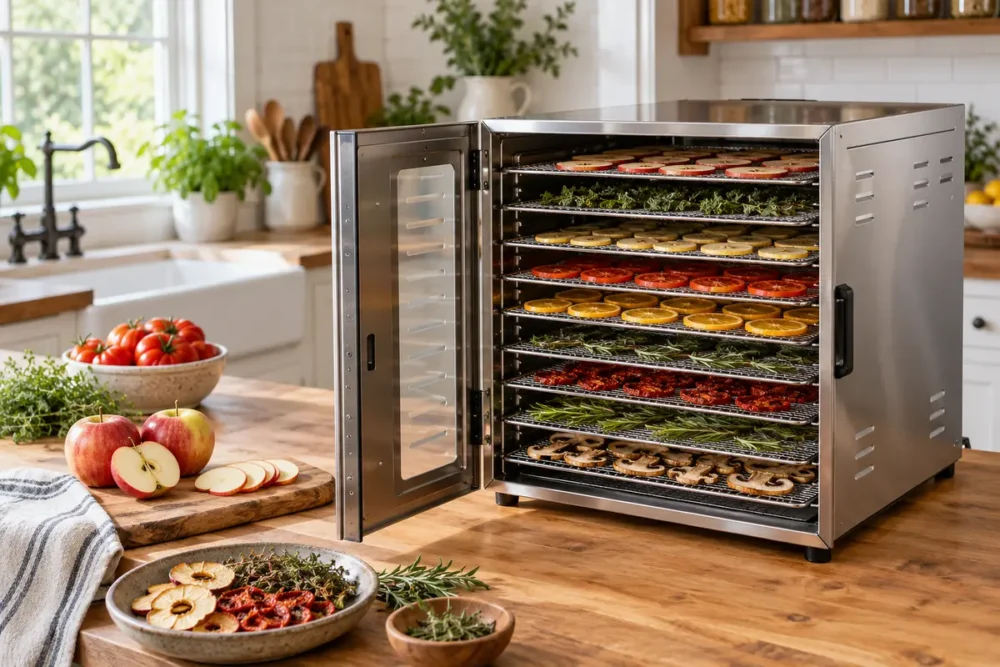
The Excalibur 10-Tray Performance Digital Dehydrator is a strong fit for households that regularly dry garden harvests, fruit, herbs, mushrooms, or jerky and will use its 16 square feet of tray space. It is harder to justify for occasional snack batches because it takes up substantial counter space and costs more than a basic dehydrator.
Our short verdict: choose it for large, frequent batches and its stainless-steel trays, broad temperature range, horizontal airflow, and two-stage controls. Choose a smaller six-tray machine if most batches only fill a few trays.
Excalibur 10-Tray Performance review at a glance
| Decision factor | What to know |
|---|---|
| Best for | Gardeners, hunters, and households drying large batches regularly |
| Capacity | 10 stainless-steel trays and 16 square feet of drying space |
| Temperature range | 85°F to 165°F |
| Timer and controls | Up to 80 hours, with two-phase time and temperature programming |
| Rated power | 800 watts |
| Airflow | Horizontal rear-to-front airflow designed to reduce tray rotation |
| Warranty | Three-year limited warranty |
| Main drawback | Large footprint and higher price than entry-level dehydrators |
The current model reviewed here is the 10-Tray Performance Digital Dehydrator, SKU DH10SSSS13. Excalibur also lists a similarly named 10-Tray Select model. Check the model number before ordering because features and tray materials can differ.
Check the current Excalibur price and availability.
Who should buy this Excalibur dehydrator?
This machine makes the most sense when capacity solves a real bottleneck. Ten trays let you process a larger harvest without dividing it into several rounds, and the horizontal airflow is designed to move air across every tray from the rear of the cabinet.
It is a particularly good match if you regularly preserve:
- apples, berries, tomatoes, peppers, and mushrooms;
- herbs that need lower temperatures;
- fruit leather or vegetable powders;
- jerky prepared with a research-based safety process; or
- seasonal harvests large enough to fill most of the cabinet.
The 85°F to 165°F range gives you room for delicate herbs as well as higher-temperature foods. The two-phase setting can run one time-and-temperature stage and then switch to another, which is useful when a food benefits from a warmer initial stage followed by gentler drying.
When is the 10-tray model too much?
More trays are not automatically better. A large cabinet uses more kitchen or utility-room space, and an 800-watt nameplate rating means it deserves a properly located outlet and adequate ventilation around the unit. Measure the intended space, including room to open the door and move air around the appliance, before buying.
A smaller model is probably the better value if you mainly dry one or two trays of herbs, apple slices, or dog treats at a time. Buying unused capacity ties up money and storage space without improving the food.
The manufacturer listed this model at $379.99 when checked on September 20, 2026, during a promotion from a stated regular price of $499.99. Prices and promotions change, so use those figures only as a snapshot and verify the current offer before purchasing.
What are the strongest features?
Sixteen square feet of stainless-steel tray space
The ten dishwasher-safe stainless-steel trays provide 16 square feet of stated drying area. That is the clearest reason to choose this machine over a compact stackable dehydrator. The removable trays also make it easier to accommodate thicker foods or containers when the manufacturer’s instructions allow it.
Horizontal airflow with no routine tray rotation claimed
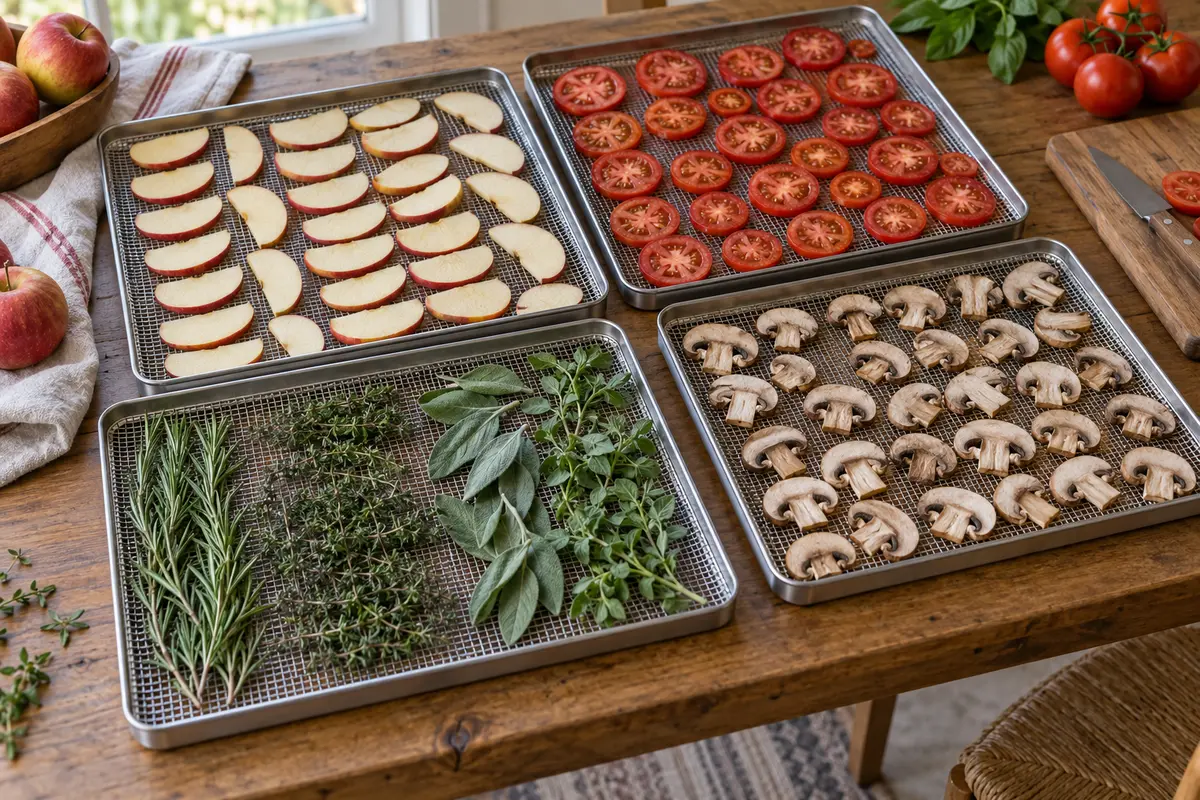
Excalibur combines its rear-mounted fan with what it calls Horizontal Parallex Air Flow and Hyperwave Technology. The company says this promotes even drying without rotating trays. Treat that as a manufacturer claim, not a guarantee: slice food evenly, avoid crowding, and check different tray positions during early batches so you understand how the machine performs in your room and climate.
Two-stage digital controls
The digital control panel supports temperatures from 85°F to 165°F and cycles up to 80 hours. Two-stage programming is more useful than a long timer alone because it can change the temperature after a set period without requiring you to stand beside the machine.
What are the drawbacks?
- It is a large appliance. Confirm counter depth, door clearance, ventilation, and a dry storage location.
- It costs more than basic dehydrators. The value depends on how often you fill it, not the number of trays printed on the box.
- Drying still requires monitoring. A timer cannot compensate for uneven slicing, crowded trays, high room humidity, or food that was not prepared safely.
- The three-year warranty is limited. Read the current warranty terms and keep the receipt rather than assuming every part or type of damage is covered.
How much electricity will it use?
The unit is rated at 800 watts, or 0.8 kilowatts. A simple upper-bound estimate is:
Electricity cost = 0.8 kW × batch hours × your electricity rate
For example, a 12-hour batch at $0.20 per kilowatt-hour would cost about $1.92 if the machine drew its full rated power continuously. Actual use can be lower because the heater may cycle. A plug-in electricity meter and several typical batches will give you a more useful household estimate.
Food safety matters more than the appliance
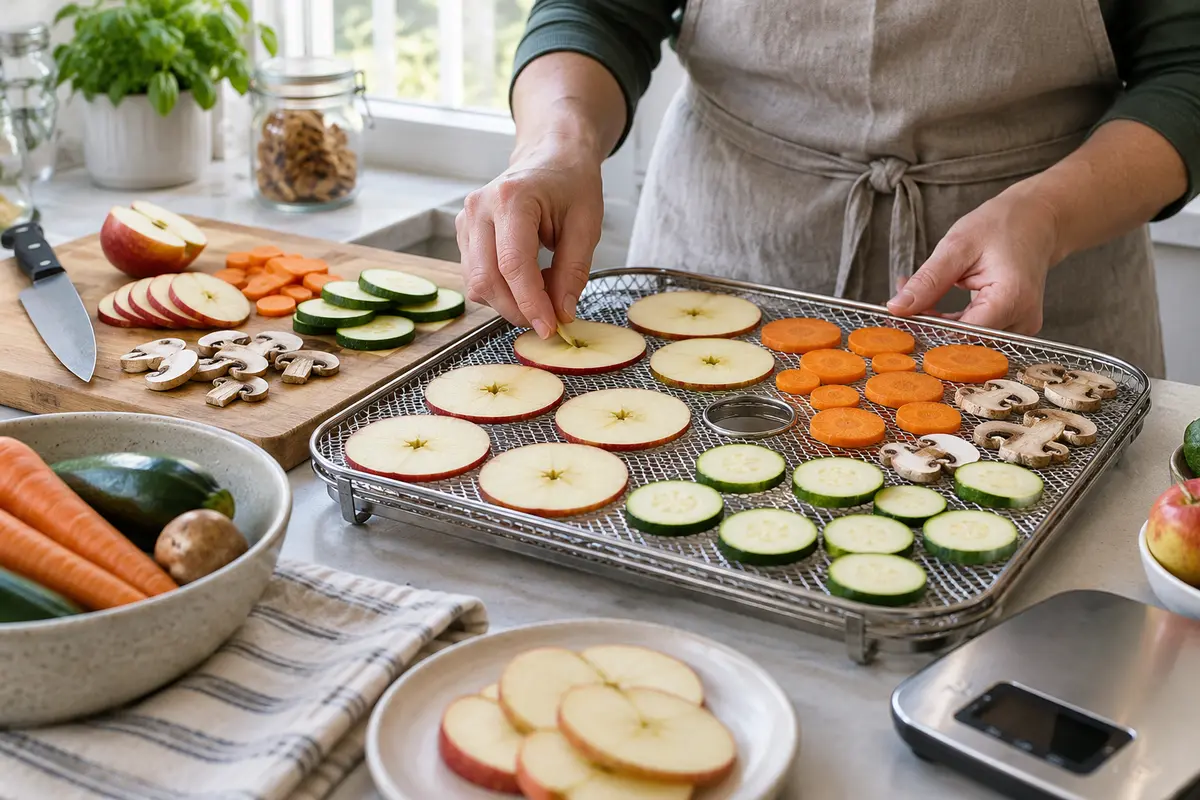
A dehydrator removes moisture, but it does not make every preparation method safe. Follow tested instructions for the specific food, especially meat, poultry, fish, eggs, and dairy. The University of Minnesota Extension emphasizes the combination of low humidity, controlled heat, and good air circulation, followed by moisture-resistant storage.
Uniform slices dry more predictably than mixed thicknesses. Arrange food in a single layer without overlap, keep raw meat away from ready-to-eat produce, and cool dried food before packaging. If moisture appears inside a storage container, investigate rather than assuming the batch is shelf-stable.
For a broader method comparison, see freeze drying versus dehydrating. If your real goal is long-term storage of complete meals rather than fruit, herbs, and jerky, compare the equipment in our 2026 home freeze-dryer guide before buying.
Is the Excalibur 10-Tray Performance worth it?
Yes, if you routinely fill a large dehydrator and want stainless trays, horizontal airflow, and programmable two-stage drying. The capacity can shorten harvest-season backlogs and reduce the number of separate batches.
No, if your normal workload is small or you are still unsure whether dehydrated food fits your household. Start with a less expensive machine, learn which foods you actually use, and upgrade only when capacity becomes the constraint.
See the current Excalibur offer, or return to the food-preservation basics guide to compare methods first.