For edible microgreens, buy seed that is sold for microgreens or sprouts, is untreated and uncoated, and comes from a supplier that tells you what crop and seed lot you are getting. Start with a small packet of one crop you will eat, such as radish or pea shoots. Test a tray before paying for a bulk bag.
The seed listing matters more than a dramatic yield promise. Penn State Extension recommends checking germination information, the date of the test, lot number, seed count or weight, and crop-specific growing instructions. Those details let you compare suppliers and trace a problem to a particular lot. See The ABCs of Microgreens.
What should a microgreens seed listing tell you?
| Check | Why it matters | Ask if missing |
|---|---|---|
| Crop and variety | Flavor, seed size, and growing behavior differ. | Which variety is in this packet? |
| Untreated and uncoated status | The shoots will be harvested for food. | Has the seed had any chemical treatment or coating? |
| Lot and germination test | Identifies the batch and its tested viability. | What is the lot number and test date? |
| Net weight and growing guidance | Lets you estimate cost and plan a trial tray. | How much should I sow for my tray size? |
| Handling and contact information | Gives you a way to resolve quality or traceability questions. | Who packed this lot and how can I reach them? |
Buy from a supplier willing to answer those questions. A vague listing with only a crop photo and a promise of “fast harvests” gives you little to evaluate. Penn State advises using high-quality seed marketed for edible microgreens or sprouts and avoiding chemically treated or coated seed.
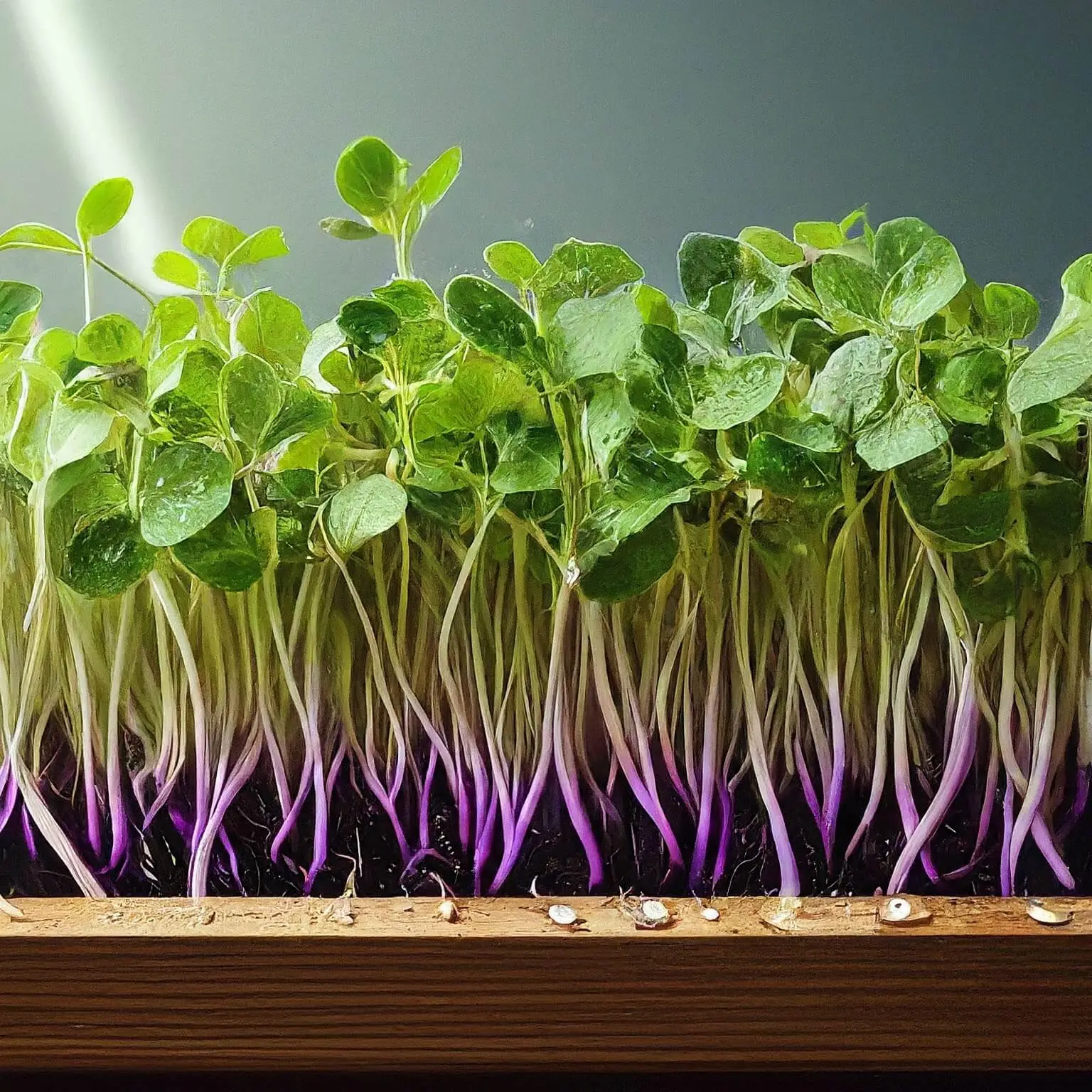
Which seeds make sense for a first purchase?
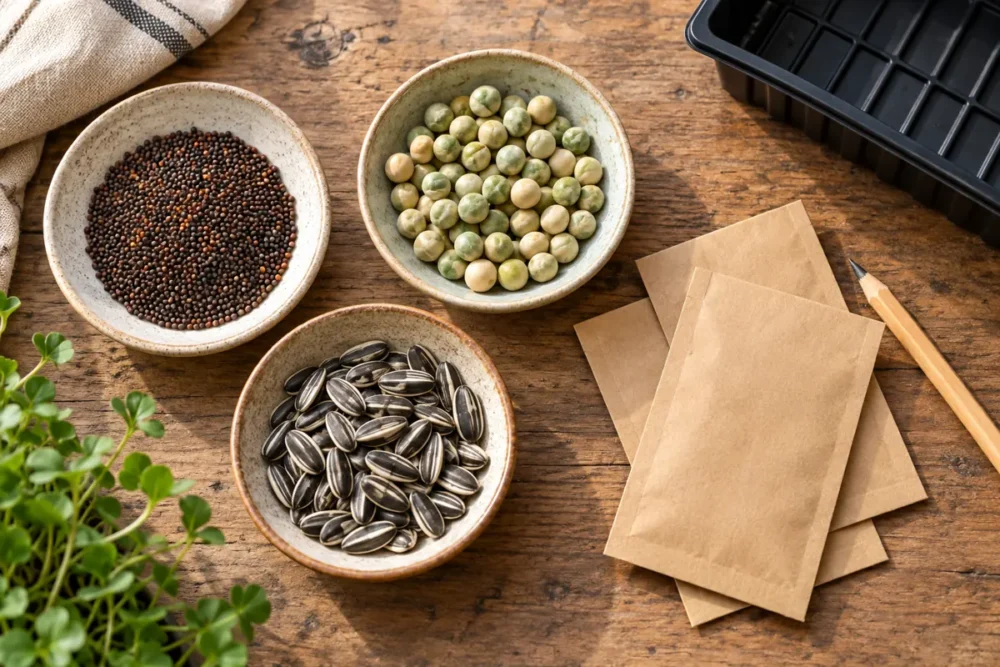
Radish is a useful first crop if you like peppery greens. Pea shoots are milder, but their larger seeds need a different sowing density. Broccoli is a mild alternative, while sunflower has a thicker shoot and hulls to watch at harvest. The beginner varieties guide compares ten crops by flavor and growing needs.
Choose one variety per tray while you learn. Penn State notes that seed size, germination, and growth rates vary by crop. A mixed packet can work when its components are compatible, but a single-crop trial makes it easier to spot a watering or germination problem. For detailed planting and harvest steps, use our indoor growing guide.
How do you compare seed prices fairly?
Compare the packet price per gram, then add shipping and other purchase costs before estimating your tray cost. For example, a hypothetical $18 packet containing 250 grams costs $0.072 per gram. If your crop’s supplier recommends 15 grams for the tray you use, seed costs about $1.08 for that tray before shipping, tax, or any seed that fails to germinate. This is an example calculation, not a recommended sowing rate or a current product price.
Seed cost per tray = (packet price + allocated shipping) ÷ packet grams × grams sown per tray. Keep the units consistent and use the seed supplier’s crop-specific rate as a starting point. Penn State explains that rates vary with seed size and growing conditions in Growing Microgreens. A cheaper bag can cost more per successful harvest if germination is poor or you cannot use it while viable.
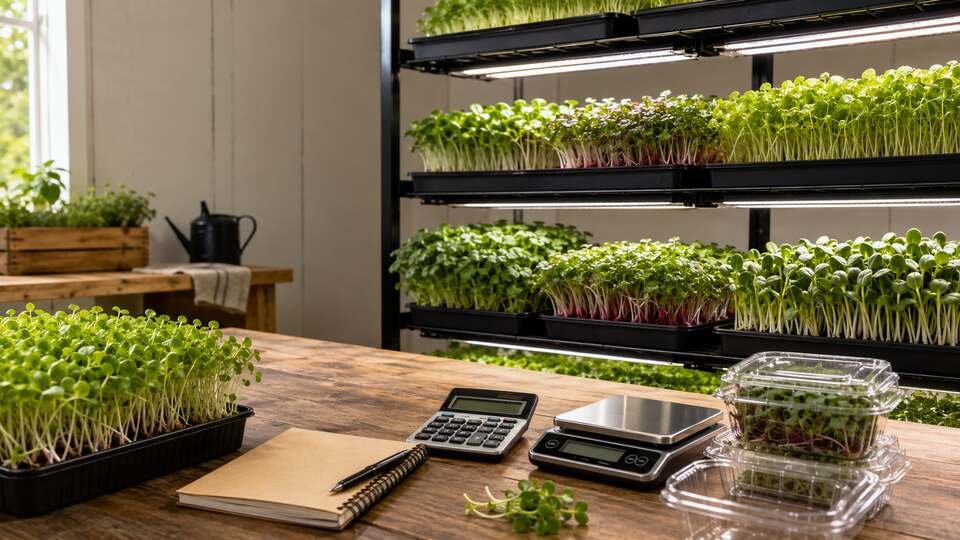
For one or two home trays, a small packet limits waste while you learn what you like. For repeated production, record sowing weight, germination, harvest, and usable yield for each lot before comparing bulk prices. If you plan to sell greens, include labor, packaging, delivery, and discarded trays in the wider cost model. Keep those costs in a separate business plan before scaling production.
How should you handle and store the seed?
Keep the original crop and lot identification with the seed, close the packet, and store it cool and dry according to the supplier’s directions. Buy an amount you expect to use rather than treating a low bulk price as a bargain by itself. If an older packet germinates unevenly, test a small sample before filling a tray; age and storage conditions affect seed vigor, as University of Maryland Extension explains.
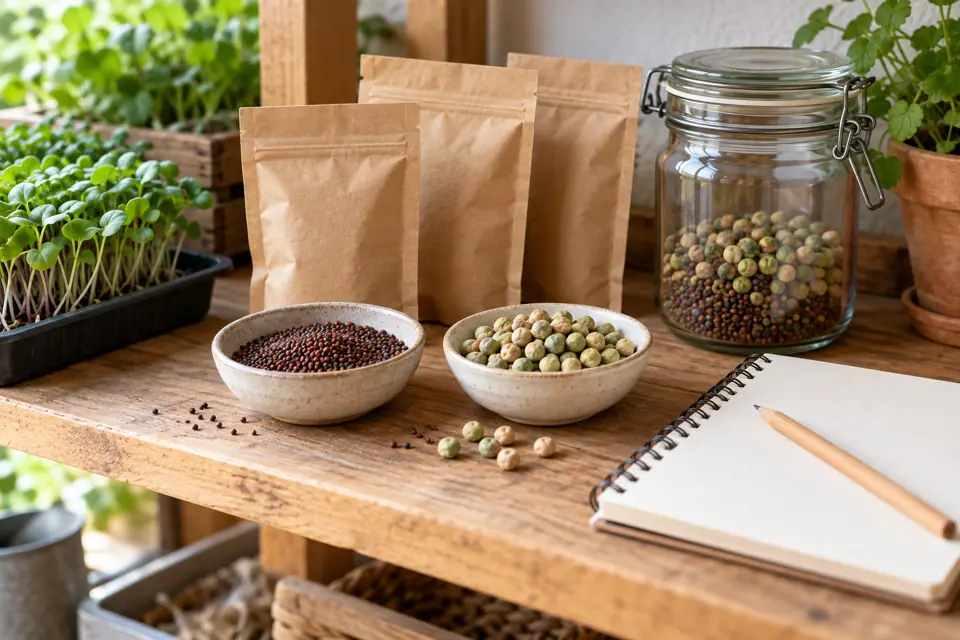
Clean tools, safe water, and careful handling still matter after you choose a good seed lot. Microgreens are often eaten raw, and seed selection alone cannot remove food-safety risks. Penn State’s microgreens food-safety guidance explains the production risks. Do not grow tomato, pepper, eggplant, or potato seedlings as edible microgreens; Penn State warns against these crops in its ABC guide.
Before you place an order
- Pick one edible crop you already enjoy eating.
- Confirm the seed is untreated, uncoated, and marketed for microgreens or sprouts.
- Check the variety, lot, germination information, packet weight, and supplier contact.
- Buy a trial quantity, then record the result for that lot.
- Compare delivered cost per tray only after you know your actual sowing weight.
Once the seed arrives, plant one trial using the indoor tray instructions. If you are considering a larger growing setup for sales, test your harvest and buyer demand before investing in bulk seed.