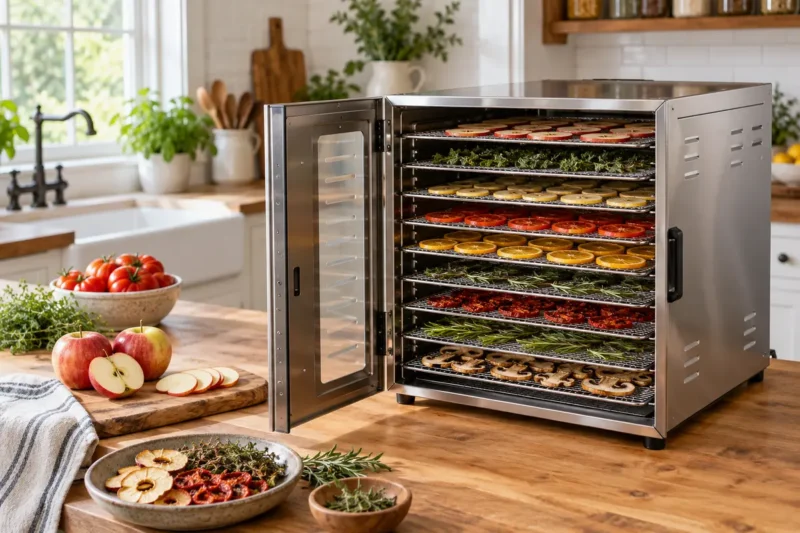
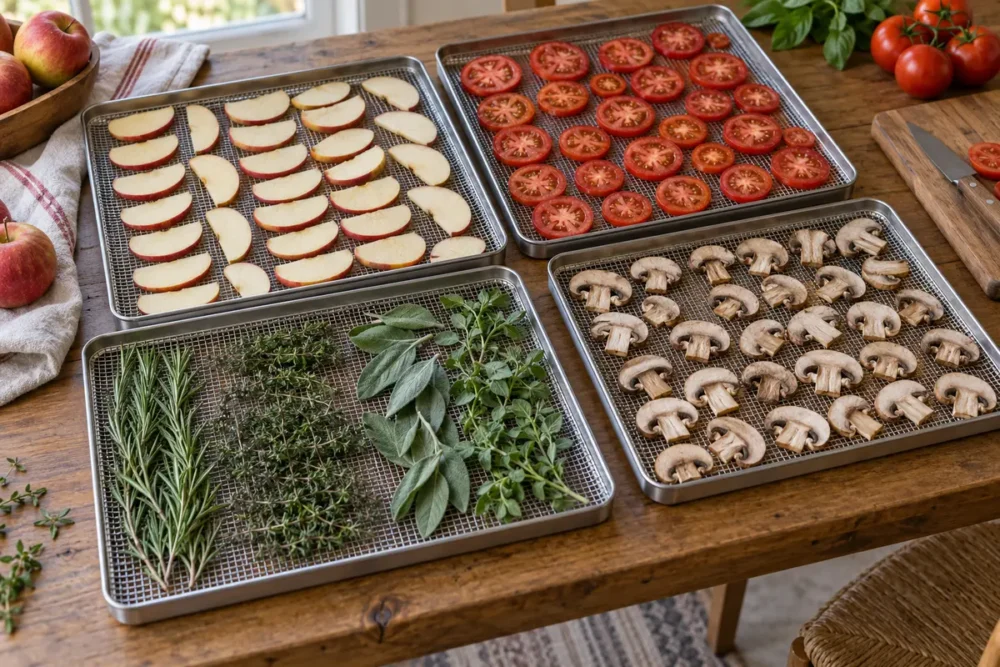
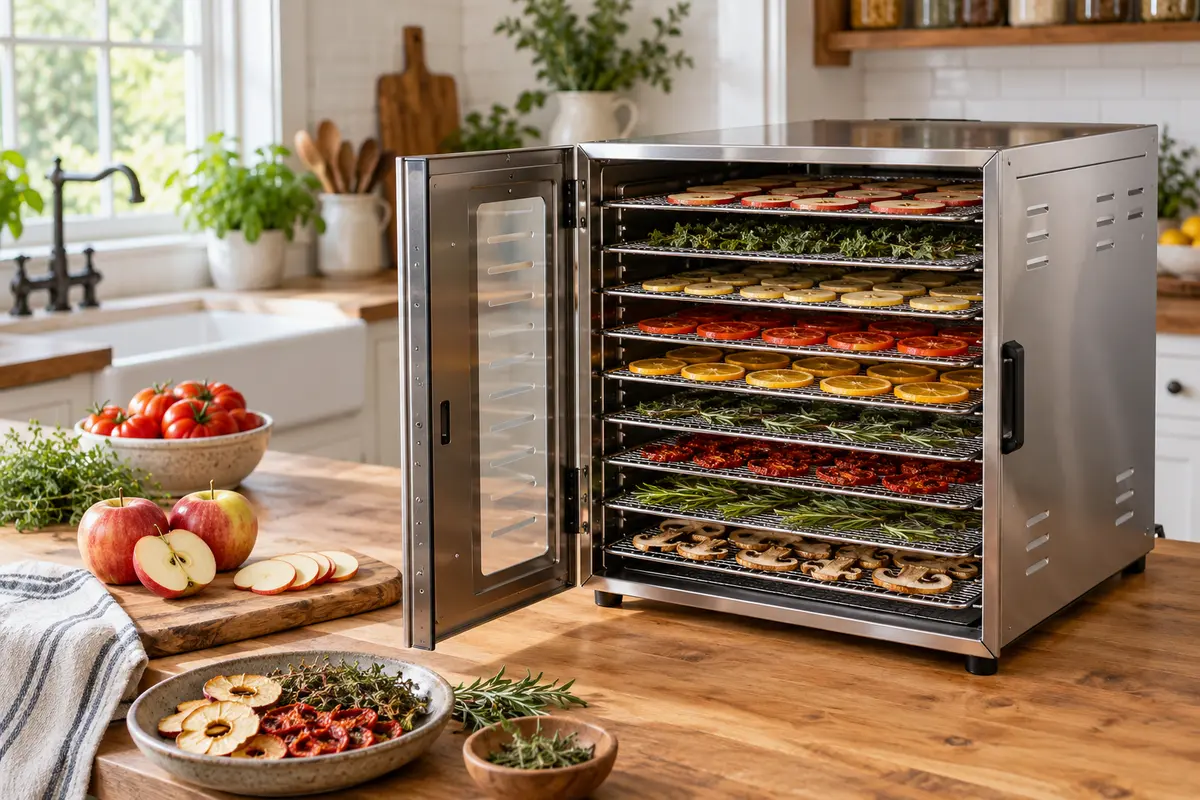
A food dehydrator is useful when you want to turn a surplus of fruit, vegetables, or herbs into compact ingredients you will actually use. It removes moisture with warm air and steady airflow. The result takes less pantry space and can be convenient for snacks, soup mixes, and cooking. Drying is not a shortcut around food safety, and it does not preserve every nutrient equally.
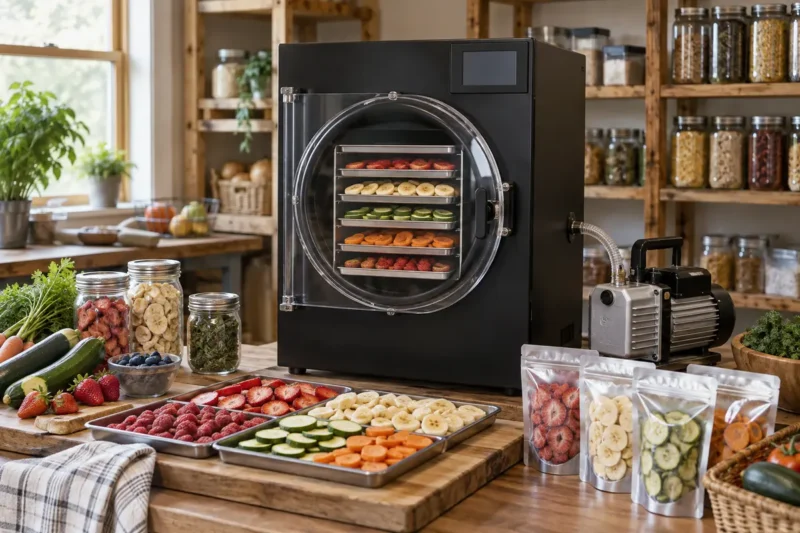
If you are deciding between appliances, see our freeze dryer versus dehydrator comparison. A dehydrator is usually the simpler place to start when your main goals are dried produce and herbs.
What are the practical benefits of a food dehydrator?
- Use a seasonal surplus: Slice ripe apples, dry herbs before they lose their aroma, or prepare vegetables for cooked dishes.
- Make compact ingredients: Dried foods weigh less and take less room than their fresh counterparts. That is handy for a pantry or a carefully planned trip.
- Control ingredients: You can choose the produce and decide whether to add sugar, salt, or seasonings.
- Dry in repeatable batches: Compared with an oven, a purpose-built dehydrator is designed to combine controlled heat with airflow. Results still depend on the model, slice thickness, load, and room conditions.
The savings are personal, not guaranteed. An appliance, packaging, and electricity all cost money. It pays off most when you regularly dry produce you already grow or would otherwise waste.
Does dehydrating preserve nutrients?
Drying retains some nutrients, but the amount varies by food and nutrient, pretreatment, temperature, time, and storage. Heat and exposure to air can reduce some vitamins. There is no defensible single percentage that applies to all dehydrated foods, and a dehydrator is not automatically more nutritious than freezing or canning. Choose the preservation method that fits the food and how you plan to eat it.
For quality, begin with sound produce and follow a tested preparation method. The University of Minnesota Extension’s drying guide explains why low humidity, appropriate heat, airflow, and proper storage matter. Vegetables often need blanching before drying; see its blanching guidance for preparation.
What should you dry first?
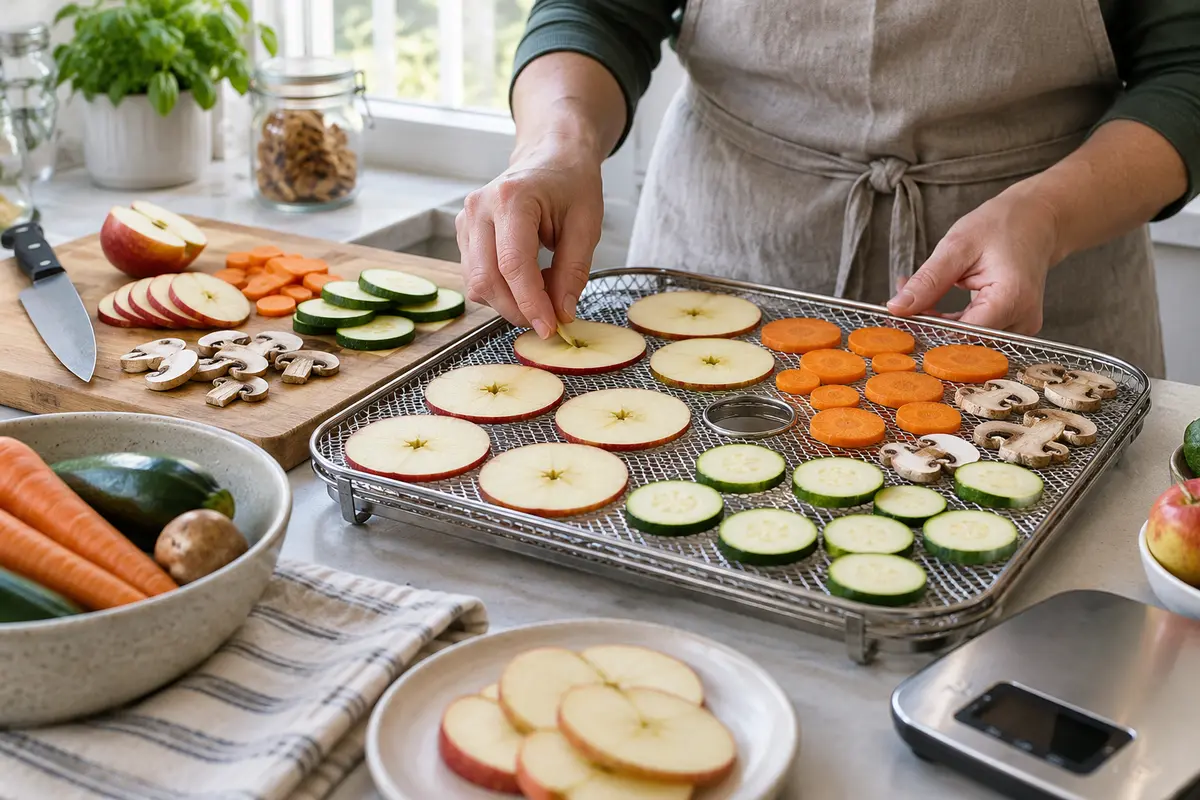
Start with one small batch of a food you already use. Apple slices, herbs, and vegetables for soup give you a chance to learn how your machine dries without filling every tray. Wash produce, remove damaged portions, and cut pieces evenly. Keep slices in a single layer with room for air to move. Follow a tested food-specific guide for pretreatment, temperature, and checking dryness rather than relying on one time setting for everything.
| Goal | Good starting point | What to check |
|---|---|---|
| Snacks | Fruit slices or fruit leather | Food-specific dryness and packaging instructions |
| Cooking | Properly prepared vegetables and herbs | Blanching guidance where applicable; complete drying before storage |
| Meat jerky | A tested jerky procedure | Required meat-heating and drying steps; safe storage |
How do you store dried food safely?
Let food cool, then package it promptly in clean, dry, moisture-resistant containers. Keep it in a cool, dark place and label the food and drying date. Check containers for condensation; moisture means the food needs further drying. The National Center for Home Food Preservation’s packaging guide gives specific advice on conditioning fruit and checking containers. Storage life depends on the food, dryness, packaging, and temperature; do not assume every batch will last for years.
Keep dried produce separate from meat jerky. Meat needs additional safety steps and may need refrigerated or frozen storage. A low dehydrator setting alone does not reliably make raw meat safe.
Can you make jerky in a dehydrator?
Yes, but use a tested jerky procedure. The National Center for Home Food Preservation’s jerky instructions cover safe handling, meat thickness, heating to the necessary internal temperature, drying, and storage. They describe a pre-drying heating method and a post-drying oven step. The temperature of the drying air is not the same as the internal temperature reached by the meat. Do not treat “set the dehydrator to 140°F” as a complete safety instruction.
Is a dehydrator worth buying?
It is a good fit if you will use it regularly for produce, herbs, fruit leather, or tested jerky recipes, and have space to store both the appliance and finished food. Look at usable tray area, airflow, temperature controls, ease of cleaning, and the electrical rating. A larger machine is useful only if your typical batches will fill it.
To estimate one batch’s electricity cost, multiply the rated kilowatts by hours of operation and your electricity price per kilowatt-hour. A machine rated at 800 watts running for eight hours at $0.15/kWh would cost about $0.96 at its full rated draw; actual draw and drying time vary. This estimate excludes the appliance, produce, and packaging.
For a specific model’s features and tradeoffs, read our Excalibur 10-tray dehydrator review. Compare its tray space with your real harvest before paying for capacity you may not use.
Quick answers
Does dehydration kill harmful bacteria?
Removing enough moisture limits growth during storage, but drying is not a substitute for the tested heat treatment required for jerky. Follow food-specific Extension or NCHFP directions.
Do dehydrated foods need refrigeration?
Many correctly dried fruits and vegetables can be stored in moisture-resistant containers in a cool, dark place. Jerky has different handling and storage guidance; follow the tested recipe.
Is a dehydrator cheaper than a freeze dryer?
A dehydrator generally has a simpler buying and operating decision, but compare the current prices, batch capacity, energy use, and the foods you actually want to preserve. Our side-by-side guide walks through that choice.