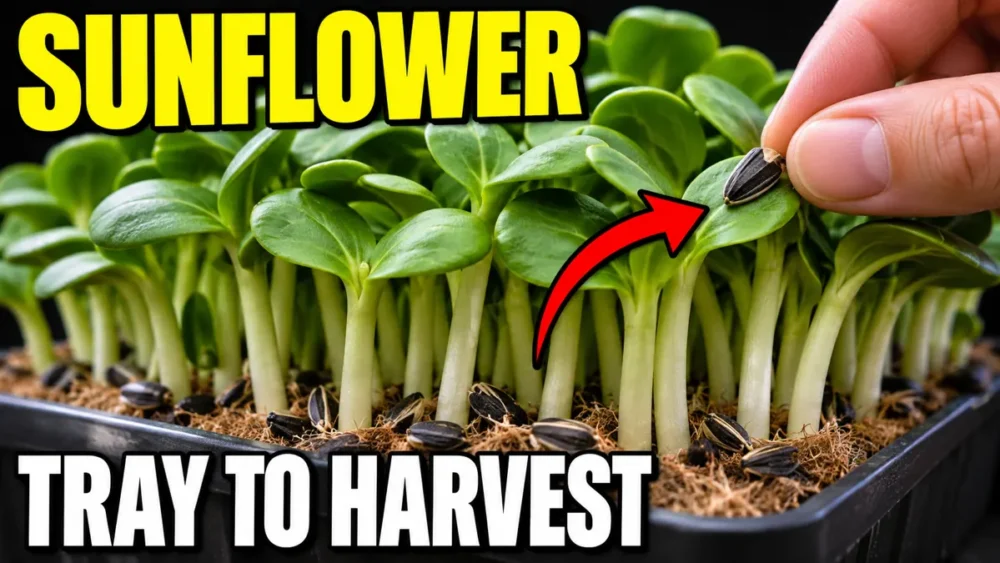
Sunflower microgreens are young sunflower shoots grown in a shallow tray and cut above the growing medium when their seed leaves open. They have a mild, nutty flavor and a thicker, crisp stem that works well in salads and sandwiches. Start with untreated seed sold for growing food, a clean tray, and a medium that drains well.
What you need to grow sunflower microgreens
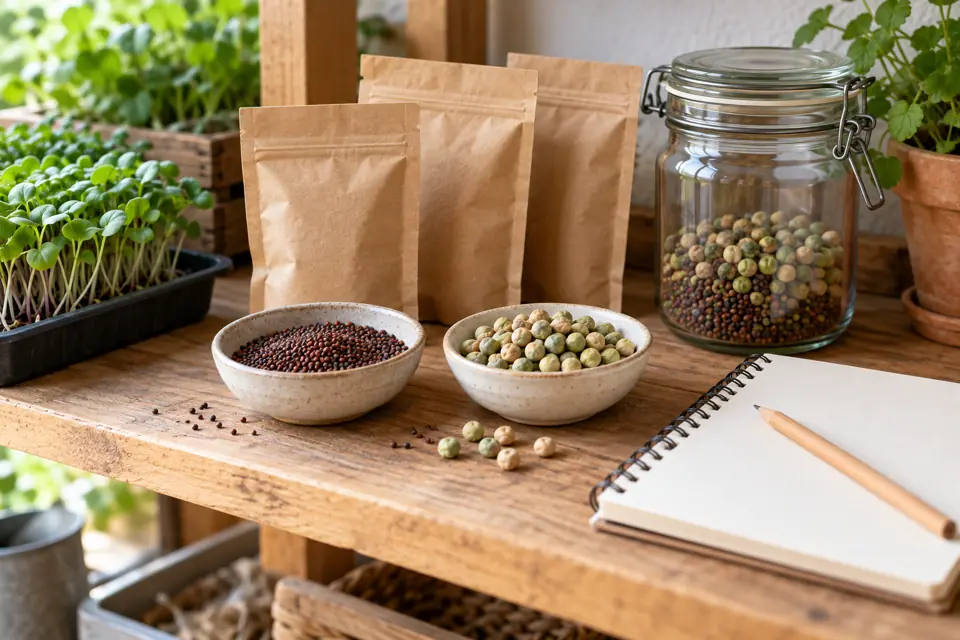
- Sunflower seed suitable for microgreens or food production. Check the packet for treatment and germination information; do not use seed coated with pesticides.
- A shallow tray with drainage holes and a second tray to catch water.
- A clean seed-starting mix or reputable soilless medium.
- A bright window or grow light, clean water, and clean scissors for harvest.
Black oil sunflower is a common choice because its smaller seeds are easy to spread evenly. Check the seed supplier’s directions for soaking and sowing. Whatever variety you use, avoid dense piles of seed and discard any that smell sour or show decay. Our microgreens seed buying guide explains the seed-label checks.
How to grow sunflower microgreens in a tray
- Clean the trays. Wash and sanitize reusable equipment between crops. Fill the draining tray with moist growing medium and level the surface.
- Sow evenly. Follow the seed supplier’s guidance on whether to soak. Spread the seeds in a single, fairly close layer so they touch the medium without stacking on top of one another. Press them gently into contact.
- Cover during germination. Use a clean inverted tray or other breathable cover, then check daily. Remove the cover as seedlings emerge and need light. Avoid sealing the tray in stagnant, wet conditions.
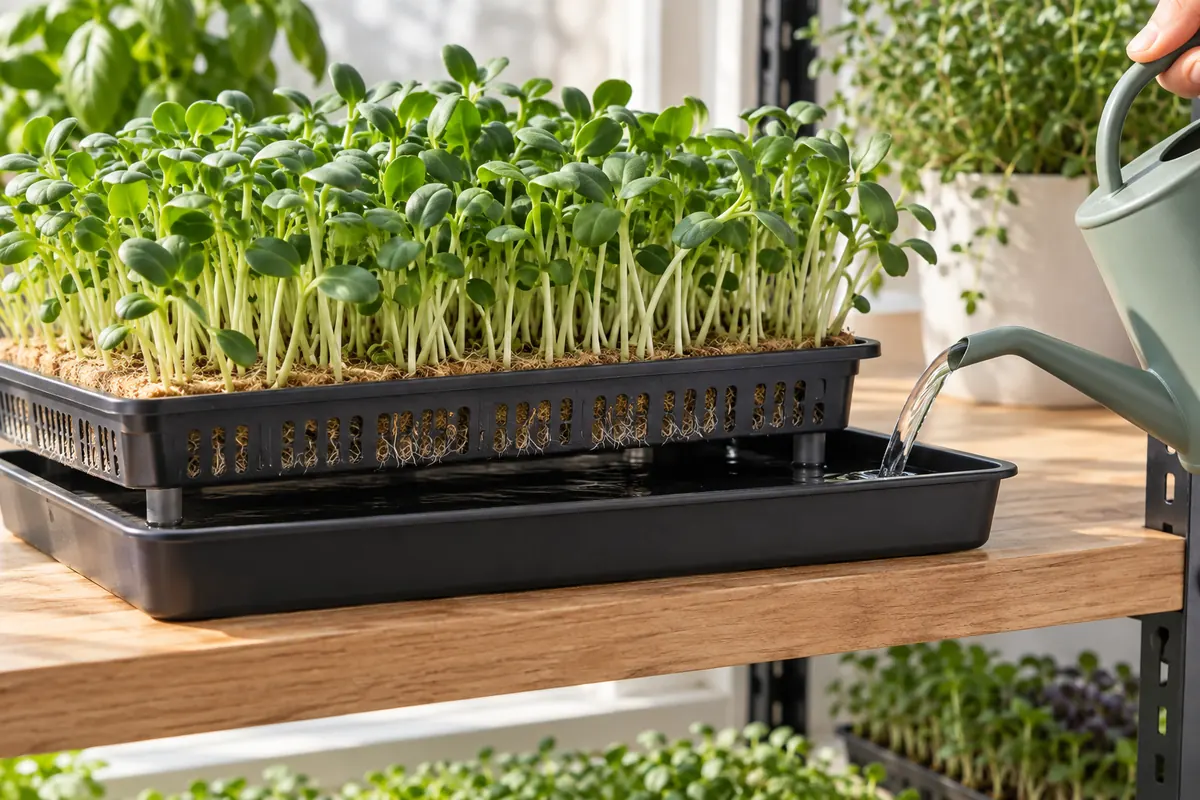
- Give light and water as needed. Put the tray in bright light or under a grow light. Keep the medium moist, not waterlogged. Add water to the lower tray when the surface begins to dry, then drain standing water.
- Harvest when ready. Cut clean, healthy stems above the medium with clean scissors once the seed leaves have opened and the greens taste good. Growth time varies with temperature, light, seed, and variety, so use the plants rather than a fixed day count as your guide.
Penn State Extension recommends managing moisture and airflow to limit mold and keeping edible stems away from the substrate during harvest. See our indoor tray guide for a broader setup walkthrough.
Why are sunflower seedlings moldy or uneven?
First check whether the white growth is attached to roots: fine root hairs are easy to mistake for mold. Fuzzy growth spreading across the medium or stems, a sour smell, and slimy tissue are warning signs. Do not eat a crop with suspected mold or decay. Discard it, clean and sanitize the tray, and adjust airflow, seed density, and watering before sowing again. Do not spray an edible crop with a household pesticide or use a chemical treatment to rescue suspect greens.
If only part of the tray germinates, check seed age, seed-to-medium contact, and moisture. A small germination test can help before you sow another full tray.
How to harvest, store, and eat them
Use clean scissors and a clean container. Keep harvested greens cold. Wash your hands and wash the greens in fresh drinking water shortly before eating, then dry gently; washing earlier can shorten their shelf life. Penn State Extension notes that clean handling is particularly important because microgreens are often eaten raw.
Try sunflower greens with tomato and lemon dressing, in a sandwich with cucumber, or as the crunchy part of a mixed lettuce salad. See our microgreens salad pairing guide for a comparison with pea, radish, and other varieties.
Sunflower microgreens can contribute nutrients as part of a varied diet. Their exact nutrient profile depends on the variety and conditions; no single serving promises a particular health outcome. For evidence and context, read the microgreens nutrition guide.
Sources: Penn State Extension, growing microgreens at home; Penn State Extension, food safety in microgreens production.