Disclosure: This guide contains affiliate links. If you buy through them, we may earn a commission at no extra cost to you. Compare the current kit contents, electrical ratings, and installation requirements before ordering.
Choose a solar kit by the loads it must run, how long they must run, and whether the system is portable, grid-connected, or truly off-grid. A portable battery station can cover a few essential devices. A cabin that runs every day needs panels, storage, an inverter, and a design that can recover after cloudy weather. A grid-tied roof array is a different purchase again.
If you mainly want outage backup, start with our 2026 home-backup solar generator comparison. If you are planning a permanent cabin or homestead system, work through the sizing steps below before browsing kits.
First decide what the system must do
| Use | Likely starting point | Check before buying |
|---|---|---|
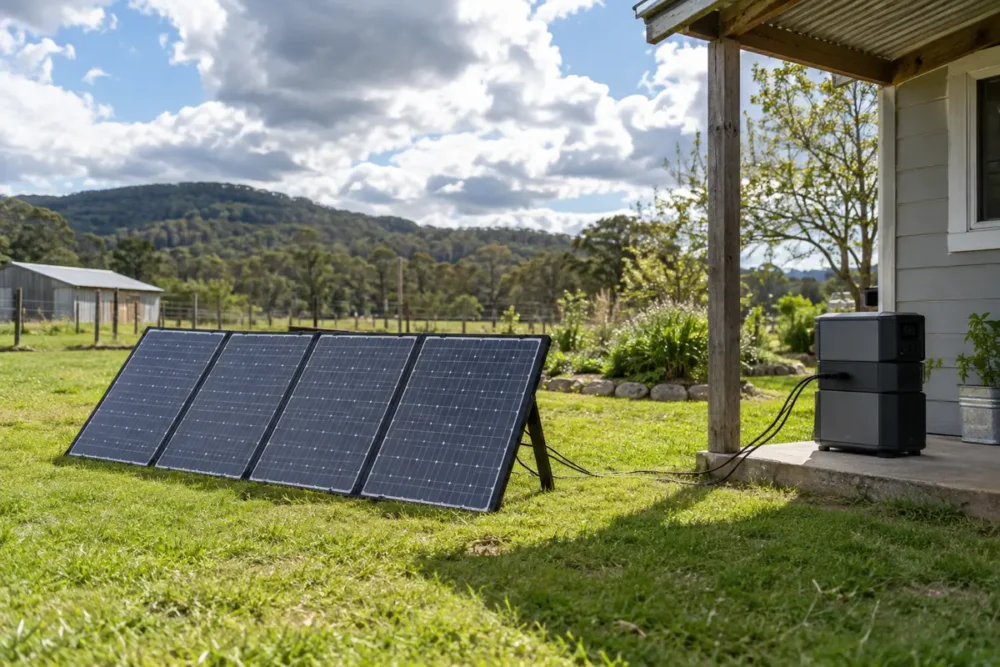
| Short outage or RV trip | Portable power station with compatible panels | Outlet power, usable battery energy, solar input, weight |
| Off-grid cabin or homestead | Permanent solar, battery, and inverter system | Daily energy, peak loads, winter production, battery autonomy |
| Grid-connected home | Grid-tied or hybrid design | Utility rules, permits, backup capability, installation quote |
A grid-tied solar array alone generally stops supplying the house during an outage. If backup matters, ask specifically how the proposed battery and inverter isolate the home from the grid and which circuits they can power. The U.S. Department of Energy explains this distinction in its rooftop solar resilience guide.
Make a load list before choosing a kit
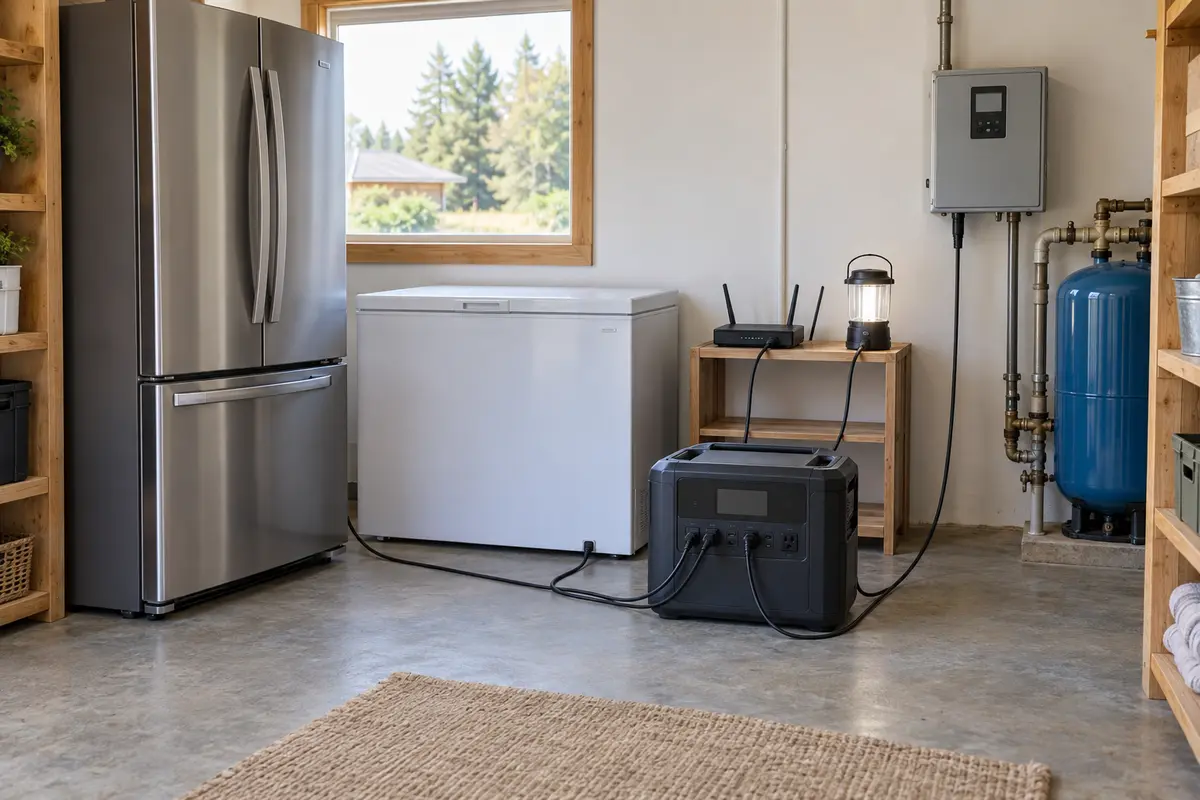
Write down each essential device, its measured running watts, and the hours you expect to use it. Multiply watts by hours to estimate watt-hours. A device drawing 60 watts for 10 hours uses about 600 watt-hours. A refrigerator is different because it cycles on and off, so a plug-in energy meter or a reliable daily-use figure is more useful than multiplying the nameplate watts by 24 hours.
- Add the devices that may run at the same time. The inverter must handle their combined running power and relevant startup surges.
- Add the daily watt-hours. Battery capacity must cover the energy you need after accounting for conversion losses and a sensible reserve.
- Estimate solar recovery for your location and season. Panels rated in watts do not produce that rating all day, and winter or shade can change the result substantially.
For an initial location-specific production estimate, use NREL’s PVWatts calculator. It estimates grid-connected PV output; an off-grid design still needs its own battery, load, and poor-weather analysis.
Compare what is actually in the box
The words “complete kit” do not guarantee that every installation item is included. Check the exact listing for panel quantity, battery capacity, inverter voltage and output, charge-controller limits, mounting, cable lengths, overcurrent protection, and any required transfer equipment. Compare warranties and support on the parts that matter most to your setup.
ShopSolar currently groups complete systems by application. Compare current off-grid solar kits if you need a cabin or full-time system. Browse complete solar power systems if you are still comparing backup, hybrid, and other configurations. These are category pages, so confirm the contents and current availability of a specific kit before you decide.
Plan the installation and connection
Portable devices can power compatible appliances through their outlets. Connecting any backup source to household wiring is a different job. Do not backfeed a receptacle. Have a qualified electrician specify the appropriate transfer or isolation equipment, permits, and local-code requirements. The Electrical Safety Foundation International explains why transfer equipment matters; the Department of Energy explains rooftop permitting and inspection.

Which path should you take?
For a few outage loads, compare portable stations before committing to permanent hardware. For a cabin, start with a load list and the worst season you need to cover, then compare off-grid kits against that target. For a grid-connected home, get a site assessment and ask what still works when utility power fails. The right kit is the one whose documented components and electrical limits meet your measured job, not the one with the biggest watt number in its headline.
Ready to compare a permanent system? See current ShopSolar off-grid kits and take your load list with you. For a smaller outage setup, return to our home-backup generator guide.