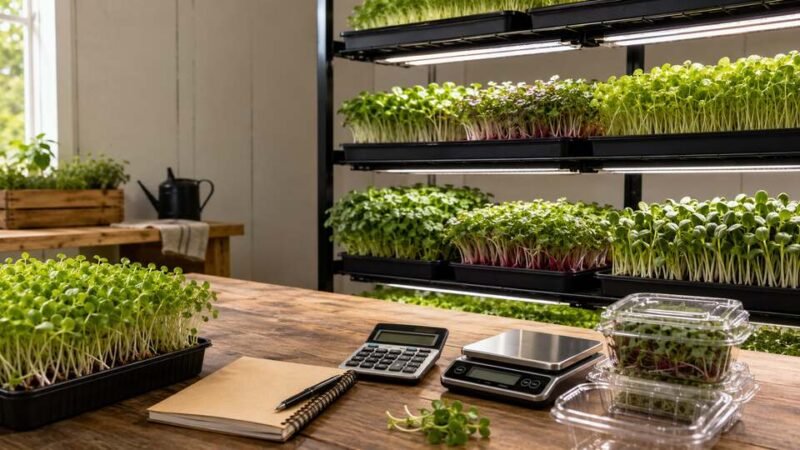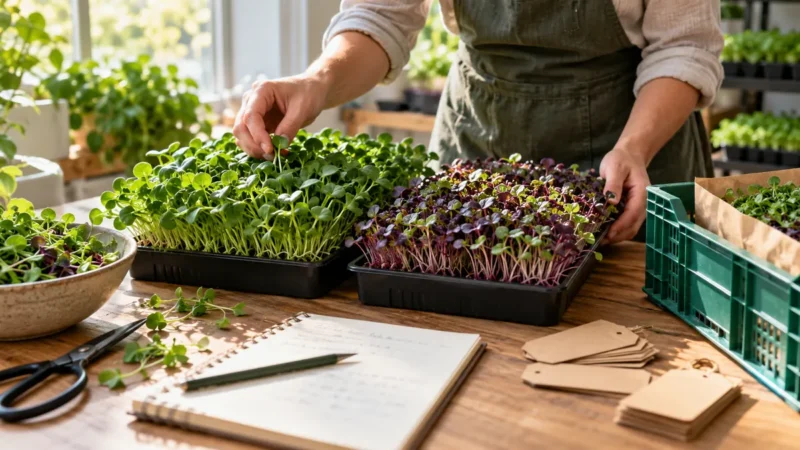
To sell microgreens to restaurants, start with the kitchen’s needs instead of a list of crops you want to grow. Ask a chef which varieties, pack sizes, delivery days, and prices would fit the menu. Offer a small paid trial, record the time and cost of serving that account, and expand only if the restaurant reorders. A sample can open the conversation; a repeat order is the real test.
This guide focuses on restaurant accounts. For farmers markets, direct customers, and pricing across channels, see our guide to selling microgreens. If you want to collect local orders online, use the online preorder guide.
Find Restaurants That Can Use Your Crop
Look at menus before reaching out. A restaurant that regularly serves salads, sandwiches, or plates finished with fresh herbs may have a use for microgreens. Think about flavor and portion size, not just color. Pea shoots, radish, and other varieties can fill different roles, but the chef decides whether they belong on the menu.
Contact the kitchen at a time that does not interrupt service. Ask who chooses produce and how that person prefers to hear from local growers. Keep the first message short: what you grow, the area you serve, the quantity you can deliver reliably, and whether the chef would like to discuss a small trial. Do not imply you supply restaurants if you have not done so.
Penn State Extension advises growers to learn what chefs want before deciding what to produce. Its guide to marketing to professional chefs explains why variety, quantity, handling, and delivery should come from a buyer conversation.
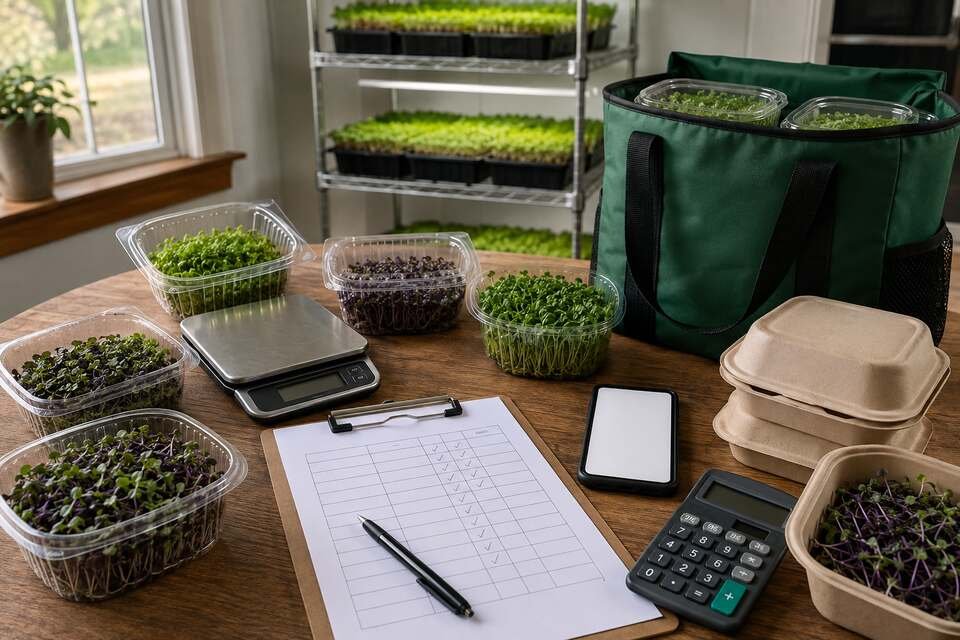
What Should You Ask A Chef?
- Which dishes would use the greens, and what flavor or texture is missing?
- What weight or number of portions would the kitchen use in a week?
- How does the kitchen want the crop packed and labeled?
- Which delivery day and time work without disrupting service?
- Who approves a trial, and what payment terms apply?
Ask about substitutions and advance notice if a harvest falls short. A chef may need a consistent product more than an unusual variety. If the kitchen needs more volume than you can supply, propose a smaller trial rather than promise an account you cannot fulfill.
Offer A Trial The Kitchen Can Evaluate
Bring a small sample only after the chef agrees to receive it. Include the variety, harvest date, and storage or handling instructions. Invite feedback on flavor, appearance, and usable portion size. Penn State’s microgreens marketing guidance recommends samples and handling information for chef relationships.
Then quote a paid trial with the exact pack size, price, and delivery details. Free samples are a selling cost. Keep them modest and track whether they lead to paid orders. A compliment at the end of a tasting is useful feedback, but it is not a forecast.
Set A Restaurant Price That Covers The Route
Calculate your own cost per usable pack. Count seed, medium, packaging, labels, cleaning supplies, payment fees, labor, spoilage, and time spent selling and delivering. Check whether the kitchen’s price and order size cover those costs. The remaining contribution must also help pay for lights, racks, insurance, and other overhead.
Account contribution = weekly sales minus variable production, packing, labor, delivery, and waste costs. For example, a $60 weekly order with $18 in supplies and packaging, $24 in labor, and $12 in delivery contributes $6 before fixed costs. These are example inputs, not a typical restaurant price or margin. A second customer on the same route may change the delivery economics; calculate it with your own records.
Agree on payment terms before the first delivery. Record the purchase order or agreed quantity, invoice date, due date, and who to contact if a bill is late. A sale that is never collected does not support the farm.
Deliver Fresh Microgreens Consistently
Sow from actual orders with a modest allowance for crop variability. Harvest and weigh packs with clean tools, keep finished product separate from growing materials, and protect quality during storage and delivery. Confirm the receiving contact and time window. If a batch fails, tell the chef early enough to adjust the menu.
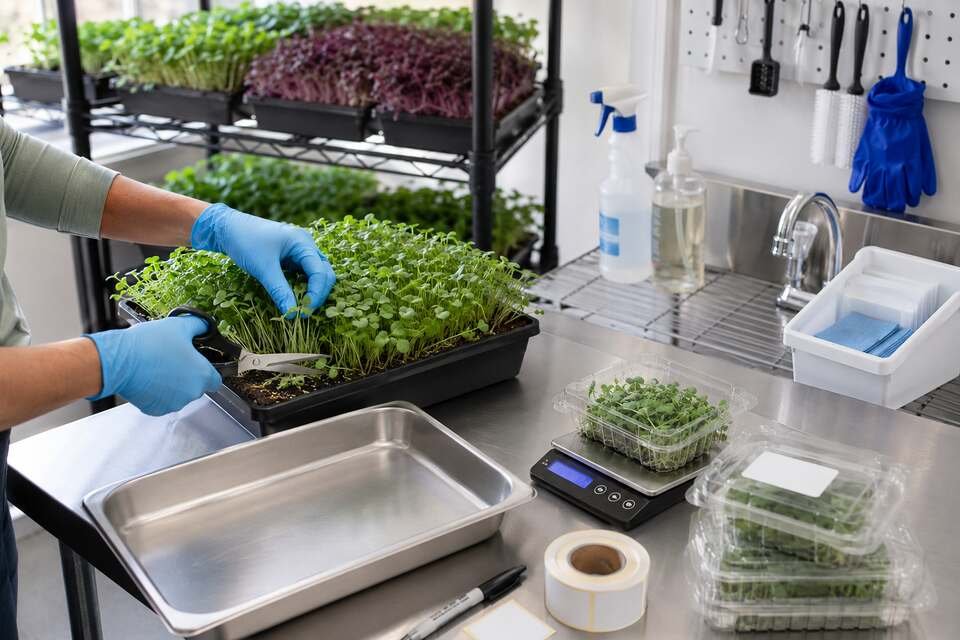
Ask your state agriculture or health authority which rules apply to your operation, including growing, packing, labeling, and delivery. Microgreens are distinct from sprouts under the FDA Produce Safety Rule, but covered operations may still have produce-safety obligations. Review Penn State’s microgreens food-safety guidance and the FDA rule overview. A restaurant may also require insurance or documentation beyond the legal minimum.
How Do You Turn A Trial Into A Repeat Order?
After the first delivery, ask the chef whether the flavor, portion size, and handling worked in the kitchen. Adjust the next quote based on that answer. Send a brief availability list on the same day each week with the variety, pack weight, price, order deadline, and delivery day. Keep the communication useful and predictable.
Review the account after several orders. Are the chef’s quantities stable? Are invoices paid on time? Does the route still earn enough after labor and waste? A restaurant account is worth keeping when it works for both kitchen and grower.
If you are still comparing restaurant sales with other channels, use the full microgreens sales guide. If you are considering a paid business course, read our Freedom Farmers training review and compare its support, price, and terms. We may earn a commission if you buy through links on that review.