You can sell microgreens online by taking local preorders, then arranging pickup or delivery for fresh product. Start with a simple order page or form that shows the variety, pack weight, price, order cutoff, and pickup or delivery day. Ask a few buyers to place paid orders before you invest in a full store. Fresh microgreens still need safe growing, harvest, packing, and handling.
This page covers the online ordering system. For finding buyers across restaurants, markets, and direct sales, read our guide to selling microgreens. For equipment and startup costs, use the microgreens business-plan guide.
Start With A Local Preorder, Not A Nationwide Store
A nearby customer can order online and collect the greens at a set place and time. You can also offer a delivery route if the order value covers travel and your time. Shipping a highly perishable crop to distant buyers adds packing, transit, quality, and food-safety questions. Test local demand first.
Choose one or two varieties you grow consistently. Put up a short weekly availability list and set an order deadline that gives you enough time to harvest and pack. If buyers request a variety you cannot reliably supply, say when you will test it instead of adding it to next week’s offer.
What Should A Microgreens Order Page Include?
Keep the buying decision easy. A buyer should be able to answer these questions without sending a message:
- Which varieties are available, and what do they taste like?
- How much is in each pack, what does it cost, and when is the order cutoff?
- Where and when can the buyer collect it, or which delivery area is served?
- How should the greens be stored and used?
- How can the customer contact you about an order?
Use a clear photo of the actual product if you have one. Avoid claiming a universal shelf life or a specific health benefit you cannot substantiate. State whether the greens are harvested to order and explain any cancellation or substitution policy before checkout.
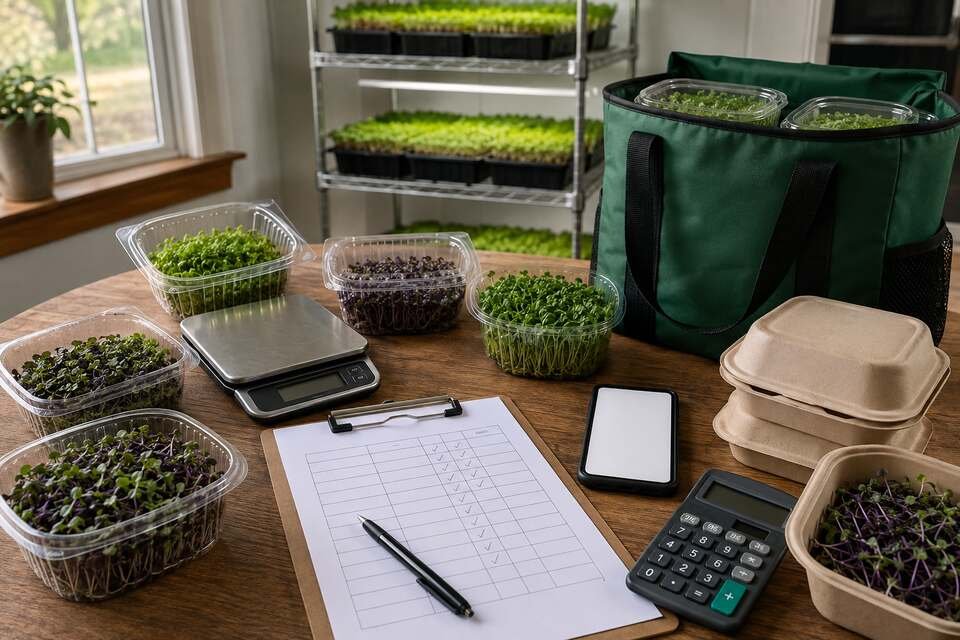
A full ecommerce setup is optional at this stage. A simple form, payment link, or local order page can be enough for a small test. Keep customer names, orders, batch details, promised pickup or delivery times, and payment status in one record so you do not oversell a harvest.
Price The Delivery Route Before You Promote It
The online price has to cover more than seeds and growing medium. Count packaging, labels, payment fees, labor, unsold packs, and the time and fuel for each stop. A low-value order that requires a separate trip can lose money even when the crop itself grows well.
Contribution per order = sale price minus supplies, labor, fees, delivery, and waste. That remainder still needs to cover equipment, insurance, rent, and other fixed costs. Keep pickup as the first option if delivery cannot support its costs. Combine deliveries on one day and within a small area when buyers prefer the service.
For example, if you sell a $12 order but spend $3 on growing and packaging, $2 on payment and other variable costs, and $8 worth of time and travel to deliver it alone, the order contributes negative $1 before overhead. Those are illustrative numbers. Use your own batch records and local costs.
How Do You Get Your First Online Orders?
Show the weekly offer to people who can actually collect or receive it. A local farm page, a short email to customers who opted in, or a post in a community group may be more useful than a broad campaign aimed at people outside your delivery area. Follow each platform’s rules for commercial posts.
Tell buyers exactly what is available this week. A plain note works: “Radish and pea shoots are available for Thursday pickup. Orders close Tuesday evening. Here are the pack weights and prices.” Link directly to the order page. Ask early customers what they cooked and whether the portion was right. Their next paid order tells you more than a like or a compliment.
Do not pay for ads until you know that a typical order covers its costs and that you can fulfill it consistently. Once you have repeat buyers, test one change at a time, such as a different pickup window or a larger pack.
Can You Offer A Weekly Microgreens Subscription?
Yes, but first prove you can fulfill a regular preorder. A recurring order should spell out the variety or substitution rule, pack weight, price, collection or delivery day, billing schedule, and how to pause or cancel. Confirm each customer’s preference and capacity before sowing for them.
Subscriptions can make your sowing schedule easier to plan, but they also create an obligation when a tray fails or a customer is away. Keep a small buffer and a clear communication plan. Do not advertise guaranteed varieties or quantities until your production records support them.
Keep Food Safety In The Ordering Workflow
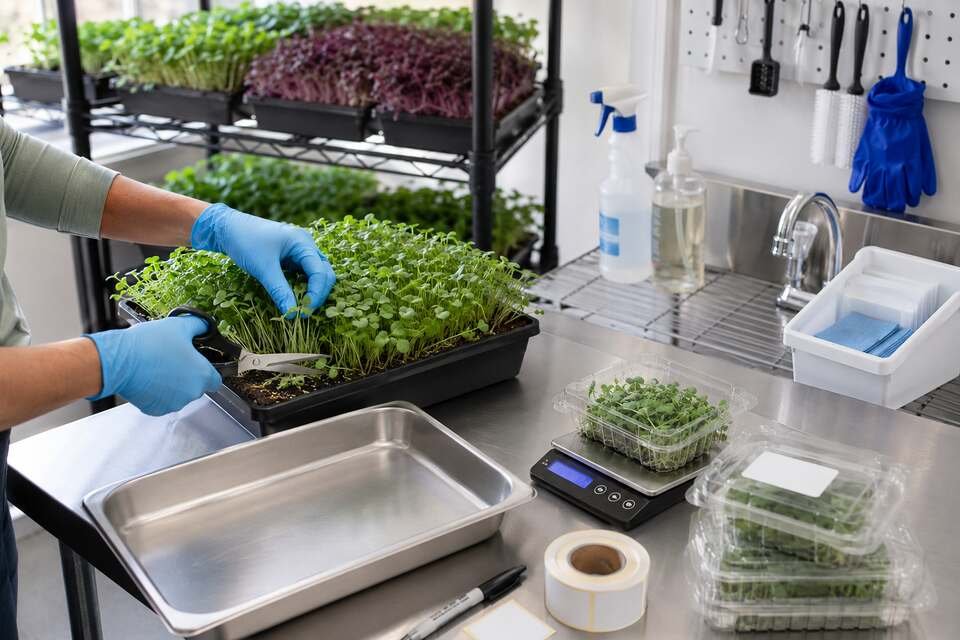
Online checkout does not change the rules for selling fresh produce. Check the requirements for your state, facility, sales channel, labeling, and delivery method. Microgreens are treated differently from sprouts under the FDA Produce Safety Rule, although covered operations may still have produce-safety obligations. Ask your state agriculture or health authority which rules apply to your business.
Use a clean harvest and packing routine, appropriate water, and records that help trace a batch if there is a problem. Protect product quality during storage and transport. Penn State Extension discusses food-safety risks in microgreens production, and the FDA explains the Produce Safety Rule. Penn State also describes how the buyer determines packaging, quantity, and pricing.
What Should You Do Next?
Write a one-week offer for one or two reliable varieties. Set the pack weight, price, order deadline, and pickup time. Ask a small group of local buyers for paid orders, then record the actual harvest, time, costs, and feedback. Improve the offer before you add a larger store or paid promotion.
If you still need to choose a sales channel or calculate the economics, go back to our microgreens sales guide. If you are weighing a paid course, read our Freedom Farmers training review first. We may earn a commission if you buy through links on that review.