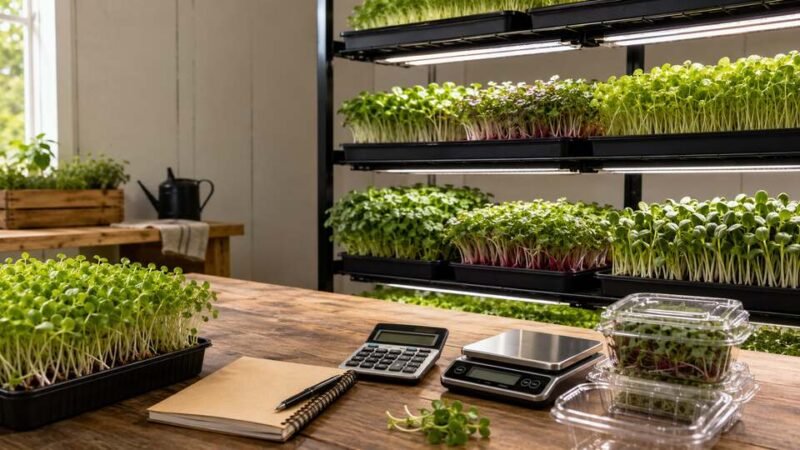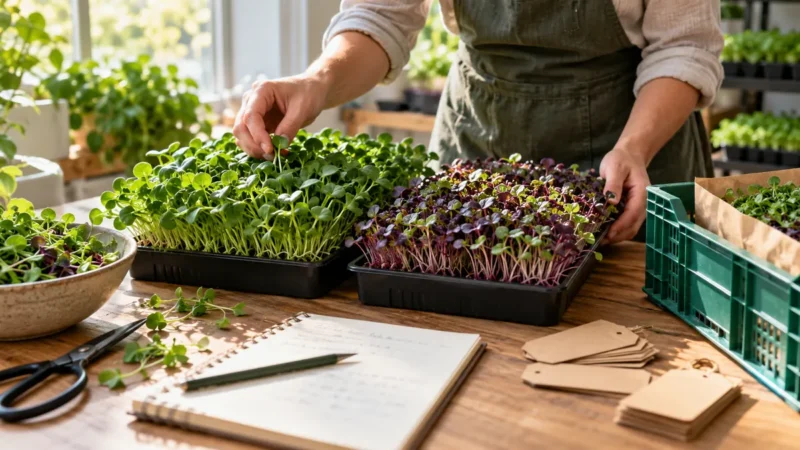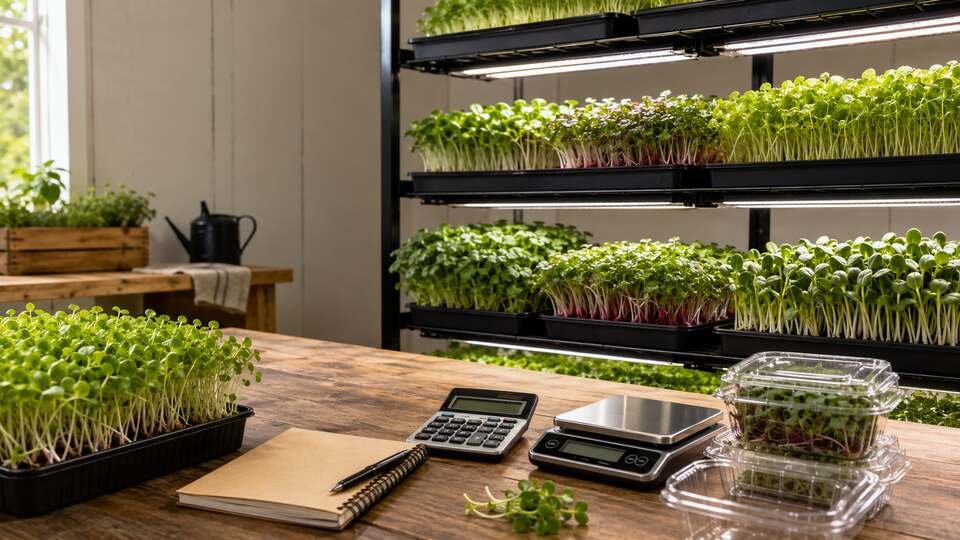
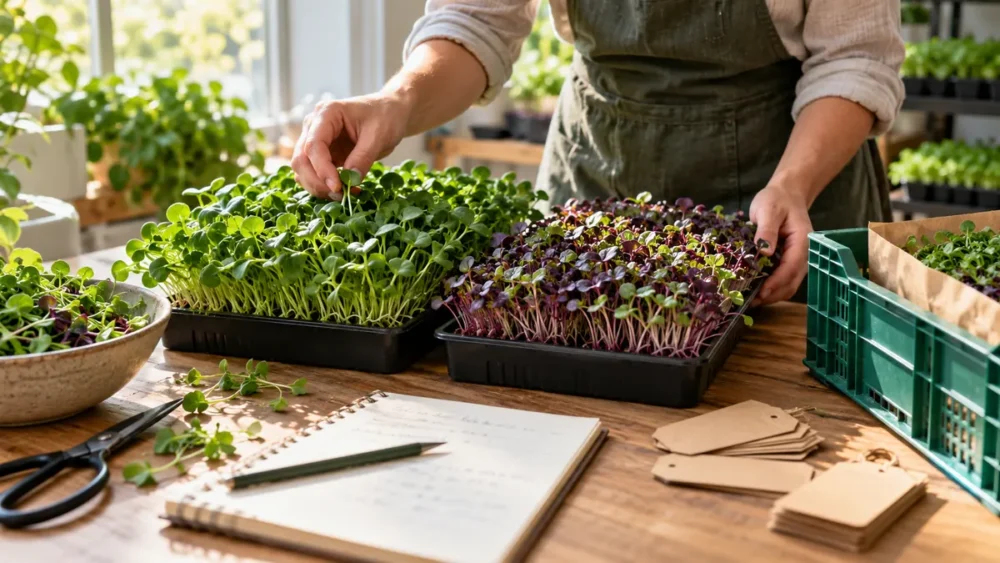
The useful microgreens market trend for a small grower is local demand you can verify. Restaurants, direct buyers, markets, and produce shops may want different varieties, pack sizes, and delivery schedules. Talk to buyers, test a paid order, and measure repeat demand before you invest in a larger growing setup.
National local-food data provides context, but it cannot tell you what your town will buy. This 2026 guide separates broad signals from evidence you can collect for your own microgreens business.
What do the market numbers actually show?
USDA’s 2022 Census of Agriculture reported $17.5 billion in U.S. food sales through direct marketing channels, 25% higher than 2017 after adjusting for inflation. Most of that growth came from sales to retail outlets, institutions, and intermediaries. Direct-to-consumer sales were roughly unchanged after inflation. Read the USDA Economic Research Service summary.
These are local-food figures, not a microgreens market forecast. They do not measure the number of buyers, current prices, or competition in your delivery area. A national growth percentage is a poor basis for buying racks or projecting your first year’s sales.
Penn State Extension describes microgreens as a possible diversification crop with a short production cycle and premium-market appeal, while also naming production consistency, food safety, budgeting, and marketing as challenges. Its business-planning guidance is a useful starting point for turning an idea into a testable plan.
Which microgreens sales channels are worth testing?
Choose a channel based on the order you can fulfill reliably, not a headline about industry growth. The questions below are a practical test plan, not a prediction that any channel will work in your area.
| Potential buyer | Ask before sowing more trays | Evidence to record |
|---|---|---|
| Restaurant | Which variety, flavor, pack weight, and delivery day fit the menu? | Paid trial order, reorder interval, travel and packing time |
| Direct local customer | Would a weekly pickup or preorder fit their routine? | Paid orders, missed pickups, repeat purchases |
| Farmers market | Which packs sell at a price that covers the stall and your time? | Sell-through, unsold packs, stall fees, hours worked |
| Produce shop | What labeling, insurance, shelf-life, and delivery terms do they require? | Written terms, returns, actual wholesale contribution |
For first conversations and pricing, use our microgreens sales guide. If chefs are your target, the restaurant pitch guide goes deeper on samples, delivery, and follow-up. For direct preorders, see the local online-order guide.
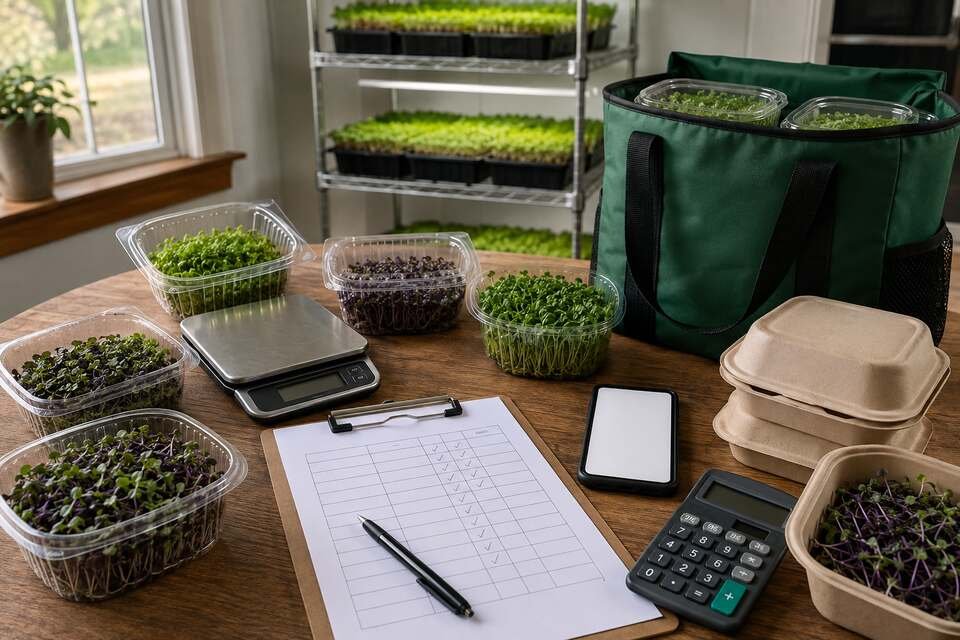
Do indoor racks and hydroponics improve the business case?
Racks and lights can make production possible in a small indoor space. Hydroponic methods offer another way to grow. Neither choice creates customers, guarantees a higher margin, or proves a lower environmental footprint on its own. Count electricity, water, supplies, cleaning, equipment replacement, labor, and waste in the system you actually use.
Start with a setup you can clean and manage consistently. Run small batches, record saleable yield, and compare the cost per sold pack. Expand only when paid repeat orders exceed dependable capacity. Penn State’s growing guide discusses crop timing and production considerations.
What claims should growers avoid in their marketing?
Flavor, freshness, and reliable local delivery are concrete things a customer can judge. Nutrition varies by crop and growing conditions; a single “40 times more nutrients” line cannot describe every variety or nutrient. Do not promise disease prevention or call a method sustainable solely because it uses a vertical rack or grows without soil.
Describe the actual crop, harvest date, package weight, handling process, and delivery terms. If you make organic, nutrition, or environmental claims, check the rules and evidence that apply to the exact claim. Food safety belongs in the offer as well: Penn State’s microgreens food-safety guidance covers water and production risks, and local requirements can depend on your facility and sales channel.
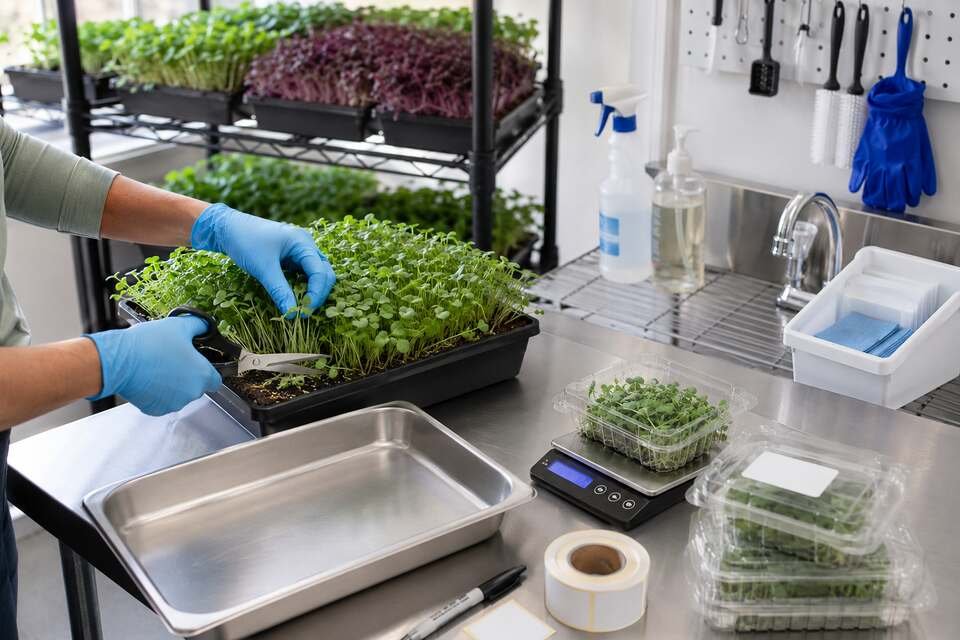
A two-week demand test before you scale
- Choose one buyer type and one or two varieties you can produce consistently.
- Ask several local buyers about their current supply, preferred pack size, order frequency, and delivery terms. Write down the answers.
- Quote a specific pack and price. Seek a small paid trial rather than treating compliments as orders.
- Record seed and medium, saleable harvest weight, packages sold, labor, waste, fees, and delivery time.
- Ask whether the buyer wants the same order again. Compare the contribution from paid orders with the fixed costs of your setup.
A repeat order at a workable margin is a stronger signal than a national market projection. Use our profitability analysis for the unit economics and the business-plan template to decide what your next equipment purchase must prove.
Sources: USDA ERS direct-sales summary; Penn State Extension business planning; Penn State Extension growing guidance; Penn State Extension food safety. National local-food data is not a microgreens-specific demand estimate.