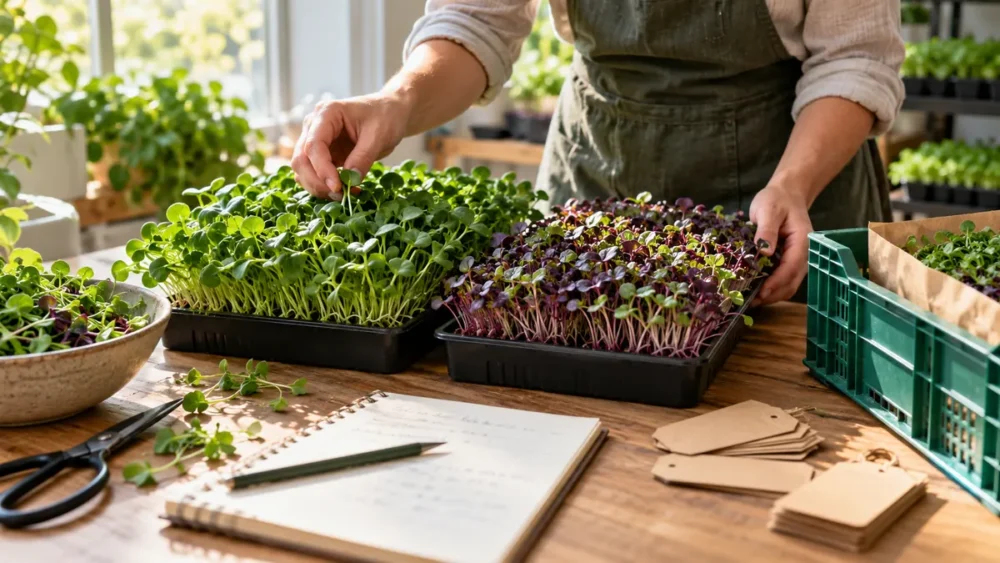
There is no universally most profitable microgreen. Radish, pea shoots, sunflower, broccoli, and arugula are sensible varieties to test because they offer different flavors and uses. The winner for your business is the crop that buyers reorder at a price that covers seed, medium, packaging, labor, delivery, spoilage, and overhead. Start with two varieties and paid trial orders before buying more racks.
A fast harvest does not guarantee a fast return. Growing conditions, seed costs, usable yield, pack size, and local demand change the calculation. Penn State Extension recommends understanding the market before developing a microgreens product; the University of Missouri’s microgreens planning budget provides a cost framework you can adapt to your own operation.
Which microgreens should a beginner test for sales?
| Variety | Why buyers may want it | What to check in a trial |
|---|---|---|
| Radish | Peppery flavor and colorful stems for sandwiches and chef garnishes | Whether the spice level fits your buyers; consistent stems and usable pack weight |
| Pea shoots | Sweet, substantial shoots for salads, stir-fries, and restaurant dishes | Seed cost, seed handling, space per tray, and repeat orders |
| Sunflower | Crunch and a nutty flavor for salads and direct-sale packs | Seed quality, hull removal, labor, and unsold packs |
| Broccoli | Mild brassica flavor for salad mixes and home buyers | Usable yield, pack size, and whether customers actually prefer it to alternatives |
| Arugula | Distinct peppery flavor for chefs and salad mixes | Reliable production, customer preference, and your local price |
This is a shortlist for testing, not a ranking by guaranteed profit. Penn State Extension’s business-planning guide discusses radish, pea shoots, broccoli, and sunflower as core varieties, while its growing guide lists arugula among commonly grown options. The growing period can vary with species and environment; record the actual sowing and harvest dates in your setup instead of relying on a fixed day count.
Choose crops for the buyer you can reach
Ask chefs what size, flavor, color, and delivery day they need. A restaurant may value a steady garnish and a predictable weekly drop more than the cheapest tray. For direct preorders, ask households which greens they would use and what pack size they would buy again. A sample that wins compliments but no paid reorder is feedback, not proof of demand. Our guide to selling microgreens compares buyer channels and the costs of serving each one.
Radish or arugula may suit a buyer seeking a sharp flavor; pea shoots or sunflower may appeal to people who want a larger, crunchy addition. Broccoli can fit a mild mix. Let the buyer’s menu and your repeatable harvest guide the choice. Our restaurant pitch guide and local preorder guide cover two different channels.
Calculate contribution per variety, not just revenue per tray
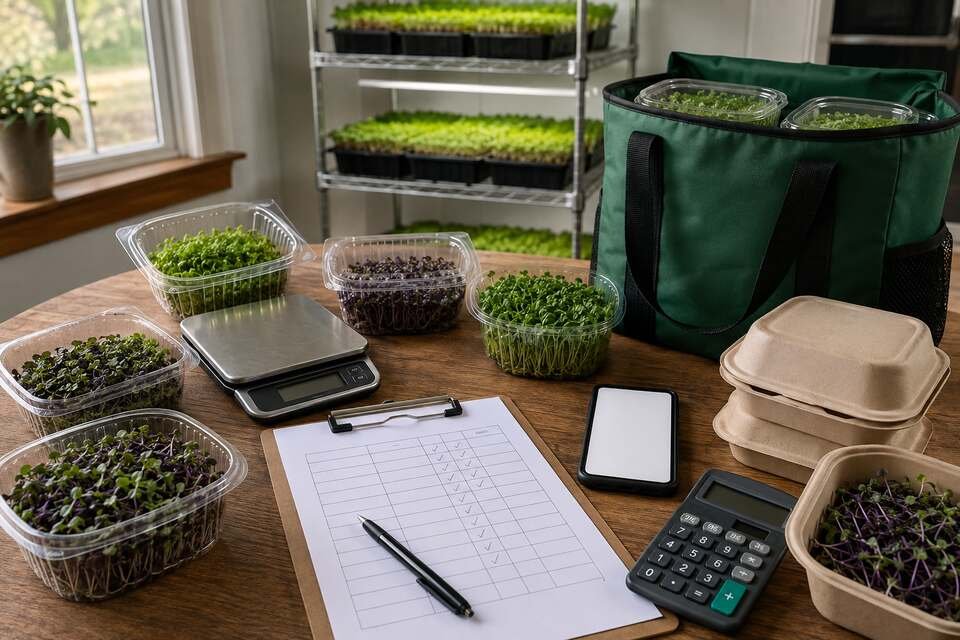
For each crop, record usable packs sold multiplied by the actual price. Then subtract the variable costs of producing and fulfilling those orders: seed, growing medium, packaging, labor, payment fees, delivery, and loss from failed or unsold batches. The remainder is contribution toward fixed expenses such as racks, lights, space, insurance, and administration.
Contribution per batch = revenue from paid packs − variable costs. For a fair comparison, use the same time period and include your own labor at a realistic rate. If two crops bring in the same sales but one takes extra time to remove hulls or requires a special delivery, their contribution may differ. For net profit, subtract an appropriate share of fixed costs too. The Missouri budget uses specific 2024 Missouri assumptions; replace its prices, yields, and labor rates with your own rather than treating them as today’s market average.
Our microgreens profitability guide walks through an example and break-even formula. Use the pricing guide to quote a pack or recurring order without ignoring delivery and waste.
Run a two-variety, two-week test
- Choose a buyer group. Contact a small number of restaurants or local preorder customers before you sow. Ask about uses, pack size, and buying schedule.
- Grow small trial batches. Record seed weight, medium, sowing date, harvest date, usable weight, failed trays, and minutes of work for each variety.
- Sell a defined offer. Quote a pack size, price, and pickup or delivery day. Track paid packs rather than assumed tray yield.
- Compare reorders and contribution. Repeat the crop that buyers reorder and that covers your real variable costs. Revise the offer or sales channel before expanding equipment.
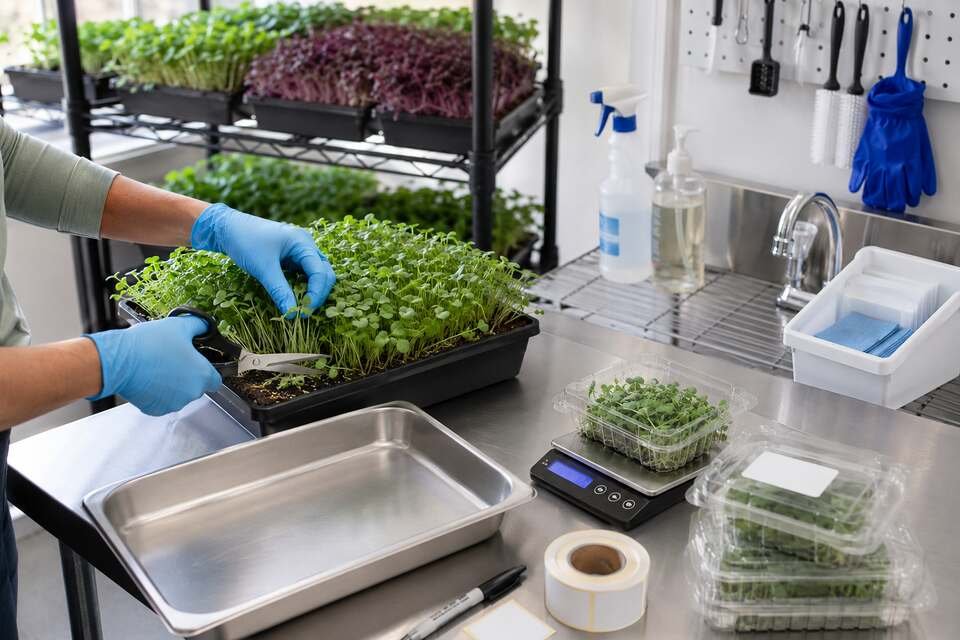
Keep production and handling safe while testing. Penn State Extension’s microgreens food-safety guidance covers risks in growing and handling; check the rules that apply to your location and sales channel. Avoid making specific nutrient or health claims for a variety unless the particular claim is supported and permitted.
What should you do after the first paid orders?
Use the repeat orders and cost records to decide whether to add a third variety, adjust pack size, or change delivery days. If the contribution is thin, more trays can multiply the problem. Build equipment, cash-flow, and buyer assumptions in our microgreens business-plan guide. If you want structured paid instruction after testing demand, read our Freedom Farmers course review for the curriculum, price and enrollment questions. We may earn a commission through links in that review.