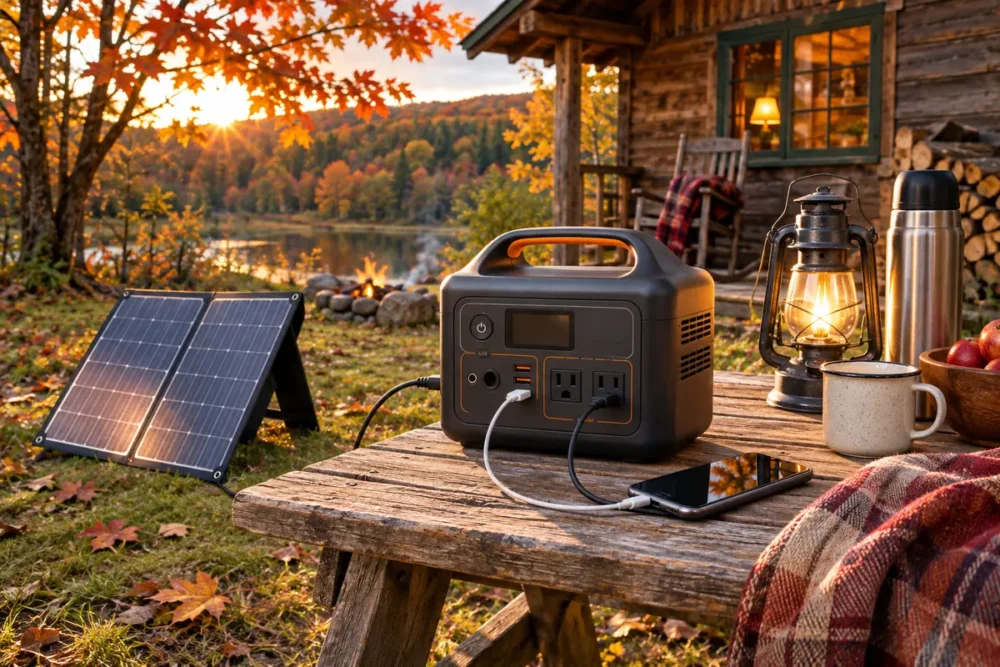
Which portable solar generator should you take camping? For phones, lights, and a laptop, a roughly 500 Wh power station may be enough. Add an electric cooler, more people, or an overnight outage plan and the 1 kWh class makes more sense. Buy by measured watt-hours and the largest appliance you will run at once, then check whether the solar panel is actually included.
Disclosure: Some product links are affiliate links. We may earn a commission at no extra cost to you. We compared published specifications and seller listings, not hands-on test results. Prices, bundles, and stock can change.
Three portable solar power stations worth comparing in 2026
These are different sizes for different jobs. The specifications below are published ratings, not measured runtime in our hands. ShopSolar may sell a main unit and a solar bundle under the same product listing; select the configuration you want before comparing totals.
| Use | Model | Battery / continuous AC output | Solar input | Watch for |
|---|---|---|---|---|
| Minimal phone and laptop kit | EcoFlow RIVER 3 | 245 Wh / 300 W | 110 W maximum | Too small for substantial cooler or appliance loads |
| Light camp kit | BLUETTI AC50P | 504 Wh / 700 W | 200 W maximum | Limited energy for an all-night electric cooler |
| Balanced weekend kit | Jackery Explorer 1000 v2 | 1,070 Wh / 1,500 W | Check the selected panel bundle and input limits | Main-unit listing may exclude panels |
Our pick for most weekend campers: start with the Jackery Explorer 1000 v2 class if you need to run several small loads and want more room than a 500 Wh unit offers. The AC50P is easier to justify when space and weight matter more than overnight capacity. The RIVER 3 is a smaller choice for phones and a laptop, with limited AC output. None is a whole-home backup system.
Size a camping solar generator from the things you actually plug in
List every device, its running watts, and how many hours you expect to use it. Multiply watts by hours for each item, then add the watt-hours. A 60 W cooler running continuously for eight hours would use 480 Wh; a real compressor cooler cycles, so measure its daily use rather than assuming that figure. A 10 W light used for four hours adds 40 Wh.
For a quick planning example, a 60 W device for eight hours, a 10 W device for twelve hours, and an 8 W device for six hours total 648 Wh. If you provisionally allow 20% for conversion losses and reserve, a 1,000 Wh battery gives about 800 Wh to plan with. A 504 Wh battery gives about 403 Wh under the same assumption. These are sizing examples, not guaranteed runtimes; actual inverter losses, battery settings, temperature, and device duty cycles vary.
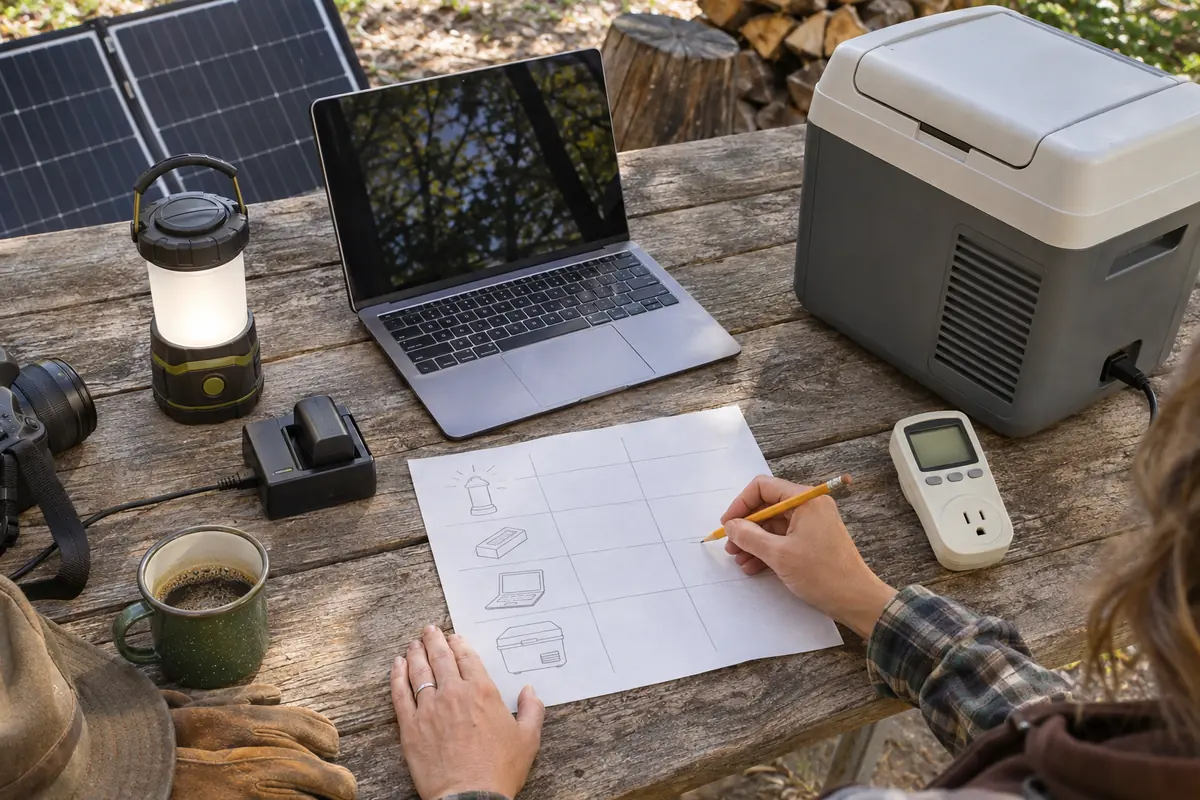
Then check continuous output in watts and startup surge separately. A 1,000 Wh battery with a 700 W inverter cannot run a 900 W appliance merely because its energy capacity is larger. Check the outlet type and the manufacturer’s manual if you plan to run a cooler, coffee maker, or appliance with a motor. For an extended home outage or 240 V circuits, use our 2026 home-backup solar generator comparison instead.
Best compact choice: BLUETTI AC50P
BLUETTI lists the AC50P at 504 Wh of LiFePO4 storage and 700 W continuous AC output, with a 200 W maximum solar input. That is a practical size for phones, camera batteries, lights, a laptop, or short use of a small appliance within its output rating. It is a poor choice if your plan requires running a power-hungry cooler all night without recharging.
Check whether the ShopSolar option includes a panel and compare the connector and voltage requirements before using an existing panel. See the current BLUETTI AC50P options at ShopSolar.
Best balanced 1 kWh choice: Jackery Explorer 1000 v2
The Explorer 1000 v2 has a published 1,070 Wh battery and 1,500 W continuous AC output. That extra output headroom matters if your camping list includes a small appliance that a 700 W station cannot run, though the appliance can still drain the battery quickly. ShopSolar lists the main unit and a bundle with SolarSaga panels; compare what is in the box, not just the headline price.
The Jackery is our default recommendation for a camper who wants to cover several modest loads over a weekend and recharge when conditions allow. It is not a promise that a refrigerator will last a specific number of hours; measure the appliance first. Compare Jackery Explorer 1000 v2 bundles at ShopSolar.
Smallest choice: EcoFlow RIVER 3
EcoFlow lists 245 Wh of storage, 300 W continuous AC output, and a 110 W solar-input limit for the RIVER 3. ShopSolar offers a main-unit option and 100 W panel bundles. This is for a light kit: charge phones, a camera, or a laptop, and check the combined draw before adding anything else. It is not a substitute for the 1 kWh class if a cooler or several appliances must run overnight.
Check the exact panel bundle and the station’s input limits before ordering. See EcoFlow RIVER 3 options at ShopSolar.
Solar panel bundle or power station alone?
A battery station is not automatically a solar generator kit. A main-unit-only option charges from the wall or a compatible panel you already own. A bundle adds a panel, but its rated wattage is measured under standard test conditions. Expect less in poor sun, and allow enough daylight to replace the energy you used the previous night.
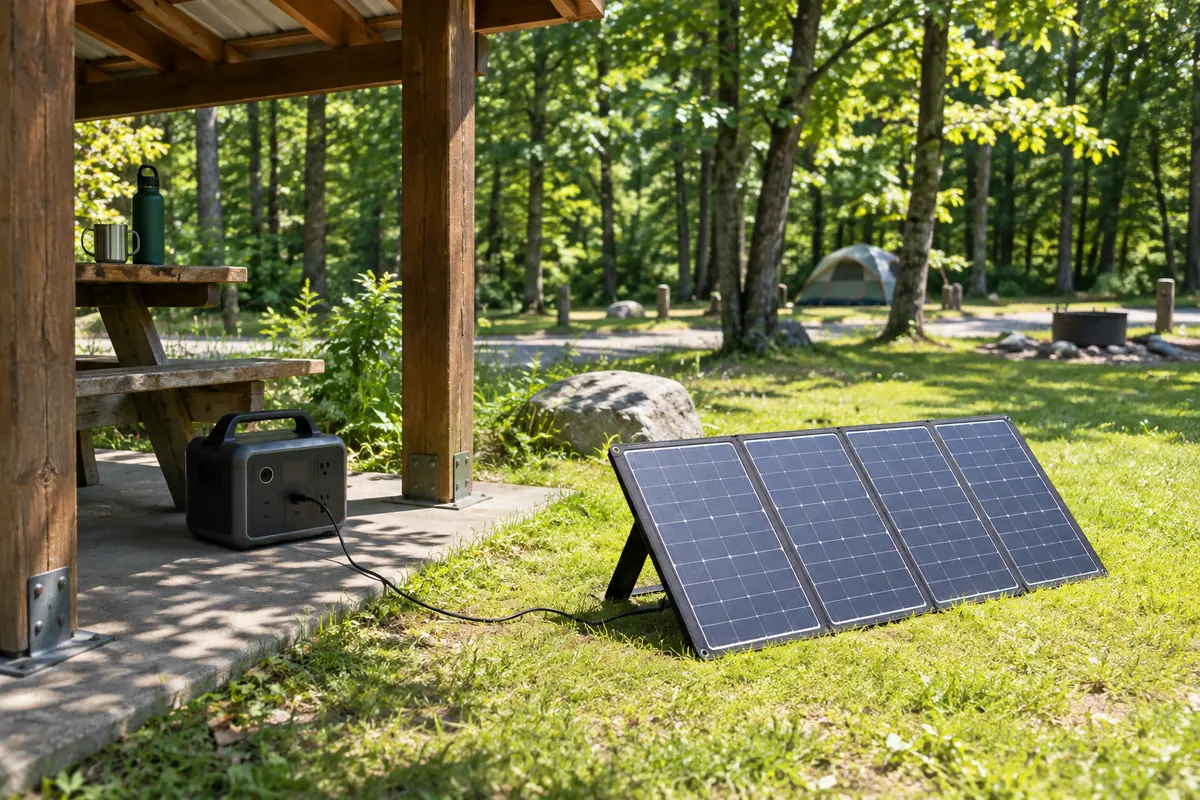
At camp, place the panel where it gets unobstructed sun. Keep the station dry, ventilated, and within the manufacturer’s temperature range. Check the cable length before ordering, especially if the sunniest spot is away from the tent. A battery unit has no combustion exhaust, but that does not make it weatherproof or safe to overload.
What to check before you buy
- Energy: total your daily watt-hours and leave room for losses and a cloudy day.
- Power: check continuous AC output, startup surge, and the actual outlets your devices need.
- Solar: confirm the panel is included, then match its electrical ratings and connector to the station.
- Portability: weigh the unit and panels together if you will carry them from the car.
- Support: check the selected bundle’s warranty and current availability, not a screenshot of an old sale.
For a cabin with permanent wiring, panels, and a battery bank, read the DIY solar kit selection guide. If storage is the main decision, the home solar battery guide explains capacity versus output in more detail.
Buying decision: choose the RIVER 3 for a minimal phone-and-laptop kit, the AC50P for more modest camp loads, or the Jackery 1000 v2 when you need a more flexible 1 kWh station. Measure your loads first, then browse current ShopSolar solar generator bundles and confirm stock and included panels.
Sources: BLUETTI AC50P specifications; Jackery Explorer 1000 v2 specifications; EcoFlow RIVER 3 manual; Ready.gov power-outage safety guidance.