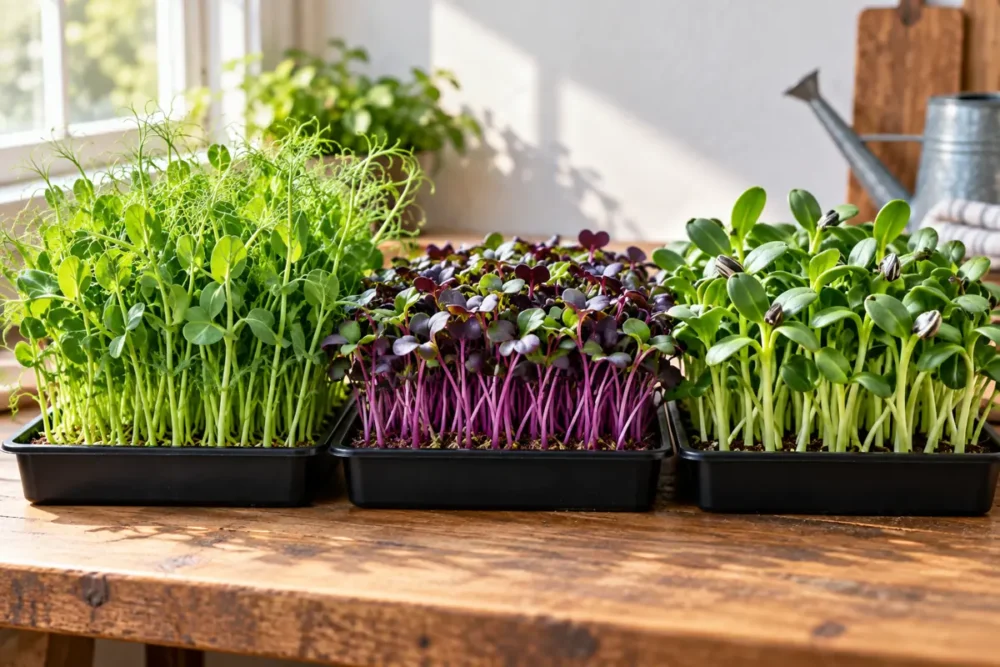
Start with radish if you want a quick, peppery crop, or pea shoots if you want a mild green for sandwiches and stir-fries. Broccoli is another straightforward first tray. The best microgreen for you depends on taste, seed size, light, and what you will actually eat. If flavor is your deciding factor, compare our seven microgreens by taste and kitchen use. Grow one variety at a time while you learn your setup.
This is a seed-choice guide. For the full tray method, including drainage, light, watering, and harvest, read how to grow microgreens indoors. Harvest times are estimates, not promises: cultivar, room temperature, light, and your preferred leaf stage all matter.
Which microgreens should a beginner choose first?
| Variety | Flavor and use | What to watch |
|---|---|---|
| Radish | Peppery; tacos and sandwiches | Start with a small tray if you prefer mild food |
| Pea shoots | Sweet, fresh pea flavor; salads and bowls | Larger seed needs its own sowing density |
| Broccoli | Mild brassica flavor; wraps and salads | Avoid crowding and prolonged wetness |
| Sunflower | Nutty, substantial shoots; sandwiches | Larger seed and hulls need attention |
| Mustard | Sharp, spicy garnish | Its heat can dominate a mild mix |
| Kale | Mild brassica greens | Compare with broccoli before buying a large packet |
| Arugula | Peppery, slightly bitter; pizza and salads | Trial a small batch for your preferred flavor |
| Cress | Bright, peppery garnish | Keep its shallow medium evenly damp |
| Basil | Aromatic herb; tomato dishes | Allow more patience than with radish |
| Cilantro | Distinctive herb flavor; salsa and curries | Start after you know your basic tray routine |
Penn State Extension lists these among commonly grown microgreens and notes that large seeds such as pea and sunflower need a lower sowing density than small seeds. The table is an editorial starting point, not a claim that every seed lot will behave the same way. See The ABCs of Microgreens and Growing Microgreens.
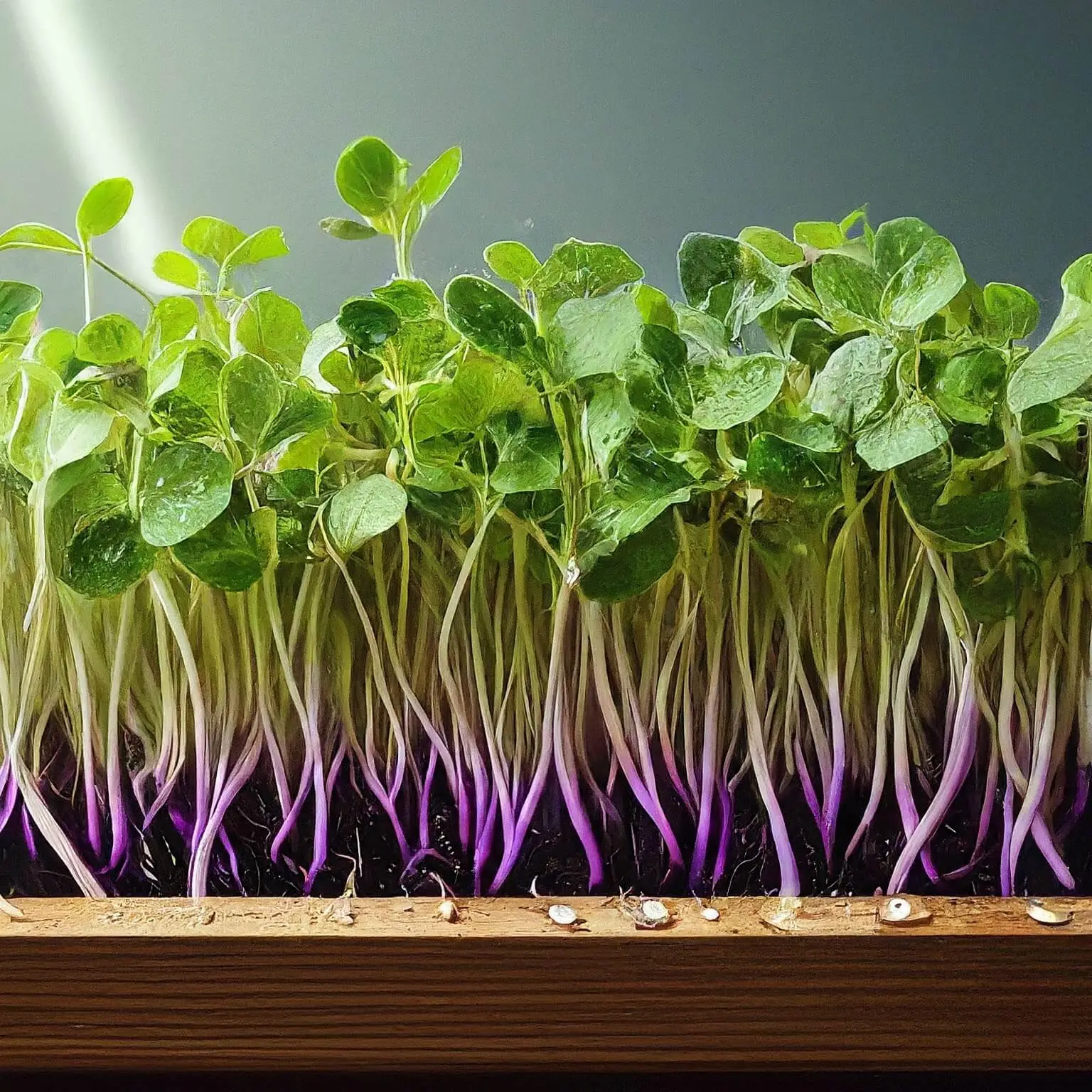
The first four varieties to try
1. Radish microgreens: a peppery first harvest
Radish is a good first test when you enjoy spicy greens. Use a small amount on a sandwich or taco before sowing several trays; the flavor is stronger than some beginners expect. Our radish microgreens guide covers this crop in more detail.
2. Pea shoots: a mild, familiar flavor
Pea shoots taste like fresh peas and have a larger, more substantial stem. The seeds are much bigger than broccoli or radish seed, so do not use the same scoop per tray. Check the supplier’s instructions for any soaking step and test one tray before scaling up.
3. Broccoli microgreens: a mild brassica
Broccoli is useful when you want a gentler green for wraps and salads. It is a reasonable comparison crop alongside radish: try each separately, then blend them after harvest if you like both. Avoid blanket nutrition claims; nutrient content changes with the crop and growing conditions.
4. Sunflower shoots: a hearty texture
Sunflower shoots have thicker stems and a nutty flavor. Use seed sold for edible microgreens, pay attention to any hulls left on the shoots, and discard anything spoiled. Read the sunflower microgreens guide before planting a large batch.
Six more microgreens to try after your first tray
5. Mustard
Mustard adds heat and color to a meal. Grow it separately first so you know how much you want in a salad mix.
6. Kale
Kale is another brassica to compare with broccoli. Buy a small seed packet and judge it by flavor and reliability in your room, rather than a claimed health multiplier.
7. Arugula
Arugula brings a distinct peppery taste. A small test tray will tell you whether you prefer it alone, blended with milder greens, or as a garnish.
8. Cress
Cress is a compact, peppery option for sandwiches. Watch moisture closely in a shallow setup; a soggy mat or tray is a poor trade for faster germination.
9. Basil
Basil is worth trying for its familiar aroma, though it is a less forgiving first experiment than radish. Plant it separately so you can follow the seed supplier’s germination guidance without compromising a mixed tray.
10. Cilantro
Cilantro microgreens can add herb flavor to salsa and grain bowls. Seed handling and timing differ from the quickest brassicas, so try it once you have a repeatable setup. People who dislike cilantro’s flavor may want to skip it altogether.
How should you buy and compare seeds?
Choose seed marketed for edible microgreens with good germination information. Avoid chemically treated or coated seed. Penn State Extension explains that some seed coats can remain on shoots at harvest and that seed quality and handling affect food safety. Compare packet price by usable seed quantity, not by the promise of a guaranteed number of harvests. Our microgreens seed-buying guide is the next step if you are comparing suppliers.
Keep a brief note for each tray: crop and seed source, sowing date, growing conditions, harvest date, and whether you liked the result. That simple record is more useful than a universal “ready in seven days” claim.
What supplies and care do these crops share?
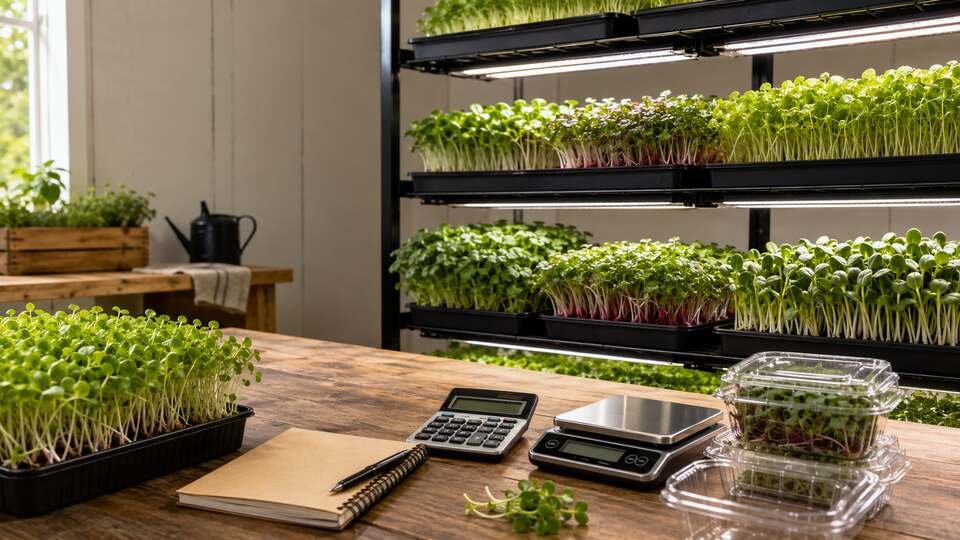
Start with a clean draining tray, a clean medium suitable for edible crops, potable water, and enough light after the seedlings emerge. Check the medium rather than watering by a fixed twice-daily rule. Bottom watering can reduce contact between water and the edible leaves. Harvest above the medium with clean scissors and wash the greens in drinking water before eating. Penn State’s home-growing instructions explain the method.
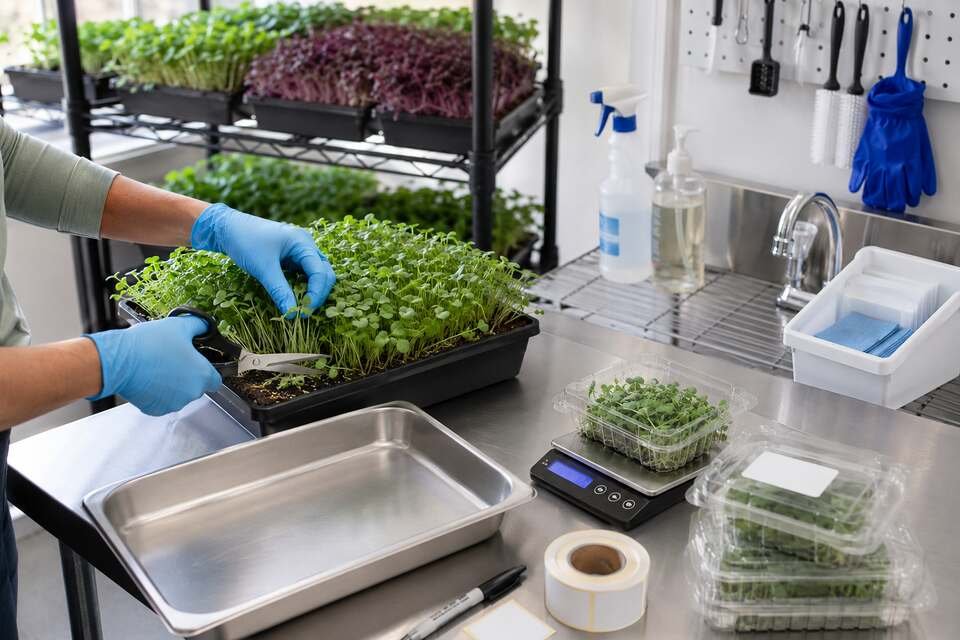
Microgreens are often eaten raw. Clean trays and tools, safe water, and careful handling matter. Discard a tray with visible spoilage. For a deeper look at contamination risks, see Penn State Extension’s microgreens food-safety guidance. Do not grow tomato, pepper, eggplant, or potato seedlings as edible microgreens; Penn State specifically warns against these crops.
Frequently asked questions
What is the easiest microgreen for a first tray?
Try radish for a peppery crop or pea shoots for a mild one. Grow a single variety first so you can adjust light and water without guessing which crop caused a problem.
Do microgreens need a grow light?
A bright window may be enough in some homes. If seedlings stretch toward the glass or your room has weak winter light, a grow light can make the setup more consistent. Follow the fixture’s placement instructions rather than a fixed distance that may not suit your light.
Can I plant a mix of seeds together?
Yes, but start with individual crops. A mix works best when seeds have compatible germination, growth rate, and density needs. Penn State advises matching those characteristics when making a mix.
Will they regrow after cutting?
Plan on sowing a fresh tray for a predictable new harvest. Wash and sanitize reusable trays between crops, and use fresh medium appropriate for edible greens.
Next step: Choose one seed packet and use the indoor tray guide to plant it. If you want a medium-free method, compare our without-soil guide before buying equipment.